

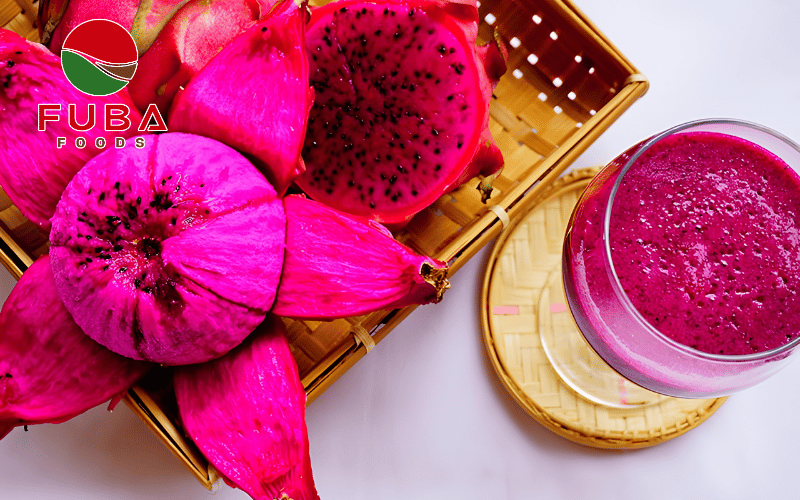
The global beverage industry is evolving rapidly as consumers demand healthier, more natural, and visually appealing drinks. From smoothies and juices to sparkling beverages, functional drinks, dairy products, and plant-based beverages, manufacturers are continuously searching for ingredients that combine nutritional value with production efficiency. Among tropical fruits, dragon fruit for beverage industry applications has become one of the fastest-growing trends due to its vibrant appearance, mild flavor, and excellent processing versatility.
Dragon fruit for beverage industry applications includes smoothies, fruit juices, functional beverages, dairy drinks, frozen beverages, and ready-to-drink (RTD) products. Available as IQF frozen cubes, puree, and concentrate, dragon fruit offers beverage manufacturers consistent quality, natural color, year-round availability, and excellent compatibility with modern beverage formulations.

As consumer expectations continue to shift toward clean-label and functional products, beverage companies need ingredients that support product innovation while maintaining operational efficiency. This article explores why dragon fruit has become a preferred beverage ingredient and what businesses should consider when sourcing dragon fruit for commercial production.
Why Dragon Fruit Is Becoming a Preferred Beverage Ingredient
Dragon fruit has evolved from a niche tropical fruit into a mainstream beverage ingredient because it satisfies both consumer preferences and manufacturing requirements. Unlike ingredients with strong or dominant flavors, dragon fruit delivers a subtle sweetness and refreshing taste that blends naturally with a wide variety of fruits, allowing product developers greater flexibility when creating new beverage formulations.
Its striking natural color also provides strong marketing value. Consumers increasingly associate colorful beverages with freshness, premium quality, and natural ingredients. Red dragon fruit, in particular, enables manufacturers to create visually attractive drinks without relying heavily on artificial color additives.
For commercial production, dragon fruit also offers practical advantages. Frozen formats ensure consistent quality throughout the year, allowing manufacturers to maintain standardized recipes regardless of seasonal harvest variations.

A Versatile Ingredient Across Beverage Categories
One reason dragon fruit for beverage industry applications continues to expand is its compatibility with numerous beverage segments.
Dragon fruit is widely used in smoothies, fruit juices, cold-pressed beverages, dairy drinks, yogurt beverages, sparkling fruit drinks, bubble tea, frozen beverages, protein shakes, and plant-based beverages. Its mild flavor allows beverage developers to combine it with mango, passion fruit, pineapple, avocado, citrus fruits, berries, coconut, or banana without overpowering the final product.
This versatility enables beverage companies to introduce multiple product variations while relying on the same core ingredient.
Strong Consumer Appeal
Modern consumers actively seek beverages made with recognizable, natural ingredients. Dragon fruit supports this demand by offering an attractive appearance together with a nutritional profile rich in dietary fiber, vitamin C, antioxidants, and beneficial plant compounds.
These characteristics help beverage brands position products within premium, functional, and clean-label categories, creating stronger differentiation in competitive markets.

Best Dragon Fruit Ingredients for Beverage Manufacturing
Choosing the appropriate ingredient format is essential for production efficiency. Different beverage applications require different dragon fruit products depending on processing methods, equipment, and desired product characteristics.
Understanding these options helps manufacturers optimize both production costs and final product quality.
IQF Frozen Dragon Fruit Cubes
IQF frozen dragon fruit cubes are ideal for smoothie chains, cafés, restaurants, and beverage businesses producing fresh-blended drinks.
Because each fruit piece freezes individually, operators can accurately measure ingredients while reducing preparation time and minimizing waste. IQF technology also preserves the fruit’s natural texture, flavor, and color, allowing beverages to maintain a fresh fruit appearance.
Frozen cubes eliminate peeling, cutting, and cleaning processes, improving operational efficiency during daily production.

Dragon Fruit Puree
Frozen puree is the preferred solution for industrial beverage manufacturers producing bottled smoothies, fruit juices, yogurt drinks, and ready-to-drink beverages.
Puree provides consistent texture and flavor while integrating easily into automated production systems. This simplifies formulation, shortens production time, and improves batch-to-batch consistency.
Manufacturers also benefit from reduced labor requirements since the ingredient is ready for immediate processing.
Dragon Fruit Concentrate
For certain beverage formulations, concentrate offers additional flexibility by reducing transportation and storage costs while allowing manufacturers to adjust flavor intensity according to product requirements.
Concentrate is particularly suitable for export-oriented beverage production where logistics efficiency plays an important role in overall operational costs.

Why Beverage Manufacturers Prefer Frozen Dragon Fruit
Fresh fruit often creates operational challenges due to seasonality, inconsistent quality, and limited shelf life. Frozen dragon fruit addresses these issues while maintaining the characteristics necessary for premium beverage production.
Reliable Year-Round Supply
Beverage production requires stable ingredient availability regardless of harvest seasons.
Frozen dragon fruit enables manufacturers to maintain continuous production schedules throughout the year, reducing supply interruptions and supporting long-term distribution agreements with retailers and foodservice customers.
This consistency is especially valuable for private-label beverage manufacturers and multinational beverage brands that require predictable procurement planning.
Consistent Flavor, Color, and Texture
One of the biggest advantages of frozen dragon fruit is production consistency.
Unlike fresh fruit, which naturally varies in sweetness and ripeness, professionally processed frozen dragon fruit follows standardized quality specifications. This enables manufacturers to produce beverages with consistent flavor, appearance, and texture across every production batch.
Consistent ingredients reduce formulation adjustments, improve manufacturing efficiency, and strengthen overall product quality.

What Beverage Companies Look for in a Dragon Fruit Supplier
Selecting a reliable ingredient supplier is equally important as selecting the ingredient itself. Beverage manufacturers increasingly evaluate suppliers based on production capability, food safety, and long-term reliability rather than price alone.
Advanced Processing Technology
Modern IQF processing technology plays a major role in preserving the quality of dragon fruit ingredients.
Rapid freezing shortly after processing helps retain natural color, flavor, texture, and nutritional value while minimizing cellular damage. Individual fruit pieces remain separated, making production more efficient and reducing ingredient waste.
As a direct frozen fruit manufacturer, FUBA applies advanced IQF technology within an integrated production process that includes raw material selection, washing, sorting, processing, freezing, packaging, and cold storage. This closed manufacturing system helps maintain consistent quality while supporting the needs of global beverage manufacturers.

International Food Safety Standards
Global beverage brands require suppliers capable of meeting strict food safety and export requirements.
Manufacturers should provide internationally recognized certifications such as HACCP, ISO 22000, and GMP together with complete documentation, including COA, CO, CQ, microbiological testing, pesticide residue analysis, and full product traceability.
These standards simplify regulatory compliance while reducing procurement risks for international buyers.
Flexible Manufacturing and Supply Capacity
Large beverage companies often require customized packaging, private-label production, and stable long-term supply.
Manufacturers with integrated production facilities and established grower networks can better accommodate these requirements while maintaining consistent product specifications and dependable delivery schedules.

Future Opportunities for Dragon Fruit in the Beverage Industry
Consumer demand for healthier beverages continues to drive innovation across the global beverage market. Functional drinks, plant-based beverages, low-sugar products, and clean-label formulations are becoming key growth categories.
Dragon fruit aligns well with these trends by offering natural nutrition, attractive color, and formulation flexibility. Beverage developers are increasingly combining dragon fruit with ingredients such as mango, passion fruit, avocado, coconut, probiotics, collagen, plant protein, and botanical extracts to create differentiated products for health-conscious consumers.
As demand for premium tropical fruit ingredients continues to increase, dragon fruit is expected to play an even greater role in the development of innovative beverages for both retail and foodservice markets.

Conclusion
The growing use of dragon fruit for beverage industry applications reflects changing consumer preferences and the increasing demand for premium, functional, and naturally colorful beverages. Whether used as IQF frozen cubes, puree, or concentrate, dragon fruit offers beverage manufacturers outstanding versatility, consistent quality, and year-round availability for commercial production.
By partnering with an experienced frozen fruit manufacturer that combines advanced IQF technology, strict quality control, and internationally recognized food safety standards, beverage companies can secure reliable dragon fruit ingredients that support product innovation, operational efficiency, and long-term business growth in an increasingly competitive global market.


