

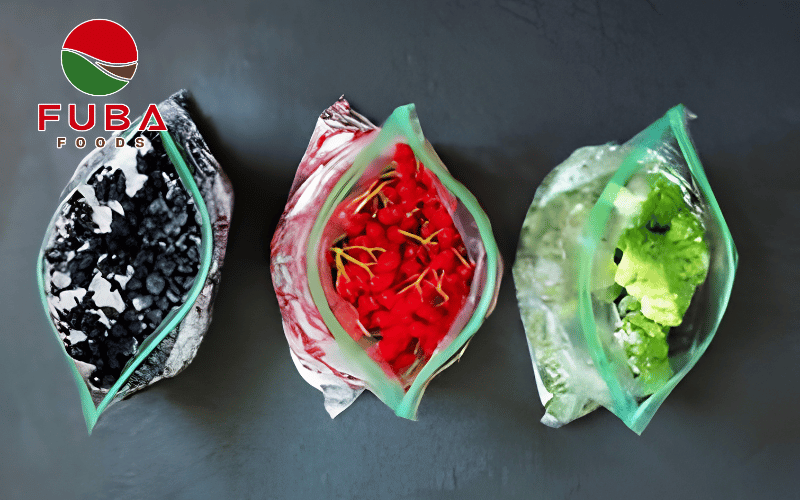
Frozen food product specifications define exactly what a buyer expects to receive from a manufacturer. They go far beyond product name and package weight. For frozen fruits and vegetables, frozen food product specifications determine raw material quality, processing methods, cut size, appearance, texture, freezing performance, packaging, storage conditions, and the acceptance criteria applied during final inspection.
For importers, distributors, food manufacturers, and foodservice suppliers, having clearly defined frozen food product specifications before placing an order is essential to avoid common sourcing issues. Without precise documentation, products may meet the general description but still vary in size, maturity, color, texture, moisture content, packaging, or processing quality, leading to inconsistencies across shipments.
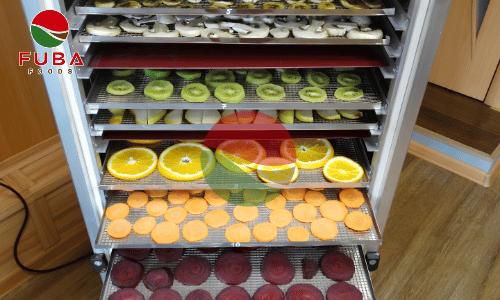
A well-structured specification serves as a technical agreement between the buyer and the manufacturer. It defines what is being produced, how it is processed, how it is packed, and the quality standards that must be consistently maintained from one production batch to another.
This article outlines the key frozen food product specifications buyers should request, helping ensure product consistency, quality control, and alignment between commercial expectations and manufacturing execution.
Why Are Frozen Food Product Specifications Important?
A product specification creates a common technical language between a buyer and manufacturer. Instead of describing a product as simply “frozen mango” or “IQF vegetables,” the specification defines the characteristics that actually determine whether the product meets the buyer’s requirements.
This becomes especially important when products are purchased repeatedly. A buyer may approve a sample and later discover that commercial batches have different piece sizes, color, texture, or raw material quality. A detailed specification reduces this gap by turning subjective expectations into measurable or clearly defined requirements.
From the factory perspective, specifications are also necessary for production planning. The factory needs to know what raw materials to source, how to prepare them, which processing method to use, how to freeze the product, and which quality parameters must be checked before shipment.
What Should Frozen Food Product Specifications Include?
A complete frozen food specification should cover the product from raw material to finished packed goods. The exact requirements depend on the product, but several technical areas should always be considered.
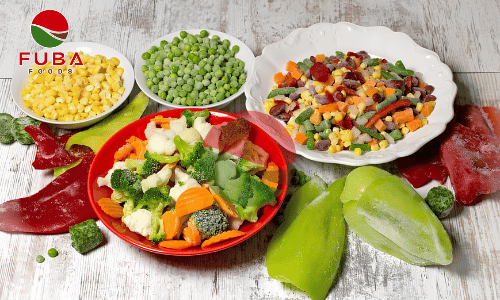
Product Name, Variety, and Raw Material Requirements
The first step is defining exactly what the product is. “Frozen avocado” is not a sufficient specification if the buyer requires a particular variety, maturity level, dry matter, or processing condition.
Buyers should identify the fruit or vegetable, variety where relevant, and the expected raw material characteristics. Maturity is particularly important for fruits because it can affect flavor, firmness, color, yield, and processing performance.
Raw material origin may also be relevant when the buyer has specific sourcing requirements. A factory with established agricultural sourcing relationships can provide more consistent access to suitable raw materials and reduce dependence on a single growing area.
This is particularly important for seasonal crops. Different harvesting periods can produce variations in size, maturity, and quality, so the factory needs a sourcing and inspection system capable of controlling those variations before processing begins.
Size, Cut, and Physical Dimensions
For processed frozen fruits and vegetables, cut size is one of the most important parts of the specification.
Buyers should define whether they require whole pieces, slices, cubes, chunks, halves, puree, or another format. Where applicable, dimensions and acceptable size variation should also be specified.
For example, a food manufacturer purchasing IQF mango cubes may require a specific cube dimension because the ingredient needs to work with an existing filling, blending, or portioning process. A variation that appears minor to the supplier may become a production problem for the buyer.
Cut consistency should therefore be treated as a production parameter, not simply a visual preference. The factory’s cutting equipment, sorting process, and quality inspection should all support the required specification.
What Quality Parameters Should Buyers Specify?
Once the physical format is defined, buyers should establish the quality characteristics that determine whether the product is commercially acceptable.
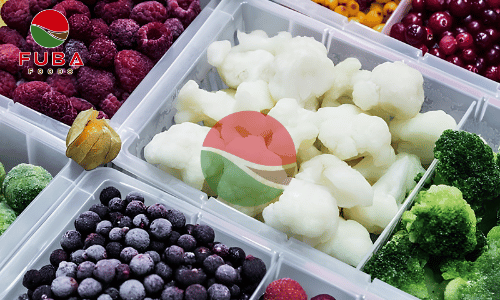
Color, Appearance, and Defects
Color and appearance are often among the first quality characteristics buyers evaluate. However, they should be described as clearly as possible rather than relying only on terms such as “premium quality.”
The specification may define expected natural color, acceptable variation, and defect tolerance. Depending on the product, buyers may also need to address bruising, discoloration, broken pieces, foreign material, damaged pieces, or other visible defects.
A factory should be able to connect these requirements with its sorting and grading process. Raw materials need to be inspected before processing, while finished products should also be checked before packing and release.
Texture and Product Condition
Texture is particularly important for frozen fruits and vegetables because freezing does not correct poor raw material quality or inappropriate processing.
Buyers should consider whether the finished product needs to remain firm, soft, tender, or suitable for a particular downstream application. The expected texture should be linked to the product’s intended use.
Processing conditions before freezing can also influence texture. Blanching, grilling, frying, or other treatments may be required depending on the product. These processes should therefore be included in the specification when they affect the final product.
Brix, Dry Matter, and Other Product-Specific Parameters
Some frozen foods require analytical specifications in addition to visual characteristics.
For fruit products, parameters such as Brix can be relevant when sweetness and soluble solids affect the final application. For avocado, dry matter can be an important quality indicator because it relates to fruit maturity and processing characteristics.
The required parameters should be selected based on the product rather than copied from a generic specification. A beverage manufacturer, for example, may have different requirements for passion fruit than a food manufacturer using the same fruit in a prepared product.
What Processing Specifications Should Be Included?
Product specifications should explain not only what the finished product looks like but also how it is expected to be processed.
Washing, Sorting, and Preparation
The specification should identify relevant preparation steps, particularly when they affect the final product. These may include washing, cleaning, peeling, deseeding, cutting, grading, blanching, grilling, frying, or other treatments.
This gives the buyer a clearer understanding of what happens between raw material reception and freezing. It also allows the factory to align its production process with the agreed product characteristics.
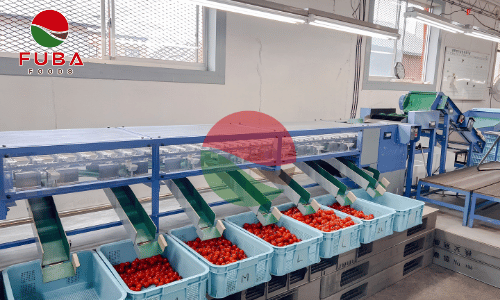
An integrated factory can manage these stages as part of one production system. FUBA’s processing flow includes raw material inspection, washing and cleaning, sorting and grading, product preparation, IQF freezing, metal detection, packing, and cold storage.
Freezing Method and Storage Conditions
The freezing method should also be specified where it affects the product’s performance.
IQF freezing is commonly used for individual fruit and vegetable pieces because rapid freezing helps maintain piece separation and supports the retention of natural color, texture, flavor, and nutritional characteristics. Conventional freezing may be more appropriate for other formats depending on the product and application.
Buyers should also confirm the required storage temperature and cold-chain conditions. Frozen products need to remain properly frozen after production, not only during the freezing stage itself.
What Packaging Specifications Should Frozen Food Buyers Ask For?
Packaging requirements should be included in the product specification before production begins. The buyer should define the primary package, net weight, secondary packaging, carton configuration, labeling requirements, and any private label requirements.
Net weight is particularly important because the difference between nominal weight and actual filled weight can affect inventory planning and commercial calculations. Packaging dimensions can also affect pallet configuration and container utilization.
For retail products, packaging may need to support consumer presentation and brand requirements. Foodservice products generally prioritize handling and operational efficiency, while bulk export packs often focus on larger quantities and logistics efficiency.
The factory should also confirm whether the requested packaging format is compatible with its actual packing equipment. FUBA operates vacuum packaging equipment alongside multiple freezing and inspection systems, allowing packaging requirements to be considered as part of the broader production process rather than treated separately.
What Food Safety Specifications Should Be Included?
Food safety requirements should be clearly defined and supported by the manufacturer’s actual quality management system.
Depending on the product and destination market, buyers may need specifications covering microbiological criteria, foreign material control, pesticide residue requirements, allergen considerations where applicable, and other regulatory or customer-specific requirements.
Traceability is also important. The manufacturer should be able to identify relevant production information and connect finished products with their production lot and raw material flow.
Certification can provide additional assurance, but buyers should not evaluate certifications in isolation. They should also understand how quality controls are implemented inside the factory.
FUBA’s manufacturing infrastructure includes food safety and quality systems associated with HACCP, ISO 22000, BRCGS, HALAL, and FDA requirements, together with traceability and cold storage maintained below -18°C. These systems illustrate the type of production infrastructure buyers should examine when qualifying an international frozen food supplier.
How Should Buyers Define Acceptable Tolerances?
Not every characteristic can remain exactly identical in an agricultural product. Natural variation exists in fruit and vegetables, so specifications should distinguish between expected variation and unacceptable deviation.
For example, a buyer may establish an acceptable range for cut size rather than requiring every piece to have mathematically identical dimensions. The same principle can apply to natural color variation or minor differences in raw material characteristics.
Clear tolerances make quality control more objective. They also reduce disputes because both parties understand what constitutes an acceptable production lot.
The key is to make tolerances practical for commercial production. A specification that is unrealistically narrow may increase production losses and cost without creating meaningful value for the buyer.
How Do Product Specifications Affect Frozen Food Pricing?
Specifications directly influence production cost. More demanding raw material requirements can reduce usable yield. Smaller or highly uniform cuts may require additional sorting and processing. Special treatments such as grilling, frying, or blanching add processing steps. Custom packaging can increase material and setup costs.
This is why buyers should provide complete specifications before requesting a final quotation. If the factory quotes based on incomplete information and the buyer later adds requirements, the original price may no longer be valid.
Production scale also matters. A manufacturer with established processing capacity can often plan raw materials, equipment utilization, packaging, and labor more efficiently for recurring commercial orders.
FUBA has an annual supply capacity of around 20,000 MT and more than 600 workers, supported by multiple freezing, inspection, and processing systems. For buyers evaluating long-term supply, production scale is therefore an important factor alongside the technical specification itself.
How Should Buyers Use Frozen Food Product Specifications Before Ordering?
The specification should be finalized before commercial production and used as a reference throughout the purchasing process.
First, buyers should provide the factory with their required product characteristics and intended application. The manufacturer can then confirm feasibility and identify any requirements that need adjustment.
Samples should be evaluated against the agreed specification rather than judged only by general appearance. Once the sample is approved, its characteristics should be documented clearly so the factory has a defined production reference.
During commercial production, quality control should then verify whether the finished goods remain within the agreed parameters. This creates a clear connection between product development, production, inspection, and shipment.
What Should Buyers Ask the Factory Before Approving a Specification?
A buyer should not only ask, “Can you produce this product?” The more useful question is whether the factory can produce it consistently at the required commercial volume.
Buyers should confirm the available product format, raw material sourcing, processing technology, freezing method, packaging options, quality controls, production capacity, storage conditions, and export experience.
They should also ask how the factory handles deviations. If a production batch does not meet the agreed specification, there should be a defined quality-control process for identifying and managing the issue before shipment.
This distinction helps separate genuine manufacturing capability from simple trading or sourcing arrangements. A direct factory should be able to explain how the requested specification moves through its actual production line.
Conclusion
Frozen food product specifications are the foundation of consistent international purchasing. They define what the buyer expects and give the manufacturer a practical framework for sourcing, processing, freezing, packaging, inspecting, and releasing the product.
A strong specification should cover the raw material, variety, size and cut, appearance, texture, product-specific parameters, processing method, freezing technology, packaging, food safety requirements, storage conditions, and acceptable tolerances. The more clearly these requirements are defined before production, the lower the risk of quality disputes, unexpected costs, and inconsistencies between samples and commercial shipments.
For importers, distributors, food manufacturers, and foodservice suppliers, the goal should not be to create the longest specification possible. It should be to create a clear, measurable, and commercially realistic specification that a factory can reproduce consistently.
When buyers and manufacturers work from the same technical reference, product quality becomes easier to control, pricing becomes more transparent, and long-term supply becomes much more predictable.


