

Vietnam has become one of the world’s most dynamic suppliers of tropical fruit, supported by favorable growing conditions, expanding cultivation areas, and continuous investment in processing technologies. As international demand shifts toward high-quality, traceable, and value-added agricultural products, Vietnam tropical fruit export is entering a new stage of development where competitiveness depends not only on production volume but also on product quality, sustainability, and manufacturing capability.
Vietnam tropical fruit export is evolving beyond fresh produce toward processed fruit products with higher added value. Advances in farming, food safety management, processing technologies, and cold-chain logistics are enabling Vietnamese manufacturers to supply international markets with more consistent, reliable, and diversified tropical fruit products.
These changes are reshaping how Vietnam competes in the global fruit industry. Understanding the latest export trends provides valuable insight into emerging market opportunities, changing customer expectations, and the capabilities that increasingly define successful fruit suppliers.
This article explores the latest trends shaping Vietnam tropical fruit export. It discusses the industry’s transition toward value-added products, stronger food safety standards, and advanced processing capabilities that are supporting sustainable export growth.

What Is Driving Vietnam Tropical Fruit Export Growth?
The steady growth of Vietnam tropical fruit export is the result of several structural advantages working together. While Vietnam has long been recognized for its abundant tropical fruit production, recent improvements in agricultural practices, export infrastructure, and processing capacity have significantly strengthened its position within international markets.
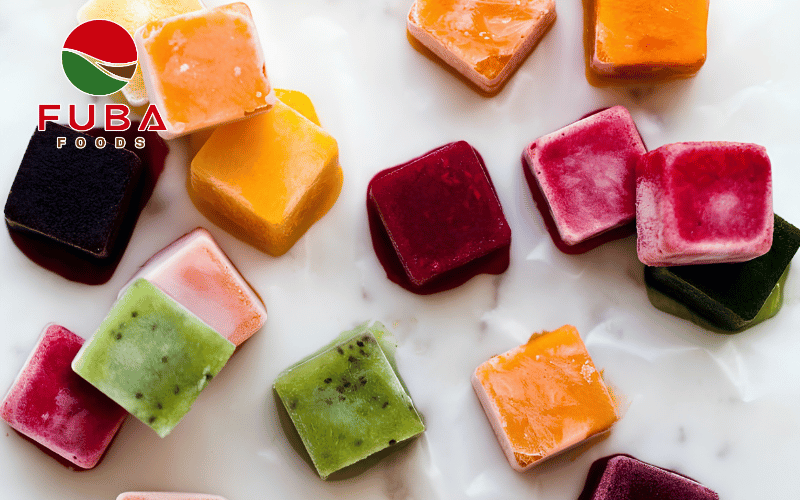
From fresh fruit to frozen products, fruit puree, NFC juices, concentrates, and dried fruit, Vietnamese exporters are expanding beyond traditional commodity exports to meet growing demand for premium ingredients and value-added food products.
Diverse Growing Regions Create a Stable Supply Base
Vietnam’s geographical diversity provides favorable conditions for cultivating a wide range of tropical fruits throughout the year. The Mekong Delta, Central Highlands, Southeast region, and South Central Coast each contribute different harvest seasons and fruit varieties, helping maintain continuous raw material availability.
Major export fruits such as mango, dragon fruit, passion fruit, avocado, pineapple, coconut, banana, jackfruit, and durian benefit from this diversified production landscape. Rather than relying on a single harvest period, processors can source fruit from multiple growing regions, reducing seasonal supply fluctuations and improving production continuity.
The expansion of specialized farming areas and closer cooperation between growers and processors has also contributed to more standardized cultivation practices, resulting in greater consistency in fruit quality and harvest planning.

The Shift Toward Value-Added Tropical Fruit Exports
International markets are placing greater emphasis on processed fruit ingredients that offer convenience, extended shelf life, and consistent quality. As a result, Vietnam’s export industry is gradually shifting from volume-driven fresh fruit exports toward products with higher added value.
Processing Technology Is Expanding Export Opportunities
Modern processing technologies have significantly broadened the range of exportable tropical fruit products. Individual Quick Freezing (IQF), aseptic processing, fruit puree production, freeze drying, and advanced packaging solutions enable manufacturers to preserve fruit quality while extending shelf life and improving transportation efficiency.
Processed fruit products are less vulnerable to seasonal fluctuations and logistics challenges than fresh fruit. They also provide greater flexibility for food manufacturers producing beverages, dairy products, bakery fillings, desserts, sauces, and ready-to-eat foods.
As global demand for convenient and clean-label ingredients continues to increase, processed tropical fruits are becoming an increasingly important contributor to Vietnam’s export growth.

Rising Food Safety Standards Are Raising Industry Competitiveness
Export success increasingly depends on the ability to meet stringent international food safety and quality requirements. Import regulations continue to evolve across major markets, placing greater emphasis on traceability, pesticide residue management, microbiological safety, and standardized production systems.
Vietnamese processors have responded by investing in internationally recognized food safety management systems, laboratory testing, automated production lines, and comprehensive quality assurance programs. These improvements not only strengthen compliance but also enhance customer confidence in Vietnamese fruit products.
At FUBA, raw material selection, hygienic processing, integrated quality management, and modern processing technologies are combined to produce tropical fruit ingredients that meet the quality expectations of international markets. Maintaining close collaboration with growing regions and strict production control helps ensure product consistency while supporting the long-term development of Vietnam’s tropical fruit export industry.
Beyond manufacturing capability, FUBA supplies a diverse portfolio of tropical fruit ingredients including IQF frozen avocado, frozen mango, frozen passion fruit, frozen dragon fruit and customized fruit puree solutions. These products are widely used by beverage, dairy, bakery, dessert, and foodservice manufacturers seeking consistent quality and year-round supply.

Emerging Trends Shaping Vietnam Tropical Fruit Export
The next phase of Vietnam tropical fruit export will be defined by quality, innovation, and supply chain resilience rather than production volume alone. As global food markets evolve, manufacturers that invest in processing technology, traceability, and sustainable operations are better positioned to meet increasingly sophisticated customer expectations.
Value-Added Products Are Driving Export Growth
Demand for processed fruit ingredients continues to outpace many traditional fresh fruit categories as food manufacturers seek products with greater convenience, longer shelf life, and more consistent quality. Frozen fruit, fruit puree, concentrates, freeze-dried fruit, and ready-to-use fruit preparations have become essential ingredients across beverage, dairy, bakery, confectionery, and foodservice applications.
This shift creates new opportunities for Vietnam’s processing industry to capture more value throughout the supply chain. Instead of exporting raw agricultural products, manufacturers are increasingly transforming fresh tropical fruit into premium ingredients with higher commercial value and broader international applications.
Investment in automated production, hygienic processing environments, and advanced preservation technologies further strengthens the competitiveness of Vietnamese processed fruit in global markets.

Traceability and Sustainability Are Becoming Market Requirements
Sustainability is no longer viewed as an added benefit but as a fundamental expectation across many export destinations. Buyers increasingly request greater visibility into farming practices, production processes, and environmental responsibility throughout the supply chain.
Traceability systems enable manufacturers to monitor every production stage, from orchard management and harvesting to processing and final shipment. This transparency strengthens food safety, simplifies regulatory compliance, and improves confidence in product quality.
Sustainable sourcing also supports long-term supply stability. Close collaboration between growers and processors encourages responsible farming practices, improves harvest consistency, and helps maintain reliable raw material availability despite changing climate conditions.
At FUBA, sustainable sourcing is supported through partnerships with carefully selected growing regions, standardized raw material inspection, and integrated traceability throughout production. Combined with internationally recognized quality management systems, this approach helps ensure every shipment meets both customer specifications and evolving export requirements.

How Vietnam’s Processing Industry Is Strengthening Global Competitiveness
Vietnam’s competitive advantage is increasingly built on manufacturing capability as much as agricultural production. Modern processing facilities are helping transform abundant fruit resources into export-ready ingredients that satisfy demanding international standards.
Advanced Processing Technology Improves Export Performance
Maintaining fruit quality after harvest is essential for international distribution. Technologies such as Individual Quick Freezing (IQF), aseptic processing, freeze drying, automated grading, and modern packaging systems help preserve the fruit’s natural flavor, color, texture, and nutritional characteristics while extending shelf life.
These technologies also reduce post-harvest losses, improve production efficiency, and enable manufacturers to supply consistent products throughout the year. Stable product specifications are particularly important for food manufacturers that require uniform ingredients across multiple production batches.

As investment in processing infrastructure continues to expand, Vietnam is steadily strengthening its position as a reliable supplier of premium tropical fruit ingredients rather than simply a source of fresh agricultural commodities.
Integrated Manufacturing Supports Long-Term Supply Reliability
Successful export operations depend on more than production capacity. Consistency is achieved through careful coordination between raw material sourcing, quality management, processing, packaging, storage, and logistics.
An integrated manufacturing model allows processors to monitor every stage of production while responding more efficiently to changing customer requirements. Continuous quality inspection, standardized operating procedures, laboratory testing, and controlled cold-chain management contribute to greater product consistency and lower operational risk.
At FUBA, this integrated approach combines advanced processing technology with strict quality control and close cooperation with fruit-growing regions across Vietnam. Managing the production process from raw material selection through finished goods enables the factory to supply tropical fruit products with dependable quality, full traceability, and stable year-round availability.

Future Opportunities for Vietnam Tropical Fruit Export
Global demand for tropical fruit ingredients is expected to continue growing as consumers increasingly choose healthier, plant-based, and naturally sourced foods. This trend is creating new opportunities not only for fresh fruit exports but also for processed fruit products that deliver greater convenience and longer shelf life.
Future growth will likely be supported by continued investment in precision agriculture, digital traceability, automation, and environmentally responsible processing technologies. At the same time, expanding free trade agreements and improved logistics infrastructure will further strengthen Vietnam’s access to international markets.
Manufacturers that combine sustainable sourcing, advanced processing, and rigorous quality management will be well positioned to respond to evolving market requirements while creating higher-value export products for the global food industry.
Conclusion
Vietnam tropical fruit export is entering a new stage of development driven by innovation, processing capability, and supply chain excellence. While Vietnam’s natural agricultural advantages remain important, long-term competitiveness increasingly depends on the ability to deliver consistent quality, transparent sourcing, and value-added fruit products that meet international standards.
The continued expansion of modern processing technologies, stronger quality management systems, and closer collaboration between growers and manufacturers is enabling Vietnam to move beyond traditional fresh fruit exports toward a more diversified and resilient export industry.
Through integrated manufacturing, advanced processing technologies, comprehensive quality control, and long-term partnerships with fruit-growing regions, FUBA contributes to this transformation by producing tropical fruit ingredients that support the evolving needs of global food manufacturers. This factory-based approach helps ensure every product reflects the consistency, reliability, and quality expected in today’s international food supply chains while reinforcing Vietnam’s position as a trusted source of premium tropical fruit exports.


