

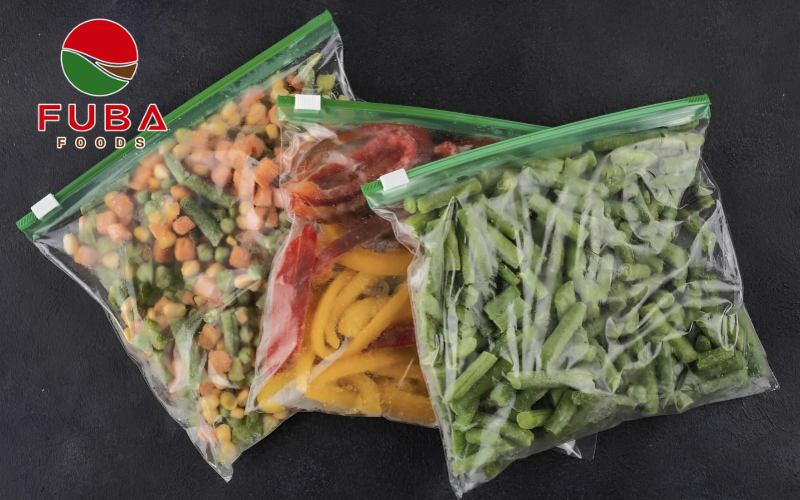
Vietnam fruit and vegetable sourcing has become increasingly relevant for international buyers looking for tropical produce, frozen ingredients, and value-added agricultural products. Vietnam offers diverse growing regions, a wide range of fruits and vegetables, and established processing capabilities that can support commercial supply beyond seasonal fresh produce.
However, sourcing successfully from Vietnam involves more than identifying a product and comparing prices. Buyers need to evaluate where raw materials come from, how they are processed, whether supply can remain consistent throughout the year, and how the supplier manages food safety, cold-chain logistics, documentation, and customized specifications.
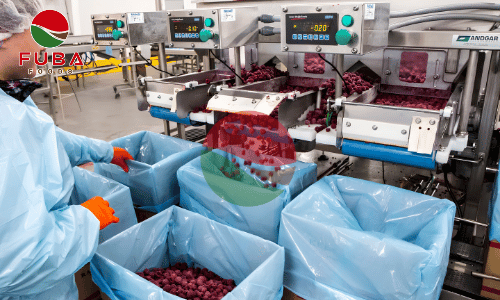
This article explains what international buyers should know when sourcing fruits and vegetables from Vietnam, from agricultural supply and processing capabilities to quality control, product formats, pricing, and supplier selection. It also highlights why working directly with a capable processing factory can make a significant difference in long-term sourcing.
Why Vietnam Is an Attractive Market for Fruit and Vegetable Sourcing
Vietnam has a strong agricultural base supported by different climatic zones and growing regions. The Central Highlands, Mekong Delta, and Southeast Vietnam contribute different types of fruits and vegetables, allowing buyers to access both tropical fruits and a broad range of vegetable ingredients.
This geographical diversity is particularly useful for commercial sourcing because the availability of raw materials is not dependent on a single growing area. Mango, dragon fruit, passion fruit, avocado, durian, jackfruit, eggplant, okra, sweet corn, sweet pepper, zucchini, pumpkin, and sweet potato are among the products that can be sourced and processed for international markets.
For buyers, the key advantage is not simply product variety. A diverse agricultural base gives processors greater opportunities to build sourcing networks, manage seasonal fluctuations, and plan production around different harvest periods.
Vietnam Fruit and Vegetable Sourcing Requires More Than Seasonal Availability
One of the biggest challenges in agricultural sourcing is the gap between harvest availability and year-round commercial demand. Fresh produce naturally follows seasonal cycles, while food manufacturers, distributors, and foodservice businesses often need ingredients continuously.
A reliable Vietnam fruit and vegetable sourcing strategy therefore depends on how the supplier manages raw materials before they enter production. Suppliers with established relationships with farming regions and growers can better coordinate procurement according to product specifications, harvest periods, and production requirements.
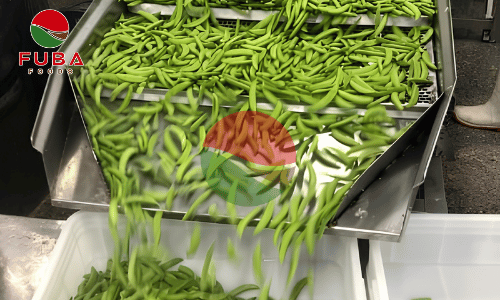
A supplier with sourcing coverage across multiple Vietnamese agricultural regions can have greater flexibility in maintaining raw-material availability than a supplier relying on a limited number of farms or one local growing area.
What Product Formats Can International Buyers Source?
Vietnamese agricultural products are increasingly supplied not only as raw or fresh produce but also as processed ingredients designed for commercial applications. This distinction matters because processing can significantly improve convenience, storage stability, and production efficiency.
Fresh, Frozen, and IQF Products
Fresh produce may be suitable for buyers with established local distribution or short-distance logistics. For international buyers, however, frozen products can provide greater flexibility because they reduce dependence on immediate consumption after harvest.
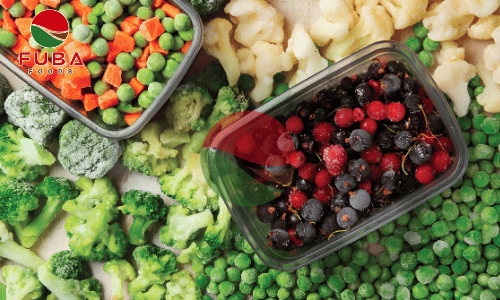
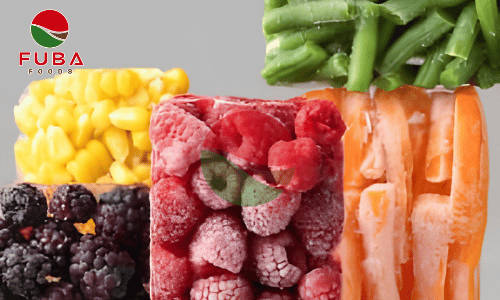
IQF, or Individually Quick Frozen, is particularly relevant for fruits and vegetables. By rapidly freezing individual pieces, IQF processing helps maintain the product’s natural appearance, texture, flavor, and nutritional characteristics while allowing portions to be handled separately.
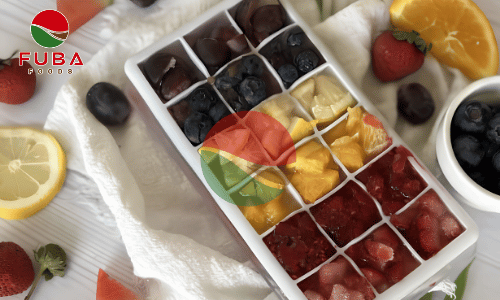
Depending on the product, buyers may source slices, dices, chunks, halves, whole products, puree, or other customized formats. These options allow ingredients to be matched more closely with specific manufacturing processes rather than forcing food manufacturers to adapt their production around a standard raw ingredient.
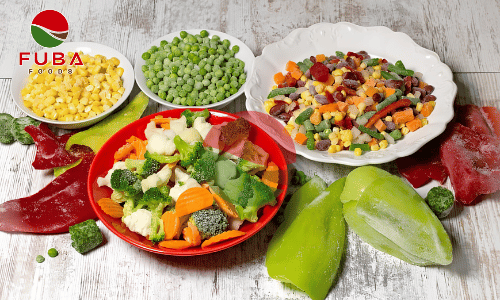
Value-Added Fruit and Vegetable Processing
For industrial buyers, value-added processing can be just as important as the agricultural raw material itself. Products can be prepared through processes such as cutting, blanching, grilling, steaming, frying, or freezing according to the required end application.
This is particularly useful for ready meals, foodservice products, sauces, bakery applications, pizza toppings, smoothies, desserts, and further food processing. The buyer receives an ingredient that is closer to production-ready condition, reducing preparation work and improving consistency between batches.
A capable factory should also be able to discuss customized specifications rather than offering only fixed catalogue products. Cut size, processing method, packaging, and other product parameters can affect yield, handling, and final-product performance.
Quality Control Is a Critical Part of Vietnam Fruit and Vegetable Sourcing
Product quality begins before the raw material reaches the production line. Buyers should therefore look beyond the final product and examine how the supplier controls each stage of the process.
Incoming agricultural materials should undergo inspection before processing, including checks related to quality, size, color, and product specifications. Cleaning and preparation should then remove impurities before the raw materials enter the appropriate processing line.
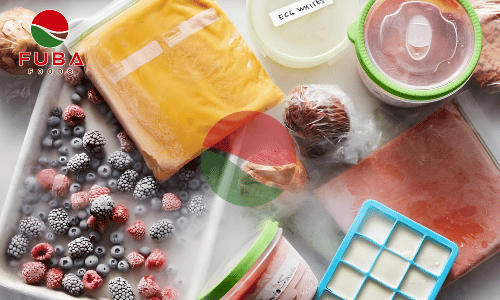
For frozen products, freezing technology and temperature control are equally important. IQF processing can rapidly freeze individual pieces, while controlled cold storage helps maintain product condition after processing. A continuous cold chain is essential from finished-product storage through international shipment.
Food safety controls should also be supported by appropriate inspection systems. At a modern processing facility, this can include metal detection, X-ray inspection, microbiological testing, traceability procedures, and documented quality-control processes.
International buyers should ask for the supplier’s applicable certifications, quality documents, product specifications, and export documentation before placing large commercial orders. Certifications such as HACCP, ISO 22000, HALAL, and BRCGS can provide additional evidence of a structured food-safety management system, depending on the market and product requirements.
Why Factory Capability Matters When Choosing a Vietnamese Supplier
Price is naturally an important consideration in agricultural sourcing, but the lowest quoted price does not necessarily represent the lowest total sourcing cost. Yield, consistency, rejected shipments, packaging performance, production delays, and logistics issues can have a much larger commercial impact over time.
Working directly with a manufacturer gives buyers greater visibility into how the product is sourced and processed. Instead of purchasing through multiple layers of intermediaries, buyers can communicate directly with the production side regarding specifications, quality requirements, packaging, production capacity, and delivery planning.
Factory-scale infrastructure also matters when demand increases. A supplier may successfully handle a small trial order but struggle when a buyer moves to regular container shipments. Buyers should therefore evaluate actual processing capacity, freezing systems, cold storage, labor resources, and quality-control infrastructure.
FUBA Foods operates a processing facility in Ca Mau with an annual supply capacity of 20,000 MT, more than 600 workers, and over 15 years of experience in frozen fruit and vegetable processing and export. Its production infrastructure includes six IQF freezing lines rated at 500 kg/hour each, three contact freezing lines, two air-blast freezing systems, and cold-storage facilities totaling 1,500 MT.
This type of infrastructure is relevant to buyers because production capacity is not simply a number on a company profile. It affects whether a supplier can support recurring orders, different product specifications, and production planning during periods of high demand.
How to Evaluate a Vietnam Fruit and Vegetable Supplier
Check Raw Material Sourcing
Start by asking where the supplier obtains its raw materials and how it manages different growing regions and harvest periods. A strong sourcing network can help reduce fluctuations in quality and availability.
The supplier should also be able to explain how raw materials are inspected before entering production. This is especially important for frozen products because freezing cannot compensate for poor-quality agricultural inputs.
Evaluate Processing and Customization Capability
Ask whether the supplier operates its own processing facility and what equipment is available. For frozen fruits and vegetables, relevant capabilities may include IQF freezing, contact freezing, air-blast freezing, cutting, blanching, grilling, steaming, frying, and vacuum packaging.
Customization is another important consideration. Buyers may require specific cut sizes, product formats, packaging weights, or private-label solutions. A factory with flexible production capabilities can usually accommodate these requirements more effectively than a supplier that simply resells standardized products.
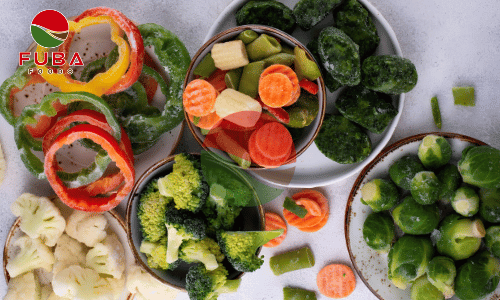
FUBA offers customized product specifications, OEM, and private-label manufacturing alongside its standard frozen fruit and vegetable range. Its product portfolio covers fruits such as mango, passion fruit, avocado, dragon fruit, jackfruit, and durian, as well as vegetables including eggplant, zucchini, okra, corn, sweet pepper, sweet potato, and pumpkin.
Review Quality, Storage, and Export Readiness
A supplier’s ability to produce the product is only one part of international sourcing. The supplier must also be able to maintain product quality after production and prepare the necessary export documentation.
For frozen products, buyers should confirm storage temperature, shelf life, packaging configuration, and cold-chain arrangements. Products in the catalogue are maintained at temperatures of ≤ -18°C, with shelf life of up to 24 months for the listed frozen product ranges.
Export experience is another practical indicator. A supplier accustomed to international shipments is more likely to understand documentation, logistics coordination, product specifications, and the communication required for cross-border transactions. FUBA currently identifies more than 30 export markets, including Japan, Korea, the European Union, and the Middle East.
How Vietnam Fruit and Vegetable Sourcing Can Improve Cost Efficiency
Vietnam’s agricultural base can provide competitive raw-material costs, but cost efficiency should be evaluated across the entire supply chain rather than based solely on the farm-gate price.
Direct factory sourcing can reduce unnecessary intermediary layers while allowing the processor to control procurement, production, packaging, and quality management within one system. Efficient production equipment and larger processing capacity can also help spread manufacturing costs across higher volumes.
A slightly higher unit price may be commercially preferable if it comes with better yield, stable specifications, fewer quality claims, dependable delivery, and less preparation work at the buyer’s facility.
What International Buyers Should Ask Before Placing an Order
Before moving from inquiry to commercial purchasing, buyers should have a clear understanding of the product specification, raw-material origin, processing method, cut size, packaging, minimum order quantity, storage requirements, shelf life, production capacity, certifications, and export documentation.
Samples should also be evaluated against the actual application rather than judged only by appearance. For food manufacturers, texture after cooking, moisture behavior, size consistency, flavor, and yield can be more important than the appearance of the frozen product itself.
The supplier should be able to communicate clearly about production lead times and what happens when raw-material availability changes. Clear communication at this stage can prevent many problems after a long-term contract has been established.
Conclusion
Vietnam fruit and vegetable sourcing can offer international buyers access to a broad agricultural base, competitive processing, diverse product formats, and increasingly sophisticated frozen-food manufacturing capabilities. The strongest sourcing opportunities, however, come from looking beyond the product itself and evaluating the complete supply chain behind it.
Raw-material sourcing, processing technology, food-safety systems, cold storage, production capacity, customization, and export experience all influence whether a supplier can support reliable long-term business.
For buyers looking for frozen fruits and vegetables from Vietnam, a direct manufacturing partner can provide greater visibility from raw-material selection through processing, storage, and shipment. The right supplier is not simply one that can provide a competitive quotation, but one with the infrastructure, quality systems, sourcing network, and production discipline to deliver the same required standard consistently as the business grows.


