


Finding a reliable Vietnam frozen produce supplier is not simply about finding a company that can ship frozen fruits or vegetables overseas. For international buyers, the more important question is whether the supplier can maintain consistent quality, specifications, and supply volumes throughout the year while meeting food safety and export requirements.
Vietnam is well positioned for frozen produce sourcing because of its diverse agricultural regions and wide range of tropical fruits and vegetables. However, seasonal harvests, raw material fluctuations, processing capacity, and cold-chain requirements can make year-round supply difficult if a supplier does not have the right sourcing and manufacturing infrastructure.
For importers, distributors, food manufacturers, and foodservice businesses, choosing the right supplier means looking beyond the product catalogue. Raw material sourcing, processing technology, production capacity, quality control, storage, packaging, and export experience all need to work together. This article explains how Vietnam frozen produce suppliers support year-round international supply and what buyers should evaluate before establishing a long-term partnership.
Why Choose a Vietnam Frozen Produce Supplier?
Vietnam has a strong agricultural foundation across several major growing regions, creating access to both tropical fruits and a broad selection of vegetables. The Mekong Delta is particularly important for tropical fruits, while the Central Highlands and Southeast Vietnam contribute a variety of fruits and vegetables suited to processing.
For frozen produce buyers, this agricultural diversity provides an important advantage: sourcing does not have to depend entirely on one crop or one growing area. A supplier with established connections across different agricultural regions can coordinate raw materials according to harvest periods and production requirements.
The advantage becomes more significant when fresh agricultural products are converted into frozen ingredients. Instead of being limited by the short selling window of fresh produce, buyers can work with processed products that are frozen, stored, and shipped according to commercial demand.
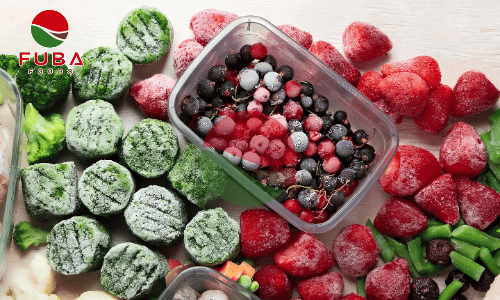
This makes Vietnam increasingly relevant for buyers who need frozen mango, passion fruit, avocado, dragon fruit, jackfruit, durian, eggplant, zucchini, okra, corn, sweet pepper, sweet potato, pumpkin, and other processed agricultural products.
How Can a Vietnam Frozen Produce Supplier Provide Year-Round Supply?
Year-round supply does not mean that every fruit or vegetable is harvested continuously throughout the year. Agricultural products remain seasonal. The ability to supply throughout the year comes from combining seasonal procurement, processing, frozen storage, production planning, and sourcing across different growing regions.
Regional Sourcing Helps Manage Seasonal Production
A strong sourcing network is the first layer of year-round supply. Different regions in Vietnam have different growing conditions and harvest periods, allowing processors to plan procurement around seasonal availability.
The supplier must also control the quality of incoming materials. Size, color, maturity, freshness, and raw-material condition can directly affect the final frozen product. Receiving large volumes of agricultural products is therefore not enough; the factory needs a structured inspection and sorting process before production.
This is particularly important for buyers purchasing to a fixed specification. If raw materials vary significantly from one production batch to another, the final product may also vary in texture, appearance, yield, or processing performance.
Frozen Processing Extends the Supply Window
Once suitable raw materials are available, rapid freezing allows the factory to preserve products for later distribution. IQF technology is especially useful because individual pieces are rapidly frozen rather than forming one large frozen block.
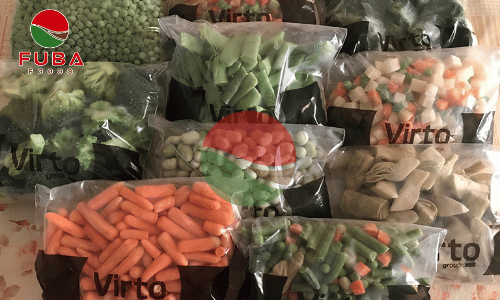
This makes the product easier to portion and handle while helping retain its natural color, texture, flavor, and nutritional characteristics. Depending on the product and application, manufacturers can also supply different formats such as slices, dices, chunks, halves, whole products, and puree.
For food manufacturers, this creates a practical advantage. They can purchase a standardized frozen ingredient according to production requirements instead of having to manage the preparation and seasonal availability of fresh agricultural materials themselves.
What Should Buyers Expect From a Reliable Frozen Produce Factory?
The difference between a trading company and a direct manufacturer becomes particularly important when the buyer requires regular volume, customized specifications, or long-term supply.
Production Capacity Must Match Commercial Demand
A supplier may be able to fulfill a sample order without having sufficient capacity for recurring commercial volumes. Buyers should therefore evaluate the factory’s actual freezing capacity, processing lines, storage capacity, and workforce.
A larger production system can also provide greater flexibility when several products need to be processed during overlapping harvest periods. At FUBA Foods, the factory in Ca Mau has an annual supply capacity of 20,000 MT and more than 600 workers. Its freezing infrastructure includes six IQF lines with a capacity of 500 kg per hour per line, three contact freezing lines, and two air-blast freezing systems.
For international buyers, this type of capacity matters because long-term supply depends on more than having raw materials available. The factory must have enough processing and freezing capacity to convert those materials into finished products within the required production window.
Cold Storage Supports Supply Continuity
Freezing is only one part of the process. After production, finished goods must remain under controlled conditions until they are loaded for export.
Cold storage capacity allows a processor to manage production more effectively around harvest periods. Products can be processed when suitable raw materials are available and then held under controlled frozen conditions for later shipment.
FUBA’s facility includes three cold-storage units with a capacity of 500 MT each, while finished products are maintained below -18°C.
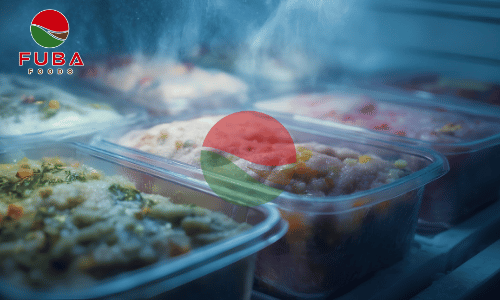
For buyers, this is particularly relevant when planning regular container shipments. A supplier with adequate frozen storage has more flexibility to coordinate production and shipment schedules rather than relying entirely on the immediate availability of fresh harvests.
Quality Control in Vietnam Frozen Produce Sourcing
Consistent supply is only valuable when product quality remains consistent. International buyers should therefore evaluate the quality-control system behind the production line rather than relying solely on product samples.
Incoming materials should be inspected before processing and sorted according to characteristics such as size, color, and quality. Products are then washed and prepared before undergoing the appropriate processing method. For frozen products, quality control continues through freezing, inspection, packaging, storage, and shipment.
Modern inspection equipment can provide another layer of control. FUBA’s processing facility includes five metal detection systems, three X-ray inspection systems, and an in-house microbiological laboratory. Its stated quality and food-safety systems include FDA, HACCP, ISO 22000, HALAL, and BRCGS requirements.
For buyers entering new markets, these systems are important because food-safety requirements can differ between destinations. A supplier should be able to provide the relevant product specifications and quality documentation needed for the buyer’s market and application.
Frozen Produce Formats for International Markets
A capable Vietnam frozen produce supplier should be able to provide more than one standard format. Different downstream applications require different levels of preparation.
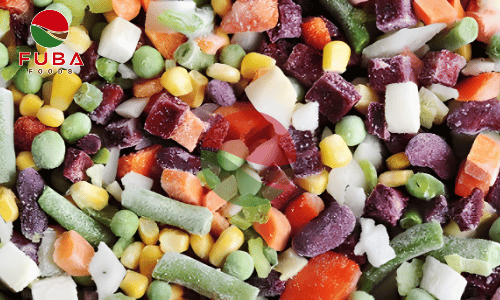
For example, food manufacturers may require diced fruit for desserts or beverage production, chunks for further processing, puree for sauces and beverages, or whole and cut vegetables for prepared meals. IQF slices and dices can be particularly useful for foodservice and industrial applications because individual pieces can be portioned directly during production.
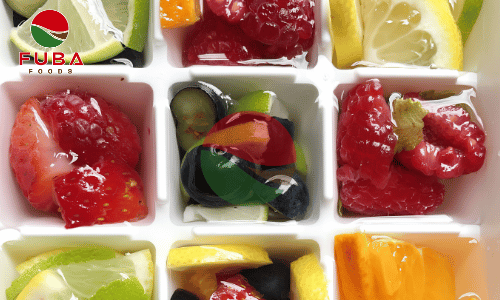
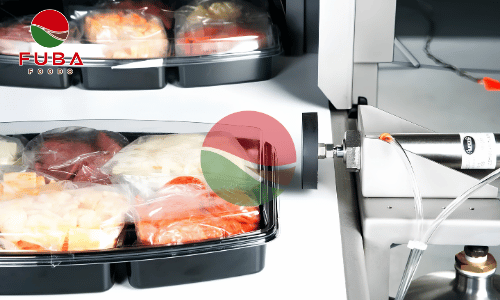
Value-added processing can further reduce preparation requirements. Depending on the product, processing may include blanching, grilling, steaming, frying, cutting, or other preparation methods. FUBA’s production equipment includes steel-belt steam cookers, a frying machine, a grilling machine, and vacuum packaging systems, supporting both frozen and value-added product formats.
This flexibility can be important for buyers developing private-label products or supplying food manufacturers with ingredients designed for a specific recipe or production process.
How to Evaluate a Vietnam Frozen Produce Supplier Before Ordering
Verify the Supplier’s Raw Material Network
Ask where the supplier sources each product and how it manages seasonal availability. A supplier should be able to explain its sourcing regions and how it maintains quality when harvest conditions change.
This is more meaningful than simply asking whether a product is “available year-round.” The real question is how the supplier converts seasonal agricultural availability into a stable commercial supply program.
Assess Factory and Processing Capabilities
Buyers should determine whether the supplier owns or directly operates the processing facility and whether its equipment matches the required product format.
For frozen produce, relevant capabilities may include IQF freezing, contact freezing, air-blast freezing, cutting, blanching, grilling, steaming, frying, packaging, and cold storage. Production flexibility is especially important when buyers need customized specifications rather than standard catalogue items.
A supplier with direct manufacturing capabilities can also provide clearer communication between procurement, production, quality control, and export teams. This can reduce the risk of specifications being misunderstood as orders move between intermediaries.
Check Storage, Packaging, and Cold-Chain Management
Frozen products depend on temperature control after processing. Buyers should confirm the required storage temperature, shelf life, packaging format, carton configuration, and cold-chain arrangements before finalizing an order.
Depending on the product, FUBA offers retail packs, foodservice packs, and bulk export packaging such as 10 kg cartons with PE inner liners. Listed frozen products are stored at ≤ -18°C, with shelf life of up to 24 months for the relevant product ranges.
Packaging should also be considered from a handling perspective. The right format can affect warehouse efficiency, transportation, portioning, and the amount of preparation required at the buyer’s facility.
Consider Export Experience and Long-Term Reliability
A supplier may produce good frozen products but still be difficult to work with internationally if its export processes are not well established. Buyers should evaluate how the supplier manages documentation, logistics coordination, product specifications, and communication throughout an international order.
Export experience is particularly relevant when supplying multiple markets with different requirements. FUBA identifies more than 30 export markets and has experience serving international importers, distributors, food manufacturers, and retail chains.
Why Direct Factory Sourcing Can Improve Cost Efficiency
The most competitive sourcing price is not necessarily the lowest initial quotation. For frozen produce, the total cost can also be affected by product yield, processing efficiency, packaging, rejected goods, storage, shipment reliability, and preparation requirements.
Direct factory sourcing can shorten the supply chain between agricultural raw materials and finished products. When sourcing, processing, quality control, packaging, and storage are managed within the same manufacturing system, buyers can have clearer visibility into how the final price is created.
Efficient production can also support competitive pricing at the source. The objective should be to achieve a stable cost for a consistent specification rather than reducing the unit price at the expense of quality or supply reliability.
For long-term buyers, consistency is often more valuable than a short-term price advantage. A supplier that can repeatedly deliver the required specification, volume, packaging, and quality standard helps reduce unexpected costs further down the supply chain.
Conclusion
A reliable Vietnam frozen produce supplier should be evaluated on much more than its product range or initial quotation. Year-round international supply depends on a coordinated system covering agricultural sourcing, seasonal planning, processing capacity, IQF technology, cold storage, quality control, packaging, and export logistics.
Vietnam’s diverse growing regions provide a strong foundation for this model, while capable processing factories can transform seasonal agricultural materials into standardized frozen ingredients available for international markets throughout the year.
For buyers looking for a long-term manufacturing partner, the strongest supplier is one that can demonstrate both agricultural sourcing strength and factory-level control. With the right combination of raw-material networks, modern processing lines, food-safety systems, storage capacity, and export experience, Vietnam can serve not only as a source of frozen produce, but as a reliable production base for international food supply chains.


