


Vietnam frozen food sourcing is becoming an increasingly practical option for international buyers looking for consistent frozen fruits, vegetables, and value-added agricultural ingredients. Vietnam offers a strong agricultural base, diverse growing regions, and processing facilities capable of turning seasonal produce into standardized frozen products for international markets.
However, finding a supplier is only the first step. The real challenge is building a supply partnership that can maintain the required product specification, quality, volume, and delivery schedule over multiple orders. Buyers also need confidence in raw-material sourcing, processing technology, food safety, cold-chain management, documentation, and cost efficiency.
For importers, distributors, food manufacturers, and foodservice businesses, the most reliable approach is to evaluate the supplier as a manufacturing partner rather than simply comparing quotations. This article explains the key factors to consider when sourcing frozen food from Vietnam and how to build a supply relationship that remains reliable as purchasing volumes grow.
Why Vietnam Frozen Food Sourcing Is Attractive to International Buyers
Vietnam has a diverse agricultural system covering several major production regions. The Mekong Delta is a major source of tropical fruits, while the Central Highlands and Southeast Vietnam contribute a wide range of fruits and vegetables.
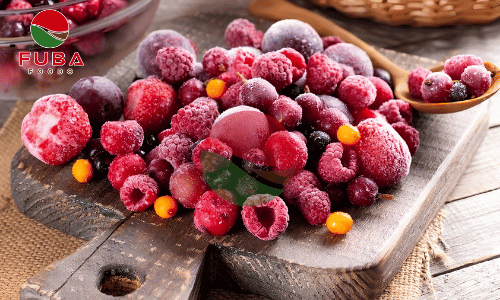
This diversity creates a strong foundation for frozen food production. Products such as mango, passion fruit, dragon fruit, avocado, jackfruit, and durian can be processed into frozen ingredients, while vegetables such as eggplant, zucchini, okra, corn, sweet pepper, sweet potato, and pumpkin can also be prepared for foodservice and industrial applications.
For international buyers, the value is not simply access to Vietnamese agricultural products. The greater advantage comes from combining agricultural sourcing with processing and freezing. This allows seasonal produce to become a standardized ingredient that can be stored and supplied according to commercial demand.
A successful sourcing strategy therefore depends on the supplier’s ability to connect the farm-level supply chain with factory-level production.
What Makes a Reliable Vietnam Frozen Food Sourcing Partnership?
A reliable partnership is built around consistency rather than a single successful shipment. Buyers should be able to receive the same agreed specification repeatedly, even when agricultural conditions, harvest periods, or order volumes change.
Consistent Raw Material Sourcing
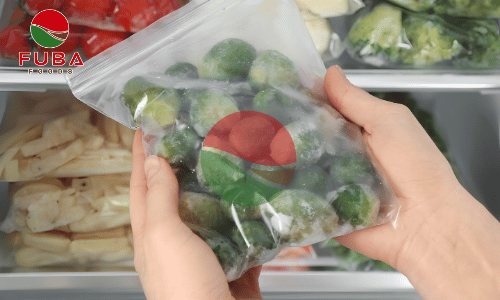
The quality of frozen food begins with the raw material. Differences in maturity, size, color, moisture, or growing conditions can affect the final product, particularly when the ingredient is used in further food processing.
A capable manufacturer should have established relationships with growers and agricultural regions and should inspect incoming materials before processing. Raw materials need to be sorted according to defined quality and product specifications rather than simply processed in the condition in which they arrive.
Regional sourcing can also help manufacturers manage seasonal fluctuations. Vietnam’s different growing areas provide access to a variety of agricultural products and harvest periods, giving processors more flexibility when planning annual production.
This is why buyers should ask not only “Where does this product come from?” but also “How does the supplier maintain the required raw-material standard when supply conditions change?”
Stable Processing and Freezing
Once raw materials enter the factory, processing consistency becomes equally important. Cutting, blanching, cooking, grilling, frying, and freezing can all affect the final characteristics of a product.
For frozen fruits and vegetables, IQF technology is particularly useful. Individually Quick Frozen processing rapidly freezes individual pieces, helping preserve natural color, texture, flavor, and nutritional characteristics while making the finished product easier to portion and handle.
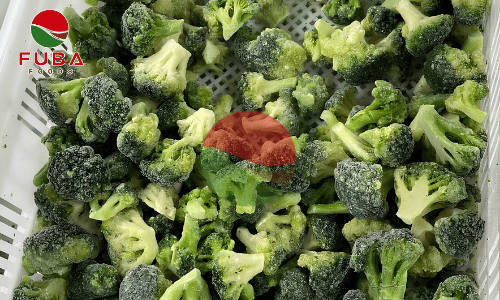
The processing method should also match the intended application. A food manufacturer may require uniform dices for prepared meals, chunks for further processing, puree for beverages or sauces, or whole and cut vegetables for foodservice. A supplier that can accommodate different formats is better positioned to support changing product requirements.
Evaluate the Factory Before Evaluating the Price
Price is an important part of Vietnam frozen food sourcing, but it should not be the first or only criterion. A low quotation has limited value if the supplier cannot maintain quality or fulfill recurring orders.
Production Capacity and Scalability
Buyers should assess whether the supplier has sufficient processing and freezing capacity for the expected purchasing volume. This becomes particularly important when moving from sample orders to regular container shipments.
FUBA Foods operates a frozen fruit and vegetable processing facility in Ca Mau with an annual supply capacity of 20,000 MT and more than 600 workers. Its production infrastructure includes six IQF freezing lines, each with a capacity of 500 kg per hour, together with three contact freezing lines and two air-blast freezing systems.
For a buyer, this type of infrastructure provides a more meaningful indication of supply capability than a product list alone. Adequate production capacity gives the factory room to manage larger orders, multiple product formats, and seasonal production peaks without relying entirely on external processing.
Storage Capacity and Cold-Chain Control
Frozen production does not end when the product leaves the freezing line. Finished products need controlled storage until shipment, and temperature stability must be maintained throughout the cold chain.
This is particularly important for long-distance international trade. A supplier should be able to explain its frozen storage conditions, packaging system, loading procedures, and logistics arrangements.
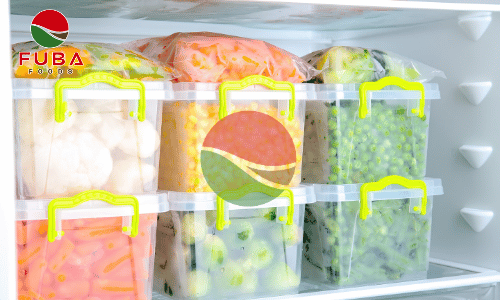
FUBA’s facility has three cold-storage units with a capacity of 500 MT each, while its frozen products are maintained at temperatures of ≤ -18°C.
For buyers, adequate storage capacity can also help the factory coordinate production around harvest periods. Products can be processed when raw materials are at suitable quality and then stored for scheduled shipment, rather than requiring production to occur immediately before every order.
Build Quality Requirements Into the Sourcing Process
Quality should not be treated as an inspection performed after production. It needs to be defined before the first commercial order.
Agree on Product Specifications Early
Before requesting a final quotation, buyers should establish the exact product specification. This may include variety, size, cut, maturity, color, processing method, glazing or moisture requirements where applicable, packaging, net weight, storage temperature, and shelf life.
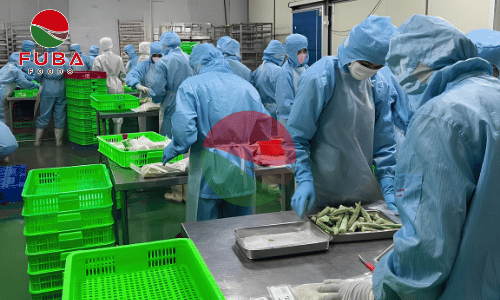
Samples should be evaluated against the intended application as well. For food manufacturers, performance after thawing or cooking can matter more than appearance in the frozen state.
Verify Food Safety and Quality Systems
International frozen food buyers should also review the manufacturer’s food-safety management system and relevant certifications for the target market.
A modern processing facility may use multiple control points, including incoming-material inspection, metal detection, X-ray inspection, microbiological testing, traceability, and controlled storage.
At its processing facility, FUBA has five metal detection systems, three X-ray inspection systems, and an in-house microbiological laboratory. Its listed quality and food-safety systems include HACCP, ISO 22000, HALAL, BRCGS, and FDA-related requirements.
Use Factory Capability to Improve Cost Efficiency
The most competitive frozen food sourcing strategy is not necessarily the one with the lowest unit price. Buyers should consider the total cost of receiving and using the ingredient.
Direct manufacturing can reduce unnecessary intermediary layers and create clearer communication between raw-material sourcing, processing, quality control, packaging, and export logistics.
Factory-level production can also improve cost efficiency through larger processing volumes and dedicated equipment. More importantly, consistent specifications can reduce hidden costs associated with rejected goods, inconsistent yields, additional preparation, or production interruptions.
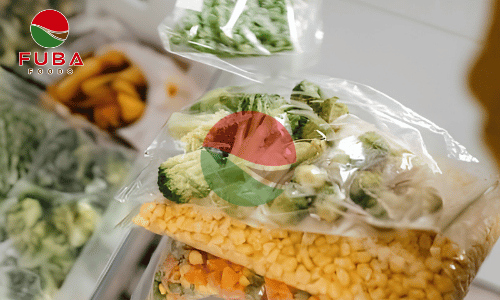
This is particularly relevant for food manufacturers. A frozen ingredient that arrives in the correct cut, size, packaging, and specification may require less preparation and generate less processing loss than a cheaper but inconsistent alternative.
The objective should therefore be reliable cost efficiency, not simply the lowest quoted price.
Consider Customization and Private Label Requirements
Long-term buyers often need products adapted to their own recipes, packaging, or market positioning. This makes customization an important part of supplier selection.
A factory should be able to discuss customized product specifications and packaging rather than offering only fixed products. Different processing capabilities can also allow the supplier to develop value-added products according to the buyer’s application.
FUBA provides OEM and private-label manufacturing alongside customized specifications, packaging formats, and its standard frozen fruit and vegetable range. Its production equipment includes steam cookers, frying and grilling equipment, and vacuum packaging systems, supporting a broader range of processed frozen products.
For a buyer, this flexibility can become increasingly valuable when moving from a standard product purchase toward a dedicated product line or private-label program.
How to Build a Long-Term Frozen Food Supply Partnership
The sourcing relationship should develop in stages. Initial samples should establish whether the product meets the required specification. Trial orders then test production consistency, packaging, documentation, logistics, and communication under real commercial conditions.
Once the product has been approved, both parties should maintain clearly documented specifications and agreed quality standards. Regular communication about forecasts, production schedules, harvest conditions, and shipment planning can help the factory prepare raw materials and production capacity more effectively.
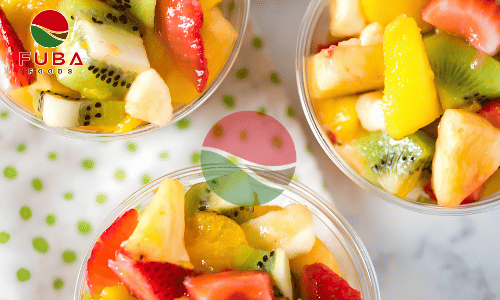
This is particularly important for seasonal agricultural products. Buyers who provide forecasts early can give the manufacturer more visibility when planning procurement and production. In return, the supplier should communicate potential supply constraints before they affect confirmed orders.
A long-term partnership works best when both sides treat supply planning as an ongoing process rather than renegotiating every shipment independently.
What International Buyers Should Check Before Choosing a Supplier
Before committing to a Vietnam frozen food supplier, buyers should look at the entire manufacturing system behind the product. The supplier should be able to demonstrate where its raw materials come from, how they are inspected, what processing technology is available, how finished goods are stored, and how quality is verified before shipment.
Production capacity should be assessed against the buyer’s current and expected future volume. Export experience, documentation, packaging capability, customization, and cold-chain management should also be considered.
Most importantly, buyers should distinguish between a supplier that can provide a product and a factory that can build a repeatable supply program around that product. The latter is much more valuable for businesses planning regular imports or long-term distribution.
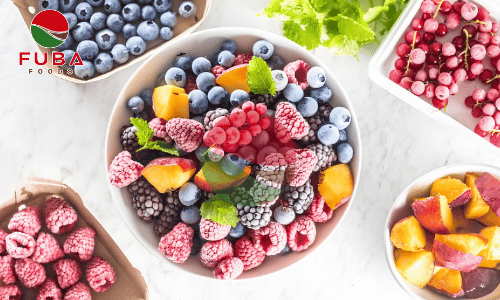
Conclusion
Vietnam frozen food sourcing can provide international buyers with access to a diverse agricultural base and increasingly capable frozen-food manufacturing infrastructure. But reliable sourcing depends on more than finding a competitive product or quotation.
The strongest partnerships are built around stable raw-material sourcing, controlled processing, adequate freezing and storage capacity, clear specifications, documented food-safety systems, reliable export operations, and transparent communication.
For buyers seeking a long-term supply partner, working directly with a capable Vietnamese factory can provide greater control over quality, production, customization, and cost efficiency. When these capabilities are combined with effective supply planning, Vietnam can become a dependable production base for frozen food supply chains serving international markets.


