

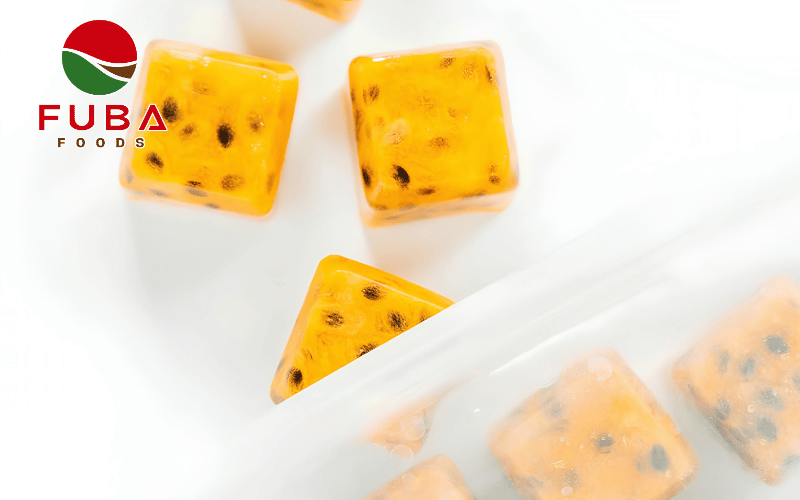
Passion fruit is valued in sauce and dessert applications for its distinctive tropical aroma, bright acidity, and naturally vibrant fruit character. However, when the ingredient is used in commercial production, the challenge is not simply finding passion fruit puree. The puree needs to deliver a smooth and consistent texture, balanced flavour, reliable fruit solids, and stable performance across batches without creating unnecessary processing adjustments.
Passion fruit puree for sauce is a practical fruit ingredient for manufacturers developing dessert sauces, fruit toppings, drizzles, fillings, and other products where a concentrated passion fruit character and smooth consistency are required. The right specification can make a significant difference to sauce texture, flavour balance, processing efficiency, and finished-product consistency.
This article explains the key factors to consider when selecting passion fruit puree for sauce and dessert production, from texture and flavour characteristics to processing controls, food safety, freezing, packaging, and supplier capability.
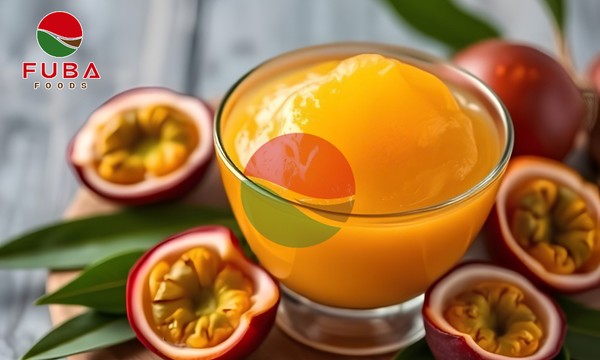
Why Passion Fruit Puree Works Well for Sauces and Desserts
Passion fruit has a naturally distinctive flavour profile that can add both aroma and acidity to formulated foods. In sauce applications, this character can help create a fruit-forward product without relying entirely on artificial flavouring to establish the identity of the finished sauce.
The puree format is particularly useful because the fruit has already been processed into a form that can be incorporated into a wider formulation. Instead of preparing fresh passion fruit at the production site, manufacturers can work with a standardized fruit ingredient that is easier to portion, store, and integrate into controlled production processes.
For dessert products, passion fruit puree can be used in fruit sauces, dessert toppings, yogurt preparations, mousse, cheesecake applications, ice cream formulations, bakery fillings, and plated dessert components. Its acidity can also provide contrast to sweeter ingredients such as cream, chocolate, condensed milk, or sugar-based formulations.
The key consideration is whether the puree specification matches the intended application. A sauce requiring a glossy, smooth finish may need different texture characteristics from a dessert preparation where a stronger fruit body is preferred.
What to Look for in Passion Fruit Puree for Sauce
Choosing the right puree requires more than comparing prices per kilogram. The ingredient specification can affect both the processing stage and the quality of the final sauce.
Smooth Texture and Consistent Fruit Solids
Texture is one of the first factors to evaluate when selecting passion fruit puree for sauce production. A sauce designed for drizzling, topping, filling, or coating generally needs a consistent texture that can move through the production process without unexpected separation or excessive variation.
Fruit solids should also be reasonably consistent from batch to batch. Variations in pulp concentration can change viscosity, flavour intensity, yield, and the amount of additional liquid or sweetener required during formulation.
For this reason, manufacturers should confirm the puree’s physical characteristics rather than relying only on a product name. Sample testing can help determine whether the puree performs as expected under the actual formulation and processing conditions.
Balanced Passion Fruit Flavour and Acidity
Passion fruit is naturally acidic, which is one of its defining characteristics. This can be beneficial in dessert sauces because it creates contrast against sweet formulations, but excessive variation in acidity can affect the balance of the finished product.
Flavour intensity should therefore be assessed alongside acidity. A puree with a strong fruit aroma may require a different formulation ratio from a more diluted ingredient. The objective is not necessarily to select the most concentrated puree available, but to choose a specification that provides predictable flavour contribution within the target recipe.
For commercial production, manufacturers should evaluate aroma, colour, acidity, fruit solids, and overall flavour together rather than treating any single parameter as the only quality indicator.

Sauce and Dessert Applications for Passion Fruit Puree
Passion fruit puree can fit into several product categories, but each application places slightly different demands on the ingredient.
Dessert Sauces and Fruit Toppings
Sauces and toppings are among the most direct applications. Passion fruit puree can form the fruit base of a dessert sauce used over cheesecake, panna cotta, ice cream, cakes, pancakes, or other sweet products.
Here, appearance and flow characteristics become particularly important. The sauce should maintain an attractive fruit colour and consistent texture while remaining easy to portion or dispense. If the finished product is intended to be commercially packaged, the interaction between puree, sugar, water, stabilizers, and other ingredients should also be tested during formulation.
Bakery Fillings and Dessert Formulations
In bakery and dessert manufacturing, passion fruit puree can contribute fruit flavour to fillings, creams, mousses, and layered products. The puree may be combined with dairy ingredients, chocolate, sugar-based systems, or other fruit ingredients depending on the formulation.
The processing requirement can therefore differ from a simple topping. Manufacturers should consider how the puree behaves after heating, mixing, cooling, or freezing, particularly when it becomes part of a multi-component finished product.
Dairy and Frozen Desserts
Passion fruit puree can also be incorporated into yogurt-based desserts, ice cream, sorbet, and other frozen formulations. In these applications, the fruit ingredient must perform consistently within a formulation that may undergo temperature changes and extended storage.
A stable supply specification becomes particularly important when the same recipe is produced repeatedly. Even relatively small differences in fruit solids or acidity can influence the balance of sweetness and tartness in the final product.
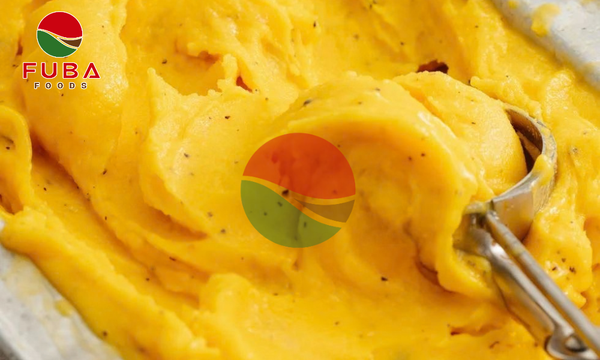
How Factory Processing Affects Passion Fruit Puree Quality
The quality of a fruit puree begins before the puree reaches the production line. Raw material maturity, sourcing, inspection, sorting, preparation, and processing conditions can all influence the consistency of the finished ingredient.
A controlled factory process typically starts with raw material sourcing and inspection before the fruit moves through cleaning, sorting, preparation, processing, and quality-control stages. Maintaining control across these steps reduces the dependence on individual batches of raw fruit and creates a more consistent manufacturing environment.
At FUBA, raw materials are sourced through a network covering agricultural regions in Vietnam and processed at its factory in Ca Mau. The production system includes raw material inspection, washing and cleaning, sorting and grading, preparation, freezing, metal detection, packing, cold storage, and export shipment. This integrated structure provides a practical foundation for maintaining control from incoming raw material through finished product handling.
For fruit ingredients used in sauces and desserts, this factory-level control matters because consistency is ultimately determined by the entire processing chain, not by the puree stage alone.
Freezing and Cold-Chain Control
Frozen fruit ingredients require appropriate temperature management after processing to maintain their intended quality during storage and transportation. For commercial applications, maintaining the cold chain is particularly important when ingredients may be stored for extended periods before entering production.
IQF and other controlled freezing technologies can help preserve the physical and sensory characteristics of processed fruit while making frozen ingredients easier to handle and store. The appropriate freezing method depends on the product format and processing requirements, but temperature control should remain consistent from production through storage and shipment.
Commercial freezing facilities may operate multiple freezing systems, including IQF lines, contact-freezing systems, and air-blast freezing systems. Sufficient cold-storage capacity is also important for handling finished frozen products, with storage maintained at -18°C or below to help preserve product quality.
For customers purchasing fruit ingredients in commercial quantities, this infrastructure is relevant because supply reliability depends not only on production capacity but also on the ability to maintain product quality after processing. A well-managed freezing and cold-chain system helps keep the ingredient in suitable condition until it reaches the customer’s facility.

Food Safety and Quality Control in Fruit Puree Production
A puree used in commercial food production needs to meet more than sensory expectations. Food safety, traceability, foreign-material control, and process hygiene are all important when the ingredient will become part of another manufacturer’s finished product.
Quality control should cover the incoming raw material as well as the processing environment and finished product. Inspection and sorting help remove unsuitable raw materials, while appropriate detection and laboratory controls provide additional layers of verification.
FUBA’s production system includes metal detectors, X-ray inspection systems, and an in-house microbiological laboratory. The company’s food-safety and quality-management framework includes HACCP, ISO 22000, HALAL, BRCGS, and traceability systems.
These controls are particularly relevant when sourcing ingredients for products that will be distributed across multiple markets, where documentation, traceability, and consistent production standards can become part of the supplier qualification process.
Choosing a Passion Fruit Puree Supplier for Sauce Production
Supplier selection should ultimately be based on whether the producer can consistently meet the technical and commercial requirements of the application.
Confirm the Product Specification
First, confirm the product specification. Important points may include texture, fruit solids, colour, flavour profile, acidity, packaging format, storage conditions, and shelf-life requirements. If the supplier offers different specifications, request samples that correspond as closely as possible to the intended formulation.
Examine Processing and Quality-Control Capability
Second, examine processing and quality-control capability. A supplier with direct manufacturing infrastructure can provide greater visibility into raw material handling, processing, freezing, inspection, and packing than a source that simply purchases finished goods for resale.
Consider Production Capacity and Supply Continuity
Third, consider production capacity and supply continuity. A sauce manufacturer may initially require a relatively small trial quantity but later need substantially larger volumes after commercialization. Supplier capability should therefore be assessed against both current requirements and potential production scale.
FUBA has an annual supply capacity of 20,000 MT, more than 600 workers, and over 15 years of experience in frozen fruit and vegetable processing and export. Its export network extends to more than 30 countries, while OEM and private-label production allows specifications and packaging to be adapted to customer and market requirements.
Evaluate Complete Commercial Support
Finally, evaluate whether the supplier can support the complete commercial process, including packaging, cold storage, export handling, documentation, and shipment coordination. These factors can have a direct effect on the total sourcing process even when the ingredient itself meets the required specification.

What to Confirm Before Ordering Passion Fruit Puree
Before placing a commercial order, manufacturers should confirm the technical specification against the actual sauce or dessert formulation. A sample trial is often more useful than evaluating the puree solely from a specification sheet because it reveals how the ingredient behaves during mixing, heating, cooling, filling, or storage.
It is also useful to clarify minimum order quantities, packaging configuration, storage requirements, lead time, production capacity, and customization options. If the ingredient will be used across multiple production sites or exported into different markets, documentation and traceability requirements should be confirmed at the beginning rather than after production has started.
For recurring supply, consistency between batches becomes especially important. The supplier should be able to explain how raw materials are inspected, how processing is controlled, and how finished products are identified and managed through storage and shipment.
Conclusion
Selecting passion fruit puree for sauce production is ultimately a matter of matching the fruit ingredient to the technical requirements of the finished product. Smooth texture, consistent fruit solids, balanced acidity, flavour intensity, processing performance, food safety, and cold-chain control all influence whether the puree can perform reliably in commercial sauce and dessert applications.
A capable manufacturing partner should therefore offer more than a fruit ingredient. Controlled sourcing, processing infrastructure, quality systems, freezing capacity, storage, packaging, and supply scalability all contribute to a more dependable ingredient supply.
For manufacturers developing passion fruit sauces, dessert toppings, bakery fillings, dairy desserts, or frozen products, testing the puree in the actual formulation and verifying the supplier’s production capability are practical steps toward achieving consistent finished-product quality.


