

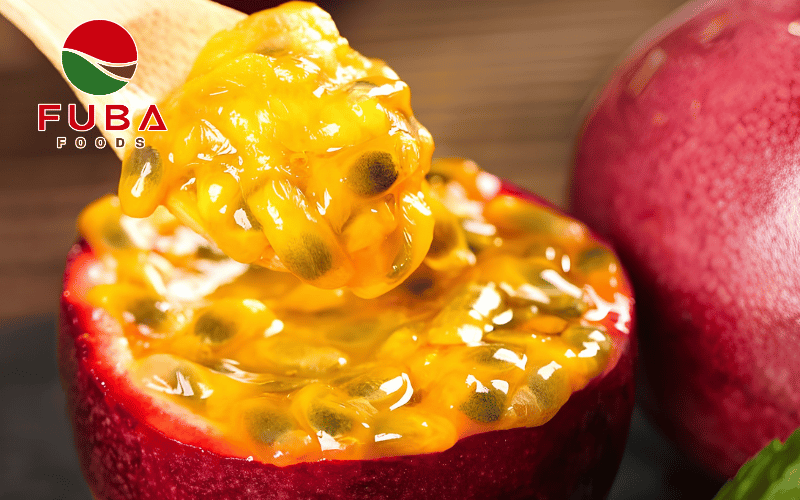
Frozen passion fruit is becoming increasingly popular in the global food manufacturing industry due to its nutritional value, vibrant tropical flavor, and industrial versatility. From beverages and dairy products to desserts and functional foods, frozen passion fruit offers numerous health benefits and versatile applications across the food industry.
Frozen passion fruit benefits include high Vitamin C content, antioxidants, dietary fiber, and stable year-round availability. Thanks to IQF (Individual Quick Freezing) technology, frozen passion fruit can retain much of its natural nutrition, flavor, aroma, and texture, making it an ideal ingredient for beverages, desserts, dairy products, and industrial food manufacturing.
As interest in frozen fruit products continues to grow, understanding the benefits of frozen passion fruit and the factors that influence its quality has become increasingly important. Thanks to modern freezing technologies, properly processed frozen passion fruit can retain much of the quality and nutritional value of fresh fruit. A better understanding of these benefits can help consumers and businesses make more informed choices when selecting high-quality frozen passion fruit products.

What Is Frozen Passion Fruit?
Frozen passion fruit is a tropical fruit product processed and preserved under low temperatures, commonly using IQF (Individual Quick Freezing) technology. Unlike fresh passion fruit, frozen products provide longer shelf life, more stable transportation conditions, and consistent industrial processing performance. Furthermore, frozen passion fruit provides several important advantages for manufacturers and distributors.
Among the various products available on the market, frozen passion fruit products from FUBA are designed to provide consistent quality and year-round availability for different food applications.
Nutritional Benefits Of Frozen Passion Fruit
Frozen passion fruit is highly valued not only for its tropical flavor but also for its nutrient-rich profile, as its combination of vitamins, antioxidants, minerals, and dietary fiber makes it an attractive ingredient for health-focused food products.
High Vitamin C Content for Immune and Skin Health
One of the most recognized frozen passion fruit benefits is its naturally high Vitamin C content, which is commonly associated with immune system support, collagen production, skin health maintenance, and cellular antioxidant protection; according to nutritional data, passion fruit contains approximately 30mg of Vitamin C per 100g depending on fruit variety and maturity, and research also suggests that Vitamin C contributes to protecting cells against oxidative stress and supports overall wellness, making frozen passion fruit particularly attractive for functional beverages and healthy snack products.

Rich in Natural Antioxidants
In addition to its vitamin content, passion fruit naturally contains various bioactive compounds, including polyphenols, carotenoids, and flavonoids, which have been widely studied for their antioxidant properties and their potential role in reducing oxidative stress. Research published in the Journal of Food Science and Technology has shown that both yellow and purple passion fruit varieties contain significant phenolic compounds associated with strong antioxidant capacity.
Thanks to this antioxidant profile, frozen passion fruit has become an increasingly popular ingredient in functional beverages, wellness products, nutritional supplements, and health-oriented food formulations. For manufacturers targeting health-conscious consumers, antioxidant-rich tropical ingredients offer strong market appeal and support the growing demand for functional food products.
Dietary Fiber Supports Digestive Health
Another notable frozen passion fruit benefit is its dietary fiber content, particularly soluble fiber, which is commonly associated with supporting digestive function, promoting gut health, increasing satiety, and helping slow sugar absorption. Compared with many other tropical fruits, passion fruit offers relatively high fiber density while maintaining its distinctive flavor profile, making it a valuable ingredient for nutritious food and beverage applications.
Naturally Low Fat And Cholesterol-Free
Frozen passion fruit aligns well with modern clean-label food trends thanks to its naturally low fat content and cholesterol-free profile. In addition, passion fruit is plant-based and gluten-free, making it suitable for a wide range of health-oriented products and dietary preferences. These characteristics enable manufacturers to position their products within premium wellness and clean-label categories.

Essential Minerals For Functional Foods
Frozen passion fruit contains several essential minerals that contribute to its overall nutritional value. Potassium supports normal heart and muscle function, magnesium plays a role in energy metabolism, iron is important for oxygen transportation, and phosphorus contributes to maintaining healthy bones. Together, these minerals enhance the appeal of passion fruit as a nutrient-rich tropical ingredient.
Thanks to its diverse mineral profile, frozen passion fruit is increasingly incorporated into sports nutrition products, functional smoothies, nutrient-enriched desserts, and frozen tropical fruit blends. Its nutritional versatility makes it an attractive option for manufacturers seeking ingredients that align with growing consumer demand for functional and value-added food products.
Why Frozen Passion Fruit Is Becoming Increasingly Popular
In recent years, frozen passion fruit has gained increasing popularity among consumers and food manufacturers worldwide. Growing demand for convenient, nutritious, and sustainably sourced ingredients, combined with advances in freezing technology, has contributed to the expansion of frozen fruit products across global markets. In addition to its nutritional benefits, frozen passion fruit offers several practical and economic advantages that make it an attractive option for both households and industrial food applications.
Preserves Much of the Nutritional Value of Fresh Passion Fruit
Modern freezing technology allows frozen passion fruit to retain much of the nutritional value, flavor, and color found in fresh fruit. This enables consumers and food manufacturers to enjoy the benefits of passion fruit throughout the year without relying on seasonal availability. As a result, frozen passion fruit has become a reliable ingredient for products that require consistent quality and nutritional characteristics.

Convenience and Time-Saving Benefits
One of the key reasons behind the rising popularity of frozen passion fruit is its convenience. Ready-to-use formats reduce preparation time and simplify food production processes, making frozen passion fruit suitable for smoothies, beverages, desserts, and various food applications. For both households and manufacturers, the ability to use pre-processed fruit helps improve efficiency and save valuable time.
Cost Efficiency and Year-Round Availability
Frozen passion fruit offers economic advantages by providing stable supply and reducing the impact of seasonal fluctuations. Businesses can better manage inventory and production costs, while consumers benefit from access to tropical fruit products throughout the year. This cost efficiency makes frozen passion fruit an attractive option across the food and beverage industry.
Reduces Food Waste
Compared with fresh fruit, frozen passion fruit has a significantly longer shelf life, helping minimize spoilage during storage and transportation. Consumers can use only the amount needed, while manufacturers can optimize raw material utilization and reduce product losses. This contributes to greater efficiency throughout the supply chain.
Supports Sustainability and Environmental Responsibility
Reducing food waste also contributes to more sustainable food systems and lower environmental impact. Improved utilization of raw materials helps businesses optimize resources and support sustainability initiatives, while consumers increasingly appreciate products that align with environmentally responsible lifestyles. These factors have further strengthened the market appeal of frozen passion fruit in recent years.

Does Frozen Passion Fruit Lose Nutritional Value?
A common question among consumers is whether freezing reduces the nutritional value of passion fruit. In reality, nutrient retention depends largely on freezing methods and storage conditions.
Several food preservation studies have also suggested that properly frozen fruits can retain nutrients effectively, sometimes offering nutritional quality comparable to fresh produce that has undergone extended transportation and storage. As a result, frozen passion fruit can maintain much of the nutritional value found in fresh passion fruit when processed and stored under appropriate conditions.
How IQF Technology Helps Preserve Nutrients in Fresh Fruit
Individual Quick Freezing (IQF) technology is widely used to help maintain the quality and nutritional value of fresh fruit. By rapidly freezing individual fruit pieces at very low temperatures, IQF minimizes cellular damage and slows down the natural degradation of nutrients. This process helps preserve important characteristics such as flavor, color, texture, aroma, and many bioactive compounds found in fresh passion fruit.
As a result, IQF technology enables frozen passion fruit to maintain much of the original nutritional quality of fresh fruit while providing longer shelf life and year-round availability.
For those interested in learning more about the freezing process and its practical applications, FUBA IQF offers additional insights into how modern freezing technology helps preserve the quality of frozen fruit products.

Why Quality Control and Cold Chain Management Matter
In addition to freezing technology, product quality also depends on proper processing practices and effective cold-chain management. Hygienic production systems, temperature-controlled storage, and regular quality inspections help maintain the consistency of frozen passion fruit throughout transportation and distribution. These measures are important for preserving product characteristics such as flavor, color, texture, and overall quality.
Careful selection of raw materials and standardized processing conditions also contribute to consistency in factors such as fruit maturity, acidity balance, color uniformity, and soluble solids content (Brix level). Together, these practices help ensure that frozen passion fruit delivers reliable quality for a wide range of food and beverage applications.
Proper preservation and storage are also essential. Frozen passion fruit should be stored at a stable temperature of -18°C or lower, kept in airtight, moisture-proof packaging, and protected from repeated thawing and refreezing. Maintaining a consistent cold chain and avoiding temperature fluctuations help prevent loss of structure, nutrient degradation, and freezer burn. When storage conditions are not controlled properly, the fruit can become dry, develop ice crystals, and lose its natural taste and quality.
Frozen Passion Fruit Applications in Food Manufacturing
Due to its vibrant tropical flavor, balanced acidity, and nutritional profile, frozen passion fruit has become a versatile ingredient across various segments of the food industry. Its year-round availability and compatibility with different formulations make it suitable for a wide range of products, from beverages and dairy items to desserts and functional foods.
As consumer demand for natural and fruit-based ingredients continues to grow, frozen passion fruit is increasingly being incorporated into innovative food applications worldwide.

Beverage Manufacturing
Thanks to its distinctive tropical aroma and balanced acidity, frozen passion fruit is widely used in beverage manufacturing. It serves as a versatile ingredient in juice concentrates, smoothies, bubble tea, functional beverages, and cocktail bases. Its naturally vibrant flavor profile allows beverage brands to create premium products while reducing the need for excessive artificial flavoring.
Bakery and Dessert Production
Frozen passion fruit is also popular in bakery and dessert applications, where it provides both refreshing aroma and acidity balance. Its bright tropical notes complement rich and sweet ingredients, making it suitable for products such as cheesecakes, ice cream, mousse, pastry fillings, and frozen desserts. This versatility enables manufacturers to create products with a more distinctive and balanced flavor profile.
Dairy and Yogurt Products
The combination of tropical aroma and pleasant acidity makes frozen passion fruit an excellent ingredient for dairy innovation. It is commonly incorporated into yogurt toppings, drinkable yogurt, frozen yogurt, and dairy smoothies. As consumer interest in exotic and tropical flavors continues to grow worldwide, frozen passion fruit remains a valuable ingredient for developing new dairy products with strong market appeal.

Sauces, Confectionery, and Functional Food Products
Beyond beverages and dairy applications, frozen passion fruit is increasingly used in sauces, jams, confectionery products, nutritional supplements, and functional food formulations. Its natural acidity, attractive color, and tropical flavor make it suitable for a wide range of value-added products. As demand for clean-label and fruit-based ingredients continues to rise, frozen passion fruit has become an important component in product innovation across the global food industry.
How to Choose High-Quality Frozen Passion Fruit
As global demand for frozen tropical fruits continues to grow, selecting high-quality frozen passion fruit has become increasingly important for manufacturers, distributors, and food processors. Product quality, supplier reliability, and proper handling practices all play essential roles in ensuring consistent performance, food safety, and customer satisfaction. Understanding these factors can help buyers make more informed decisions and maintain long-term supply stability.
Key Indicators of Product Quality
When selecting frozen passion fruit, buyers should pay close attention to its color, texture, and flavor. High-quality products usually have a bright, natural yellow without dullness, browning, or unusual discoloration. The texture should be smooth and consistent, not watery, overly icy, or clumped together. In terms of flavor, good frozen passion fruit should retain a strong tropical aroma and a naturally sweet-tart taste without any sour, stale, or off notes. Small ice crystals are normal, but too much crystallization can indicate poor freezing or storage conditions and may affect the fruit’s texture and taste. These characteristics show that the fruit has been properly processed and stored, helping preserve both its sensory quality and nutritional value.

Why Supplier Reliability Matters
In addition to product characteristics, supplier reliability plays an important role in ensuring a stable supply chain. Dependable suppliers can help reduce risks associated with product inconsistency, delayed shipments, cold-chain disruptions, and fluctuations in raw material availability. Factors such as export experience, food safety certifications, transparent quality control procedures, and traceable sourcing are often considered important indicators of long-term reliability.
If you are interested in high-quality frozen passion fruit products, FUBA’s IQF Frozen Passion Fruit may be a suitable option worth considering.
Conclusion
As demand for nutritious, convenient, and clean-label ingredients continues to grow, frozen passion fruit has become an increasingly valuable component in modern food applications. Its rich content of Vitamin C, antioxidants, dietary fiber, and essential minerals, combined with a long shelf life and year-round availability, makes it a versatile ingredient for beverages, dairy products, desserts, and functional foods.
With advanced freezing technologies such as IQF and proper cold-chain management, frozen passion fruit can retain much of the nutritional value and sensory qualities of fresh fruit. These advantages, together with its wide range of industrial applications and growing consumer appeal, have contributed to the increasing popularity of frozen passion fruit in global food markets.


