


For food manufacturers, choosing IQF sweet corn is about more than finding a competitive price. Kernel consistency, product specifications, food safety, processing performance, and supply reliability can all influence how efficiently the ingredient performs in commercial production.
IQF sweet corn provides a practical format for manufacturers that need individual kernels that are easy to portion, handle, and incorporate into different recipes. Individual Quick Freezing rapidly freezes the kernels separately, helping maintain their characteristic color, sweetness, flavor, and texture while making the ingredient more convenient for industrial processing.
For buyers, however, the freezing method is only one part of the equation. Raw-material sourcing, processing controls, packaging, cold storage, traceability, and export capability can all affect the consistency and total reliability of the ingredient. This article examines the key quality factors of IQF sweet corn, its applications in food manufacturing, and what buyers should consider when evaluating a supplier for regular commercial supply.
What Is IQF Sweet Corn?
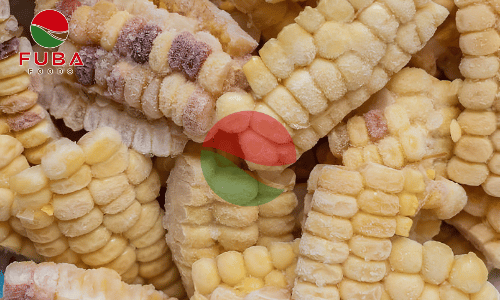
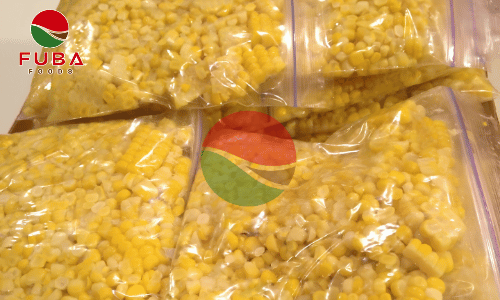
IQF sweet corn consists of individual corn kernels that are rapidly frozen separately rather than being frozen together into a solid block.
This format provides a practical advantage for food manufacturers: only the quantity required for a production batch can be taken from the package while the remaining kernels stay frozen for later use.
Compared with block-frozen ingredients, individually frozen kernels can be easier to weigh, portion, blend, and distribute throughout a production line. This makes IQF sweet corn particularly suitable for products where ingredient ratios and batch consistency need to be closely controlled.
The format is commonly relevant to ready meals, soups, salads, vegetable mixes, pizza toppings, foodservice preparations, and other processed food applications.
Why IQF Freezing Matters in Food Production
The main advantage of IQF technology is not simply that it freezes the product quickly. It creates a frozen ingredient that remains separated and practical to use after processing.
For manufacturers, this can:
- Portion control — individual kernels can be measured according to the formulation.
- Handling efficiency — there is no need to break apart a large frozen block.
- Production flexibility — manufacturers can use different quantities across different recipes or production runs.
- Product presentation — separated kernels can provide a more consistent appearance in finished foods.
- Processing consistency — uniform ingredients can help reduce variation between production batches.
Rapid freezing can also help preserve the characteristic properties of sweet corn when the process is properly controlled. However, the final result depends on both the quality of the raw material and the processing conditions used before and during freezing.
Key Quality Factors When Buying IQF Sweet Corn
For procurement, quality should be evaluated according to the requirements of the actual manufacturing application rather than visual appearance alone.
Kernel Color, Size and Uniformity
Color is particularly important when sweet corn remains visible in the finished product. Bright yellow kernels can contribute to the visual appeal of ready meals, salads, pizza toppings, soups, and mixed vegetables.
Kernel size and uniformity also have a functional role. More consistent pieces can support predictable portioning, cooking performance, and product presentation.
Manufacturers should therefore confirm the expected kernel size, color range, tolerance, and appearance as part of the product specification before establishing a regular supply program.
Sweetness, Flavor and Texture
Sweet corn is valued for its naturally sweet flavor and tender texture. These characteristics can influence the sensory quality of the finished product, particularly when the corn is used as a recognizable ingredient.
Freezing should preserve these characteristics rather than simply extend the product’s storage life. Buyers should therefore assess the product in its intended application and consider how it performs after cooking, reheating, blending, or further processing.
Ingredient Composition
Buyers should also verify what is included in the product. Depending on the application, relevant specifications may include corn content, use of preservatives or additives, moisture, processing method, and other technical parameters.
Clear ingredient specifications help manufacturers maintain their own formulation standards and reduce unexpected variation between suppliers or production batches.
Processing and Food Safety Control
Food safety begins before the product enters the freezing stage. A controlled production process should cover raw-material inspection, cleaning, sorting, preparation, freezing, foreign-material detection, packing, storage, and shipment.
This integrated approach matters because freezing cannot correct problems originating from unsuitable raw materials or inadequate processing.
FUBA’s production system includes raw-material inspection, washing and cleaning, sorting and grading, preparation according to specifications, IQF freezing, metal detection, packaging, cold storage, and export logistics. Its quality-assurance framework also includes internationally recognized food-safety systems and inspection procedures.
For international buyers, these controls provide a more complete basis for supplier qualification than evaluating the frozen product by appearance alone.
Applications of IQF Sweet Corn in Food Manufacturing
IQF sweet corn is versatile enough to function as a visible ingredient, topping, filling component, or part of a vegetable blend.
Ready Meals and Frozen Foods
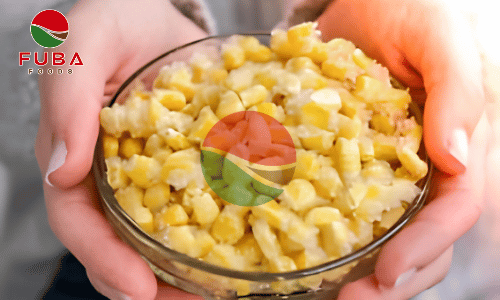
IQF kernels can be combined with rice, meat, vegetables, sauces, and other ingredients in ready meals and frozen food products.
Because the kernels remain separate, manufacturers can portion them according to a defined recipe without having to thaw or separate a frozen block. This can simplify ingredient handling on high-volume production lines.
Soups, Salads and Vegetable Mixes
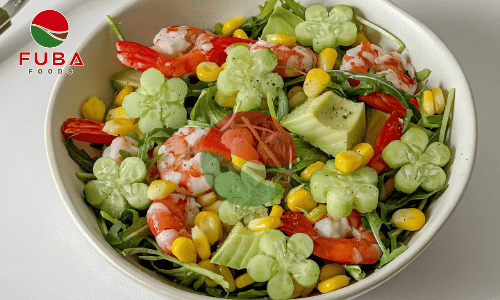
Sweet corn is commonly used in soups, salads, and mixed vegetable products where both color and texture contribute to the finished product.
For vegetable-mix manufacturers, consistency in kernel size and color is especially useful because the corn needs to maintain a balanced appearance alongside other ingredients such as peas, carrots, beans, or mixed vegetables.
Pizza Toppings and Prepared Foods
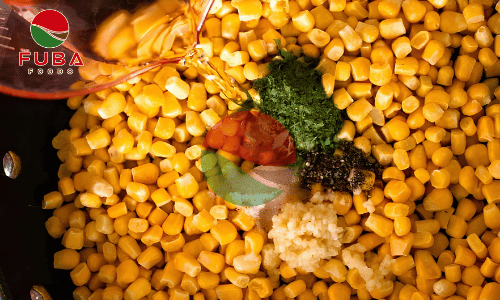
The natural sweetness and bright color of sweet corn can complement savory ingredients in pizza and other prepared foods.
IQF kernels allow manufacturers to control the amount distributed across each product, which can support more consistent portioning and ingredient cost management.
Food Processing and Custom Formulations
IQF sweet corn can also be used as an ingredient in sauces, fillings, vegetable blends, prepared meals, and customized food formulations.
In these applications, technical specifications become particularly important. Buyers should communicate requirements such as kernel size, packaging format, target weight, storage conditions, and intended use before confirming a supply program.
Packaging, Storage and Supply Reliability
Product quality does not end when the corn leaves the processing line. Packaging and cold-chain management are essential for maintaining frozen product quality during storage and international transportation.
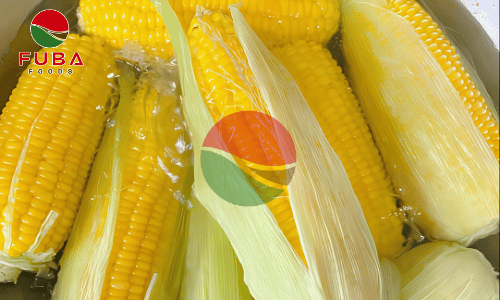
Packaging should provide sufficient protection during handling while also matching the buyer’s storage, distribution, and order-volume requirements. Bulk buyers may prefer larger cartons with food-grade inner liners, while foodservice or retail operations may require different pack sizes.
Frozen sweet corn should generally be stored at ≤ -18°C to maintain its frozen condition and support the stated shelf life. Temperature control should continue throughout loading, transportation, receiving, and warehouse storage.
For international procurement, buyers should therefore evaluate packaging and cold-chain capability alongside the product specification itself.
Why Direct Manufacturing Capability Matters
When purchasing frozen ingredients at commercial scale, direct access to the manufacturer can provide greater visibility into raw-material sourcing, processing, quality control, packaging, and production scheduling.
This can be particularly useful when buyers require recurring orders or customized specifications. Instead of coordinating with multiple intermediaries, manufacturers can communicate technical requirements and production needs more directly with the processing facility.
FUBA operates an integrated frozen food processing facility in Vietnam with multiple IQF and freezing systems, inspection equipment, cold-storage capacity, and export infrastructure. Its reported production capacity and international market experience provide the scale needed to support commercial frozen vegetable supply.
For buyers, the important consideration is not simply the size of a factory, but whether its infrastructure can support consistent specifications, repeat production, and reliable shipment execution.
How to Evaluate an IQF Sweet Corn Supplier
Before approving a supplier for regular production, buyers should evaluate several areas beyond the initial quotation.
Raw Material Supply
Check whether the supplier has reliable access to suitable sweet corn and defined standards for maturity, quality, and incoming inspection.
Product Specifications
Confirm kernel size, color, ingredient composition, texture, packaging weight, storage conditions, and other parameters relevant to the final application.
Processing and IQF Capability
Evaluate the freezing technology, production capacity, inspection systems, and ability to maintain consistent specifications between batches.
Food Safety and Documentation
Review applicable certifications, quality documentation, traceability procedures, testing requirements, and export documents for the destination market.
Cold Chain and Logistics
Confirm storage temperature, cold-storage capacity, packaging protection, transportation procedures, and shipment planning.
Supply Continuity
Consider whether the supplier can support recurring orders and maintain consistent quality as purchasing volumes increase.
For manufacturers, requesting samples and testing them under the actual intended production conditions can also provide a more meaningful assessment than visual inspection alone. Texture after cooking, flavor, appearance, portioning performance, and batch consistency should all be considered before final supplier approval.
Conclusion
IQF sweet corn combines the natural characteristics of sweet corn with a frozen format designed for efficient industrial handling. Individual kernels are easier to portion, blend, and incorporate into commercial recipes, making the format suitable for ready meals, soups, salads, pizza toppings, vegetable mixes, foodservice, and other food-processing applications.
However, reliable IQF sweet corn supply depends on more than freezing technology. Raw-material quality, processing controls, food safety, product specifications, packaging, cold-chain management, and supply capacity all contribute to the ingredient’s performance after it reaches the buyer.
For global food manufacturers, the most suitable supplier is therefore one that can provide consistent specifications and dependable supply while meeting the technical, food-safety, and logistical requirements of the intended market.


