

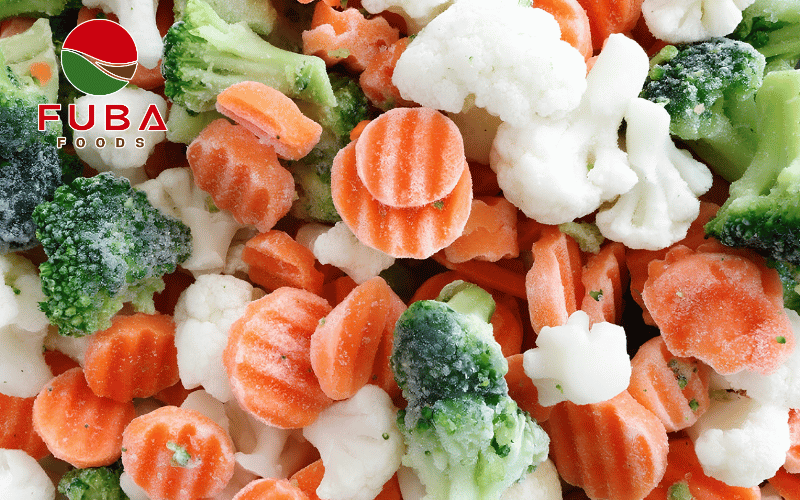
For global food manufacturers, distributors, and importers, sourcing frozen vegetables is not simply about finding a supplier that offers a competitive price. The real challenge is securing consistent cut sizes, stable color and texture, reliable food-safety controls, predictable supply, and specifications that remain unchanged across repeated shipments. Choosing the right supplier can therefore directly affect production efficiency, product consistency, and long-term procurement costs.
A reliable IQF frozen vegetables supplier from Vietnam should provide more than individually frozen vegetables at a competitive quotation. Global buyers need a supplier with stable agricultural sourcing, controlled preparation, modern IQF freezing technology, consistent product specifications, food-safety systems, suitable packaging, cold-storage capacity, and proven export capability to support long-term commercial supply.
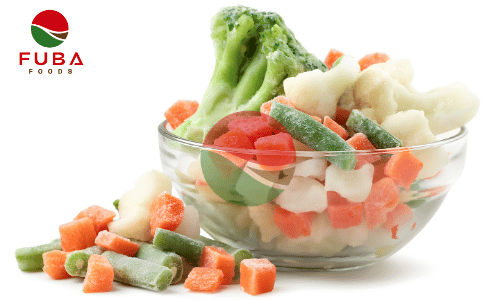
This article examines why Vietnam is a suitable sourcing destination for IQF frozen vegetables, how the products are processed, which quality and technical factors buyers should evaluate, and what to consider when selecting a reliable supplier for global food manufacturing.
Why Choose an IQF Frozen Vegetable Supplier from Vietnam?
Vietnam offers several advantages for international buyers sourcing frozen vegetables. Its diverse agricultural regions provide access to a broad range of raw materials, while the country’s food-processing industry has developed infrastructure for sorting, preparation, freezing, packaging, cold storage, and export.
For food manufacturers, the main advantage is the ability to transform agricultural products into standardized frozen ingredients. Instead of depending entirely on fresh vegetable availability at the time of production, manufacturers can source prepared frozen ingredients that are ready to portion and incorporate into established recipes.
This can reduce preparation requirements at the buyer’s facility while supporting more predictable production planning. However, these advantages depend heavily on the supplier’s ability to maintain consistent specifications and cold-chain conditions from raw-material sourcing through international delivery.
Vietnam’s Agricultural Supply Base Supports Stable Sourcing
A reliable raw-material network is fundamental to the performance of an IQF frozen vegetable supplier. If vegetables vary significantly in quality or availability, the finished frozen product may also vary in color, texture, size, and yield.
Vietnam’s diverse agricultural regions provide access to different crops and growing conditions. Established relationships with farming regions and growers can also help processors coordinate raw-material availability with production requirements.
FUBA Foods works with farming regions and growers across Vietnam to support raw-material sourcing for its frozen fruit and vegetable production.
For buyers, this is important because supply continuity directly affects production planning. A supplier with an established sourcing network is better positioned to support recurring purchase schedules than one dependent primarily on short-term spot-market availability.
What Makes IQF Frozen Vegetables Suitable for Food Manufacturers?
IQF, or Individually Quick Frozen, technology rapidly freezes individual vegetable pieces instead of creating one solid frozen block. This format is particularly valuable for manufacturers that require convenient portioning, controlled ingredient distribution, and efficient handling during production.
The value of IQF processing is not simply that the vegetables are frozen. The objective is to achieve rapid and controlled freezing while helping preserve characteristics important to the finished product, including color, texture, shape, flavor, and nutritional characteristics.
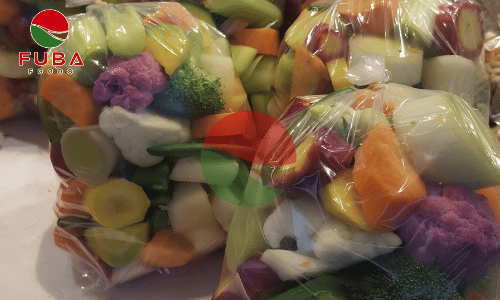
Individual Freezing Improves Production Handling
When properly processed, IQF vegetables remain separated after freezing. Manufacturers can therefore take only the required quantity from the package without having to thaw or mechanically break apart an entire frozen block.
This can simplify ingredient handling in applications such as:
- Ready meals
- Soups
- Pasta products
- Stir-fries
- Pizza toppings
- Vegetable mixes
- Foodservice products
- Further food processing
For production lines using defined ingredient ratios, individually frozen pieces can also make weighing, portioning, and blending more convenient.
IQF Processing Supports Different Product Formats
Another advantage of IQF processing is the ability to supply vegetables in formats suited to different manufacturing requirements.
Depending on the product, buyers may require:
- Dice
- Slices
- Coins
- Chunks
- Customized cuts
The appropriate format should be determined by the buyer’s recipe, cooking process, equipment, and finished-product specifications.
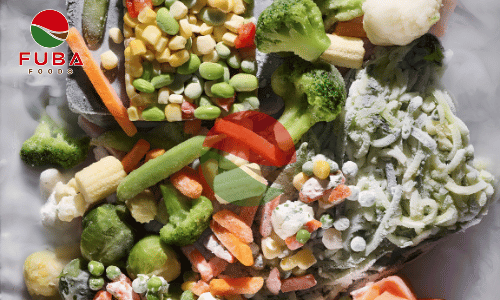
How Should Global Buyers Evaluate an IQF Frozen Vegetables Supplier?
For international procurement teams, supplier evaluation should begin with manufacturing capability rather than quotation alone.
A low unit price may not represent the lowest overall procurement cost if inconsistent sizing, excessive breakage, unsuitable packaging, quality deviations, or unreliable delivery create additional costs at the buyer’s facility.
A qualified supplier should be able to demonstrate how quality is controlled from raw-material reception through final shipment.
Raw Material Inspection and Sorting
The first quality-control point is the raw material itself. Vegetables should be inspected before entering production, with unsuitable materials removed before washing, preparation, and freezing.
Sorting and grading are equally important because differences in size, maturity, color, and quality can affect the finished product.
A controlled sorting process helps the manufacturer work toward a more consistent specification and can reduce the need for additional sorting after the product reaches the buyer’s facility.
FUBA’s documented production flow covers farm sourcing, raw-material inspection, washing and cleaning, sorting and grading, cutting or preparation, IQF freezing, metal detection, packing, cold storage, and export shipment.
This end-to-end process gives buyers a clearer basis for evaluating the supplier as a manufacturer rather than simply as a frozen-product trader.
Foreign-Object Detection and Food-Safety Control
Food manufacturers also need confidence that incoming ingredients meet their internal food-safety requirements. Foreign-object detection is therefore an important part of a professional frozen vegetable production system.
FUBA’s factory infrastructure includes five metal detection systems, three X-ray inspection systems, and an in-house microbiological laboratory. Its quality-assurance framework includes HACCP and ISO 22000, alongside FDA, HALAL, and BRCGS within its stated quality and compliance framework.
For global buyers, documentation should also be assessed alongside physical product quality. Depending on the destination market and purchasing agreement, buyers may require product specifications, certificates of analysis, certificates of origin, health or phytosanitary documents, and other export documentation.
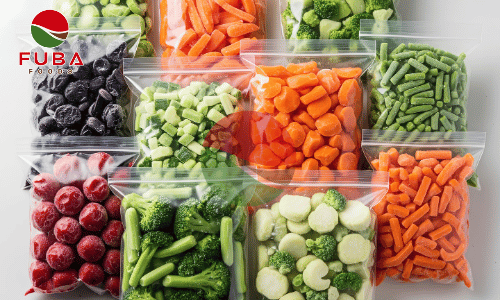
Frozen Vegetable Formats and Custom Specifications
Not every food manufacturer requires the same vegetable format. A pizza manufacturer may require a different cut from a ready-meal producer, while a foodservice distributor may prioritize bulk packaging and handling efficiency.
A capable IQF frozen vegetables supplier from Vietnam should therefore be able to work according to clearly defined technical specifications rather than offering only standardized products.
Cuts Designed for Different Industrial Applications
Cut size affects both appearance and cooking performance.
Smaller dice can distribute more evenly throughout fillings, sauces, and prepared foods. Larger pieces may be more suitable when the vegetable needs to remain visually prominent in the finished product. The same principle applies to slices, coins, chunks, and other formats.
FUBA’s frozen vegetable portfolio includes products such as zucchini, eggplant, okra, corn, edamame, sweet potato, pumpkin, and sweet pepper, alongside frozen fruit products.
This product range can be valuable for buyers looking to consolidate sourcing across multiple frozen vegetable categories.
OEM and Private-Label Manufacturing
For importers, distributors, and food brands, customization can be as important as the vegetable itself.
Packaging dimensions, labeling, product specifications, and order configuration may need to match the buyer’s market, distribution model, or production requirements.
FUBA provides OEM and private-label manufacturing solutions, including customized product specifications and packaging formats.
For buyers, this can provide greater flexibility when moving from product sampling to recurring commercial orders.
Cold Chain and Export Reliability Matter as Much as Processing
IQF processing does not end when the product leaves the freezing line. The frozen ingredient must remain under controlled conditions during storage, loading, transportation, and international delivery.
Temperature fluctuations can negatively affect product quality and may contribute to ice formation, texture changes, or packaging issues.
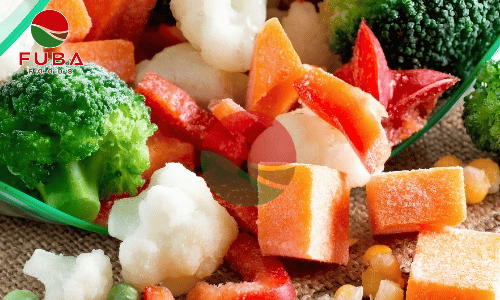
Controlled Frozen Storage
Finished frozen vegetables need to remain under appropriate temperature conditions throughout the supply chain.
FUBA operates cold-storage facilities with a stated capacity of 500 MT × 3 units and maintains finished products at controlled temperatures below -18°C. Its documented production process also includes cold-chain logistics for international shipments.
For global buyers, supplier evaluation should therefore consider both freezing capability and post-freezing infrastructure.
A supplier may have modern IQF equipment, but without sufficient cold-storage capacity and controlled logistics, the quality achieved during processing can be compromised before delivery.
Export Experience Supports International Procurement
International purchasing involves more than manufacturing. Documentation, shipping coordination, destination-market requirements, customs procedures, and communication can all affect delivery performance.
FUBA reports more than 15 years of experience in frozen fruit and vegetable processing and export, with products supplied to 30+ countries and markets including Japan, Korea, the European Union, and the Middle East.
For global buyers, established export experience can help reduce coordination challenges when orders involve recurring shipments and market-specific documentation.
Production Capacity and Cost Efficiency for Global Buyers
Price remains an important factor in B2B procurement, but buyers should evaluate total procurement cost, rather than focusing exclusively on the initial price per kilogram.
A supplier offering a lower price can become more expensive if inconsistent specifications result in additional sorting, preparation, product waste, production adjustments, or delivery disruptions.
An integrated factory can potentially control costs across multiple stages by coordinating:
Raw-material sourcing → Processing → IQF freezing → Inspection → Packaging → Cold storage → Export
The objective is therefore not simply to find the cheapest frozen vegetable supplier. It is to achieve a predictable combination of quality, specifications, volume, delivery reliability, and overall cost efficiency.
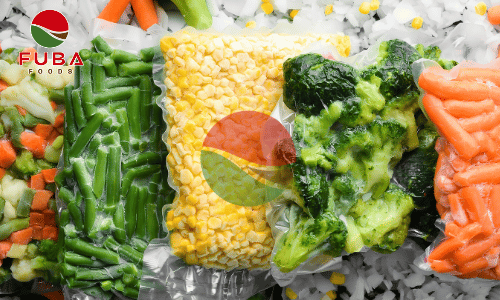
How to Choose the Right IQF Frozen Vegetables Supplier from Vietnam
Before selecting a supplier, global buyers should evaluate the supplier across the entire production and supply chain.
A practical supplier assessment should include:
- Raw-Material Sourcing - Does the supplier have reliable access to suitable agricultural raw materials and established sourcing relationships?
- Processing Capability - Can the factory prepare vegetables according to specific cuts, processing methods, and technical requirements?
- IQF Technology - Does the supplier have appropriate freezing infrastructure and sufficient capacity for the required order volume?
- Quality and Food Safety - Are there documented quality-control systems, foreign-object detection, laboratory capabilities, and internationally recognized food-safety frameworks?
- Cold-Chain Infrastructure - Does the supplier have sufficient frozen storage and reliable temperature-controlled logistics?
- Packaging Flexibility - Can the supplier provide packaging suitable for bulk, foodservice, retail, OEM, or private-label requirements?
- Export Experience - Can the supplier provide the documentation, logistics coordination, and shipment support required for the destination market?
- Supply Capacity - Can the supplier reproduce the same specification consistently across repeated commercial orders?
These factors provide a more useful basis for supplier qualification than price comparison alone.
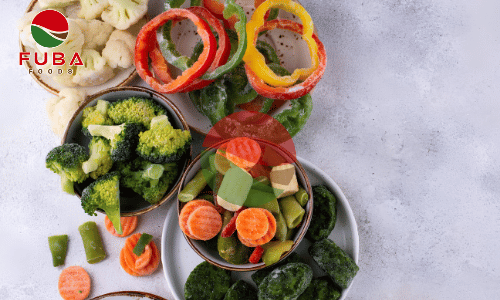
Conclusion
Finding the right IQF frozen vegetables supplier from Vietnam is ultimately about more than identifying a country of origin or comparing prices. Global buyers need a manufacturing partner capable of delivering consistent specifications, controlled processing, food-safety assurance, reliable cold-chain management, suitable packaging, and dependable export execution.
Vietnam offers a strong combination of agricultural resources and modern food-processing infrastructure, making it an increasingly practical sourcing destination for international frozen vegetable buyers. However, the real value comes from choosing a supplier that can control the process from raw-material sourcing through preparation, IQF freezing, inspection, packaging, cold storage, and shipment.


