

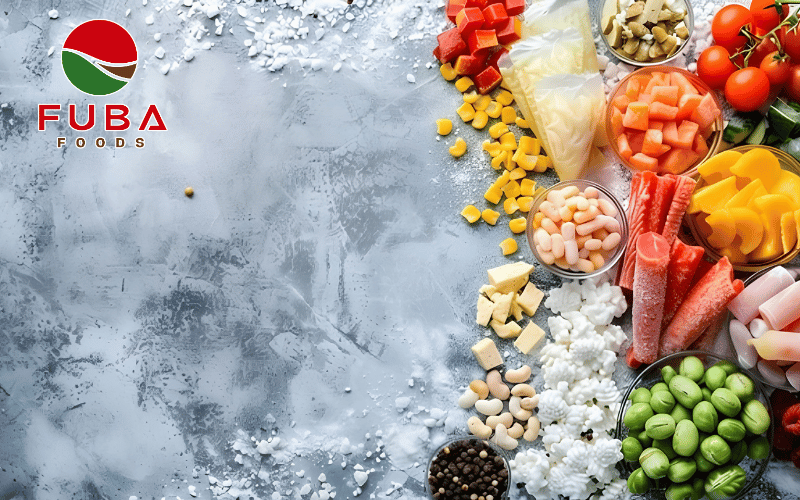
Frozen fruit and vegetable sourcing Vietnam has become increasingly attractive for international buyers due to the country’s diverse agricultural regions, wide range of tropical crops, and established food processing industry. However, identifying a reliable supply source involves more than finding a supplier with competitive pricing. Buyers must evaluate where raw materials originate, how products are processed, how quality is controlled, and whether the factory can consistently deliver at commercial scale.
For importers, distributors, food manufacturers, foodservice companies, and private label brands, frozen fruit and vegetable sourcing Vietnam requires several key decisions before the first shipment. This includes selecting suitable products and formats, distinguishing between direct manufacturers and trading companies, verifying processing capabilities, reviewing specifications and samples, and assessing long-term supply capacity.
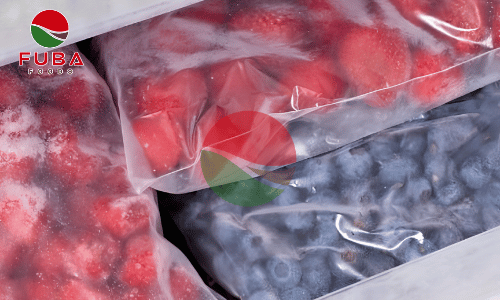
A structured sourcing approach begins with the final product requirements. By defining the target market and product specifications first, buyers can then evaluate raw material sources, factory processes, quality systems, production capacity, packaging options, and export capabilities. This helps minimize unnecessary mistakes.
This article explains how to approach frozen fruit and vegetable sourcing Vietnam, outlining the key steps, evaluation criteria, and practical considerations for selecting a reliable supplier and building a stable, long-term supply chain.
Why Source Frozen Fruits and Vegetables from Vietnam?
Vietnam has a strong agricultural base with different growing regions and climatic conditions. This supports the production of many fruits and vegetables used in frozen food processing, including mango, passion fruit, dragon fruit, avocado, jackfruit, durian, okra, sweet corn, sweet potato, pumpkin, eggplant, zucchini, and other crops.
The country’s geographic and climatic diversity can also support different harvesting periods throughout the year. For buyers, this matters because raw material availability directly affects production continuity, pricing, and product consistency.
However, agricultural availability alone does not guarantee reliable frozen supply. Fresh produce must be converted into a stable commercial ingredient through proper inspection, preparation, freezing, packaging, and cold-chain management. This is why buyers should evaluate Vietnam not only as an agricultural source but also as a food manufacturing base.
How Does Frozen Fruit and Vegetable Sourcing in Vietnam Work?
A successful sourcing process normally begins with the buyer’s product specification rather than with a supplier quotation.
Define the Product Before Contacting Suppliers
The first step is to determine exactly what needs to be purchased. Buyers should identify the fruit or vegetable, product format, desired size, processing method, packaging, target quantity, and intended application.
For example, “frozen mango” is too broad for a commercial sourcing request. A buyer may actually require IQF mango cubes of a specific size for beverage production, mango puree for industrial processing, or frozen mango slices for foodservice.
The same applies to vegetables. A food manufacturer may require IQF diced eggplant, grilled eggplant, sliced sweet pepper, or blanched vegetables rather than a generic frozen product.
A detailed specification allows factories to confirm technical feasibility and provide a more accurate quotation. It also makes supplier comparisons much more meaningful because every supplier is pricing against the same requirements.
Identify the Right Manufacturing Partner
The next step is to distinguish between a direct factory and a trading intermediary.
A trading company may be able to offer a wide product range, but buyers may have less visibility into the actual processing facility, raw material sourcing, production schedule, and quality-control system. A direct manufacturer can usually provide clearer information about how the product is processed and how specifications are controlled.
This distinction becomes increasingly important as order volumes grow. A supplier may be able to arrange one shipment through a third-party factory but struggle to maintain consistent quality or capacity for recurring orders.
How Should Buyers Evaluate Frozen Food Factories in Vietnam?
Factory evaluation should focus on the entire production system rather than simply looking at photographs of equipment or asking whether the factory has an export license.
Check Raw Material Sourcing and Seasonal Supply
The quality of frozen fruits and vegetables begins with the raw material. Buyers should ask where the factory sources its produce and how it manages seasonal variation.
A factory sourcing from established agricultural regions and multiple growing areas may have more flexibility when raw material conditions change. This can help reduce dependence on a single harvest area and provide greater supply continuity.
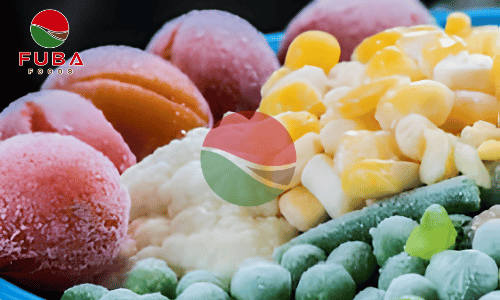
Buyers should also ask how incoming raw materials are inspected. Size, maturity, color, defects, and other characteristics can affect processing yield and final product quality.
Vietnam’s diverse agricultural regions can support year-round sourcing across different crops, but the factory still needs an effective sourcing and harvest-management system to turn that agricultural diversity into consistent commercial supply.
Evaluate Processing and Freezing Technology
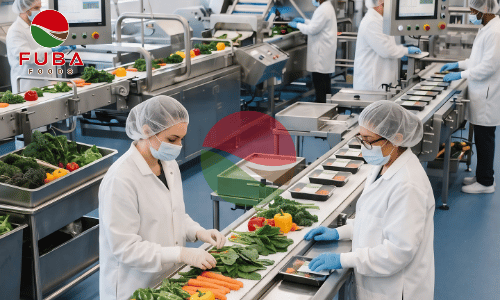
After raw materials arrive at the factory, processing controls determine much of the final product quality. Buyers should understand how the factory handles washing, sorting, grading, cutting, preparation, freezing, inspection, packing, and storage.
IQF technology is particularly relevant for buyers sourcing individually frozen fruit and vegetable pieces. Rapid freezing helps maintain piece separation while supporting the retention of natural color, texture, flavor, and nutritional characteristics.
The factory’s equipment should also match the required product format. A manufacturer producing puree does not necessarily have the same capabilities as one producing uniform IQF cubes or value-added grilled and fried products.
A factory such as FUBA combines IQF, contact freezing, air-blast freezing, food processing, metal detection, X-ray inspection, vacuum packaging, and other production equipment. This type of integrated infrastructure gives buyers more flexibility when developing different frozen fruit and vegetable formats from one manufacturing source.
What Quality and Food Safety Checks Should Buyers Make?
Price and production capacity are important, but quality control determines whether a supplier can remain reliable after the first shipment.
Review Food Safety Systems
International buyers should examine the factory’s food safety management systems and relevant certifications for the destination market. Depending on the product and market, requirements may include HACCP, ISO 22000, BRCGS, HALAL, FDA-related requirements, microbiological criteria, pesticide residue controls, and traceability.
Certification should not be treated as a substitute for understanding the actual production process. Buyers should also examine how raw materials are inspected, how foreign objects are controlled, how production lots are identified, and how finished goods are released.
FUBA’s factory infrastructure includes quality systems associated with HACCP, ISO 22000, BRCGS, HALAL, and FDA requirements, together with traceability and frozen storage maintained below -18°C. These are the types of systems international buyers should verify when qualifying a Vietnamese frozen food manufacturer.
Request Samples and Compare Them With Specifications
Samples should be treated as a technical evaluation rather than simply a taste test.
Buyers should compare the sample against the required cut size, color, texture, appearance, packaging, and other product parameters. If analytical specifications apply, such as Brix for certain fruit products or dry matter for avocado, these should also be evaluated according to the agreed specification.
The important question is whether the factory can reproduce the approved sample at commercial scale. A supplier that provides an excellent sample but cannot maintain the same quality across production lots creates significant risk for long-term distribution.
How Should Buyers Compare Frozen Food Suppliers in Vietnam?
Supplier comparison should be based on total commercial capability rather than the lowest initial price.
A lower quotation may result from differences in raw material grade, product yield, cut size, packaging, processing method, or included services. Buyers should therefore make sure suppliers are quoting the same specification.
Production capacity is another important consideration. If a distributor needs several containers every month, the supplier needs enough raw material access, production capacity, labor, freezing capacity, packaging capability, and storage space to support recurring orders.
FUBA operates with an annual supply capacity of around 20,000 MT, more than 600 workers, and export experience across more than 30 countries. These figures illustrate why production scale should be evaluated alongside product quality when a buyer is looking for a long-term sourcing partner rather than a one-time shipment.
How Does Pricing Work When Sourcing Frozen Food from Vietnam?
Frozen food pricing is influenced by more than the cost of fresh agricultural materials. The final quotation can include raw material quality, processing yield, labor, freezing, packaging, storage, testing, and export-related costs.
Seasonality can also influence raw material prices. When a crop is in peak season, factories may have better access to suitable raw materials. During periods of lower availability, sourcing costs can change.
Processing complexity is another major factor. IQF diced fruit, puree, grilled vegetables, and other value-added formats require different production processes and equipment. Packaging requirements can also affect the final cost, particularly for custom retail or private label formats.
Buyers should therefore compare the complete product specification and commercial terms rather than choosing a supplier solely because its price per kilogram is lower.
What MOQ and Supply Capacity Should Buyers Expect?
MOQ depends on the product, format, packaging, production line, and order structure. Standard bulk products may be easier to produce at scale, while customized retail packaging or multiple SKUs can require higher minimum volumes.
Buyers should clarify whether MOQ applies per product, per packaging format, or per SKU. This becomes particularly important for distributors and private label brands managing several products at the same time.
Supply capacity should also be considered alongside MOQ. A factory may accept an initial order but have limited capacity for recurring shipments. Buyers should ask whether the supplier can support expected monthly or annual demand rather than evaluating capacity based only on one shipment.
How Does Export and Cold-Chain Management Affect Sourcing?
Frozen products remain dependent on the cold chain after they leave the processing line. Proper storage and transportation are therefore essential to preserving the quality achieved at the factory.
Buyers should confirm the factory’s frozen storage capacity, storage temperature, packaging configuration, loading process, and export logistics experience. The product should remain properly frozen from factory storage through container loading and international transportation.
This is particularly important when sourcing from overseas because the supply chain may involve factory storage, port transportation, container loading, ocean freight, customs clearance, and destination warehousing.
A manufacturer with its own processing and cold-storage infrastructure can provide greater visibility across these stages. The buyer can communicate directly with the production source rather than relying on an intermediary to coordinate information between multiple parties.
What Documents Should Buyers Request Before Ordering?
Before confirming a commercial order, buyers should establish a complete set of technical and commercial documents.
The product specification should define the agreed product characteristics. Packaging information should confirm net weight, packing format, and labeling requirements. Quality documentation should demonstrate how the product is controlled, while shipment documents need to meet the destination market’s import requirements.
Buyers should also ensure that product information, lot identification, and traceability are consistent across production and shipment documents. This reduces the risk of discrepancies during customs clearance, receiving, or internal quality checks.
The exact documentation required will depend on the destination country, product category, and buyer’s own compliance system. The important point is to clarify these requirements before production rather than discovering missing documentation when the shipment is already ready to leave the factory.
What Are the Biggest Sourcing Mistakes to Avoid?
One common mistake is selecting a supplier based only on price. The cheapest quotation may not represent the lowest total cost if product specifications, yield, packaging, or quality consistency differ.
Another mistake is evaluating only the sample. Buyers need to understand how the factory will reproduce the same product across commercial production lots.
It is also risky to ignore raw material sourcing. A factory may have modern processing equipment but still struggle to maintain the required quality if it cannot consistently access suitable agricultural materials.
Finally, buyers should avoid treating cold storage and export logistics as secondary concerns. Frozen food quality depends on the entire supply chain, so the factory’s ability to maintain product condition after processing is part of the sourcing decision.
How to Build a Long-Term Frozen Food Sourcing Strategy in Vietnam
Long-term sourcing should be based on repeatable specifications, stable raw material access, reliable manufacturing, and transparent communication.
Once a suitable supplier has been identified, buyers should establish clear product specifications and approve samples before scaling orders. Production should then be monitored against those specifications, while recurring shipments should be evaluated for consistency rather than judged independently.
For larger distributors and food manufacturers, supplier relationships can also evolve beyond individual product orders. A factory with sufficient processing flexibility may support additional formats, packaging configurations, or products as the buyer expands its market.
The objective is not simply to find a Vietnamese supplier that can ship frozen products. It is to build a supply chain that can maintain the required quality, volume, and commercial specifications over time.
Conclusion
Frozen fruit and vegetable sourcing in Vietnam can offer international buyers access to diverse agricultural raw materials, established food processing capabilities, and flexible product formats. But successful sourcing requires more than finding a supplier with an attractive quotation.
Buyers should start with clear product specifications, then evaluate raw material sourcing, processing technology, food safety systems, production capacity, packaging, cold storage, and export capability. Samples should be tested against defined requirements, and commercial capacity should be assessed based on recurring demand rather than a single shipment.
The strongest sourcing decisions come from looking at the factory as an integrated production system. When raw material sourcing, processing, IQF freezing, quality control, packaging, storage, and export operations are properly connected, buyers have a stronger foundation for consistent international supply.
For companies sourcing frozen fruits and vegetables from Vietnam, the right supplier is therefore not simply the one offering the lowest price. It is the manufacturer that can consistently turn Vietnamese agricultural raw materials into a product that meets the buyer’s specifications, quality expectations, and long-term supply requirements.


