

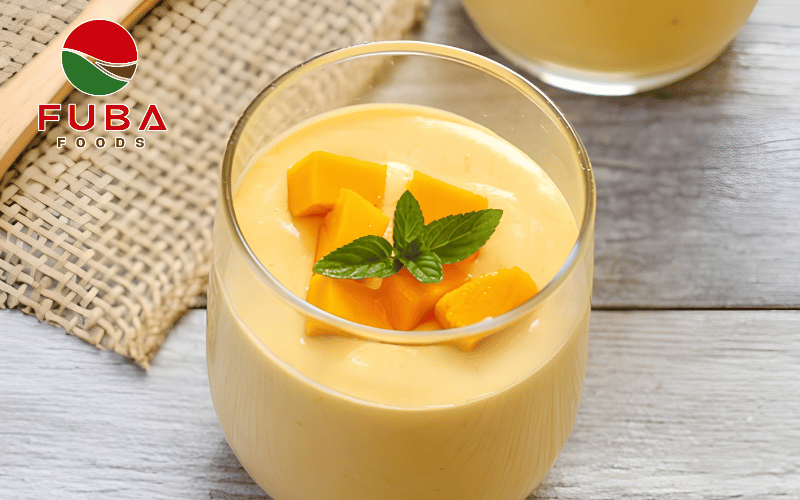
As global demand for tropical fruit ingredients continues to grow, finding a reliable mango puree supplier has become a strategic priority for food and beverage manufacturers. Whether producing juices, dairy products, bakery fillings, sauces, frozen desserts, or private-label foods, manufacturers rely on consistent mango puree to maintain product quality, production efficiency, and customer satisfaction.
A reliable mango puree supplier should provides consistent product quality, stable year-round raw material supply, internationally recognized food safety certifications, advanced processing technology, and dependable export capability. Choosing a factory with integrated production helps reduce supply chain risks while ensuring long-term manufacturing consistency.

However, not every supplier can consistently meet these expectations. Some companies simply trade products from different factories, making it difficult to control quality, traceability, or delivery schedules. Others may provide an excellent first shipment but struggle to maintain the same specifications across future orders.
For procurement managers and food manufacturers, evaluating a supplier requires looking beyond samples and quotations. Understanding how a manufacturer sources raw materials, controls production, manages quality, and supports international customers provides a much clearer picture of long-term reliability.
This article explores the essential criteria for evaluating a reliable mango puree supplier. By understanding what distinguishes a dependable manufacturing partner, you can make more informed sourcing decisions and build a more resilient supply chain.
Why Choosing the Right Mango Puree Supplier Matters
Selecting a mango puree supplier is not simply about purchasing an ingredient it is about choosing a manufacturing partner that directly influences product consistency, production efficiency, and supply chain stability. Before evaluating specific supplier capabilities, it is important to understand why this decision has such a significant impact on food manufacturing operations.

Mango Puree Directly Affects Final Product Quality
Mango puree serves as a primary ingredient in a wide range of food and beverage applications, including juices, smoothies, yogurt, ice cream, confectionery, bakery fillings, sauces, baby food, and ready-to-eat products. Because it contributes natural sweetness, flavor, color, and texture, even small variations between batches can alter the characteristics of the finished product.
For industrial manufacturers, inconsistent puree may lead to changes in formulation, additional quality inspections, production downtime, or higher material waste. Maintaining uniform Brix levels, viscosity, color, and flavor profile is therefore essential for achieving consistent product quality and protecting brand reputation.
A Reliable Supplier Reduces Supply Chain Risks
Beyond product quality, manufacturers must also consider whether a supplier can consistently meet production schedules and delivery commitments. Seasonal shortages, unstable raw material sourcing, or limited processing capacity can quickly disrupt manufacturing plans and increase operational costs.
Experienced buyers therefore evaluate suppliers based on their long-term manufacturing capability rather than short-term pricing. Factory ownership, integrated production, quality management systems, export experience, and stable raw material sourcing are often stronger indicators of reliability than the lowest quotation. Working with a factory-direct manufacturer also improves communication, traceability, and responsiveness when technical specifications or production requirements need to be adjusted.
How to Evaluate a Reliable Mango Puree Supplier
Once businesses understand why supplier selection is critical, the next step is evaluating a manufacturer’s actual capabilities. While many suppliers offer similar product specifications, experienced procurement teams typically assess the factory behind the product rather than the quotation itself. Manufacturing capacity, quality management, raw material control, and export experience often determine whether a supplier can consistently support long-term production.

Manufacturing Capability Reflects Long-Term Reliability
A supplier’s manufacturing capability is often the strongest indicator of whether they can consistently meet industrial production requirements. Buyers should first determine whether they are working directly with a manufacturer or through a trading company.
Choose a Factory-Direct Manufacturer Instead of a Trading Company
Factory-direct manufacturers oversee every stage of production, from sourcing fresh mangoes and processing the fruit to quality inspection, packaging, and export logistics. This integrated approach provides greater control over product consistency, lead times, and traceability while reducing communication delays that often occur when intermediaries are involved.
Direct manufacturers are also better positioned to support customized specifications, whether buyers require specific Brix levels, pulp content, packaging formats, or product formulations for different food applications. Because production decisions are made in-house, adjustments can be implemented more efficiently and with better quality control.
Evaluate Production Capacity and Processing Facilities
Manufacturing capacity is equally important, particularly for buyers seeking long-term supply agreements or large-volume orders. A reliable mango puree supplier should operate modern processing facilities capable of maintaining consistent output throughout the production season.
When assessing a factory, buyers should consider whether it uses automated washing, sorting, pulping, refining, pasteurization, and aseptic filling systems. Automation not only improves production efficiency but also minimizes contamination risks and ensures greater consistency between batches.
As a factory-direct manufacturer, FUBA invests in standardized production processes and modern processing equipment to maintain consistent quality across every shipment. Rather than focusing solely on production volume, the company emphasizes stable manufacturing performance, strict quality control, and the flexibility to meet different industrial specifications.

Reliable Raw Material Sourcing Ensures Consistent Product Quality
Even the most advanced production technology cannot compensate for inconsistent raw materials. The quality of mango puree ultimately depends on the quality of the fruit entering the production line, making raw material sourcing one of the most important factors when evaluating a supplier.
Strong Partnerships with Growing Regions Create Supply Stability
Reliable manufacturers establish long-term relationships with growers and sourcing regions to ensure a stable supply of fresh mangoes throughout each harvest season. Consistent access to high-quality fruit allows production to continue without interruption while reducing fluctuations in flavor, sweetness, and color.
Factories that work closely with growers can also apply harvesting standards based on fruit maturity rather than purchasing mixed-quality raw materials from multiple sources. This approach contributes to greater product consistency and improves processing efficiency.

Strict Raw Material Inspection Reduces Quality Variation
Professional manufacturers implement incoming quality inspections before mangoes enter production. Factors such as ripeness, appearance, Brix level, physical damage, and food safety are carefully evaluated to ensure only suitable fruit is processed.
Controlling quality at the raw material stage reduces variation throughout the manufacturing process and helps produce mango puree with a more consistent flavor profile, texture, and appearance. This level of control is especially valuable for food manufacturers that require stable ingredient performance across repeated production runs.
Food Safety Certifications and Quality Control Systems
After evaluating manufacturing capability and raw material sourcing, buyers should examine how a supplier manages food safety and quality control. International certifications demonstrate that production follows standardized procedures, but they should be supported by rigorous inspection systems throughout the manufacturing process.
International Certifications Demonstrate Manufacturing Standards
Food manufacturers supplying global markets must comply with increasingly stringent food safety regulations. Choosing a mango puree supplier with internationally recognized certifications helps reduce sourcing risks while simplifying customer audits and import requirements.

Reliable manufacturers typically operate under certified food safety management systems such as HACCP, ISO 22000, BRCGS, Halal, or Kosher, depending on their target export markets. These certifications indicate that the factory has established standardized procedures covering hygiene management, hazard analysis, traceability, documentation, and continuous process improvement.
For procurement teams, certifications should not be viewed as marketing credentials but as evidence that a supplier follows consistent manufacturing practices capable of supporting long-term commercial partnerships.
Quality Control Should Cover Every Stage of Production
Product quality cannot be achieved through final inspection alone. Reliable manufacturers implement quality control from raw material acceptance through processing, packaging, storage, and shipment.
Each production batch should undergo laboratory testing to verify key specifications such as Brix, pH, viscosity, color, microbiological safety, and other customer-defined requirements before release. Comprehensive batch records also improve traceability, allowing manufacturers to quickly investigate and resolve any quality concerns.

At FUBA, quality management is integrated throughout the production process rather than limited to finished-product inspection. Standardized operating procedures, in-process monitoring, and laboratory verification help ensure that every shipment meets agreed technical specifications while maintaining consistency across multiple production batches.
Product Consistency and Export Capability
For industrial buyers, receiving one excellent shipment is not enough. The real measure of a reliable supplier is the ability to deliver the same quality, documentation, and service with every order over the long term.
Consistent Specifications Support Efficient Manufacturing
Changes in mango puree characteristics can affect formulation, processing efficiency, and final product quality. Variations in sweetness, pulp content, color, or texture often require manufacturers to adjust recipes, increasing production costs and reducing operational efficiency.
Experienced buyers therefore evaluate a supplier’s ability to maintain consistent technical specifications across different production batches. Stable Brix levels, controlled viscosity, uniform color, and consistent flavor profile help manufacturers reduce process variability while ensuring that finished products meet customer expectations.
This level of consistency is typically achieved through standardized processing parameters, calibrated equipment, and continuous quality monitoring rather than relying solely on high-quality raw materials.

Export Experience Improves Supply Chain Reliability
Manufacturing capability alone does not guarantee successful international supply. Export experience is equally important, particularly for buyers operating complex global supply chains.
An experienced mango puree supplier should understand international shipping requirements, cold chain management, export documentation, and destination-market regulations. Complete documentation including Certificates of Analysis (COA), Certificates of Origin (CO), Certificates of Quality (CQ), and other market-specific certificates helps streamline customs clearance and reduces the risk of shipment delays.
Suppliers with established export operations are also better prepared to coordinate production schedules, packaging, and logistics, ensuring that customers receive products on time and in accordance with agreed specifications.
Conclusion
Choosing a reliable mango puree supplier involves far more than comparing prices or evaluating product samples. For food manufacturers, the right supplier should demonstrate strong manufacturing capability, stable raw material sourcing, internationally recognized food safety systems, consistent product quality, and proven export experience. These factors help reduce production risks, improve supply chain stability, and ensure consistent performance across every batch of finished products.
As global demand for tropical fruit ingredients continues to grow, manufacturers increasingly value long-term partnerships with factory-direct suppliers that can provide both technical expertise and dependable supply. A production partner with integrated manufacturing, standardized quality management, and flexible customization capabilities is better positioned to support changing market demands while maintaining product consistency over time.

As a factory-direct manufacturer specializing in frozen fruit ingredients, FUBA follows this manufacturing approach by combining carefully managed raw material sourcing, modern processing technology, and rigorous quality control throughout every stage of production. Rather than simply supplying mango puree, the company focuses on helping food manufacturers secure a reliable ingredient source that supports efficient production, consistent product quality, and sustainable business growth.
Whether you are sourcing mango puree for beverages, dairy products, bakery applications, sauces, or private-label manufacturing, selecting a supplier with proven production capabilities and long-term reliability will create greater value than choosing based on price alone. Investing time in evaluating the right manufacturing partner today can help build a more resilient and efficient supply chain for years to come.


