

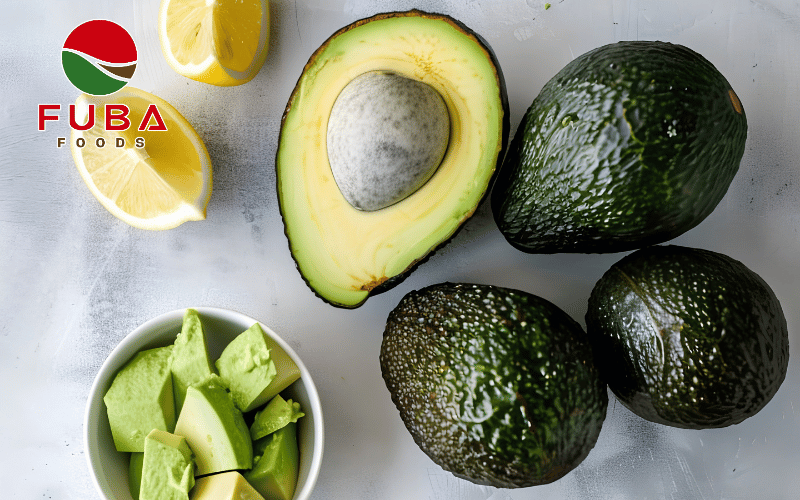
Frozen avocado is increasingly used as a practical fruit ingredient in smoothies, beverages, ice cream, yogurt, bakery products, desserts, and other processed foods. For commercial production, however, choosing an avocado supplier is not simply a matter of finding a frozen product at the right price. Variety, dry matter, texture, processing method, packaging, storage conditions, and supply consistency can all influence how the ingredient performs after it reaches the production line.
Choosing the right frozen avocado ingredient supplier means looking beyond the finished product and evaluating how consistently the supplier can control raw materials, processing, quality, and supply. A supplier with direct manufacturing capabilities can provide greater visibility into these stages while also supporting customized specifications and commercial volumes.
This article explains the key factors to evaluate when sourcing frozen avocado ingredients, including product specifications, raw material sourcing, freezing technology, quality control, packaging, cold-chain management, production capacity, and supplier reliability.

Start with the Frozen Avocado Specification
Before comparing suppliers, define what the avocado needs to do in the finished product. Frozen avocado is available in different formats, and the appropriate specification depends heavily on the application.
Avocado Puree, Cubes, or Slices
Puree is generally suited to applications where avocado needs to be blended directly into a formulation, such as smoothies, beverages, sauces, desserts, ice cream, or other processed foods. Cubes and slices are more appropriate when the product needs to retain a recognizable avocado format or when the ingredient will be further processed.
The physical format affects handling, processing time, portioning, and yield. A supplier should therefore be able to provide the format required by the production process rather than offering only a standard product that may require additional preparation.
FUBA’s frozen avocado range includes IQF avocado cubes, slices, and frozen avocado puree. The puree is specified as smooth and creamy, while the cubes and slices are designed around defined physical formats. This allows the ingredient format to be matched more closely with the intended application.
Dry Matter and Texture
Avocado behaves differently from many other frozen fruits because its value often comes from its creamy texture and relatively high dry-matter content. For manufacturers, dry matter can affect texture, formulation yield, and the amount of additional ingredients needed to achieve the desired consistency in the finished product.
A dry-matter specification of at least 23% can be used as a useful reference when comparing frozen avocado ingredients from different suppliers. However, manufacturers should still evaluate the actual product sample in their own formulation, as the same dry-matter level does not necessarily result in identical sensory or processing performance.
Evaluate the Avocado Raw Material Source
The quality of frozen avocado begins with the raw fruit. Harvest maturity, variety, growing conditions, and raw-material selection can influence colour, texture, flavour, and dry matter before processing even begins.
A supplier that has stronger control over agricultural sourcing can respond more effectively to these variables than a supplier that depends entirely on purchasing finished frozen goods from another source.
Vietnam’s Central Highlands are an important sourcing region for avocado, and FUBA’s agricultural sourcing network extends across Vietnam’s growing regions. The company specifically identifies avocado among the key products associated with the Central Highlands, where basalt-rich soils support fruit and vegetable cultivation.
For long-term supply, the important question is not simply where the avocado comes from, but whether the supplier has established relationships with farming regions and growers that can support consistent raw-material availability throughout the year.

Look at How the Supplier Processes Frozen Avocado
A reliable frozen avocado ingredient supplier should be able to demonstrate control across the production process, from incoming raw material inspection to final cold storage.
At factory level, this includes raw-material inspection, washing and cleaning, sorting and grading, product preparation, freezing, foreign-material detection, packing, and controlled storage. Each stage can affect the final ingredient, so quality should not be considered only at the end of the production line.
For avocado, processing consistency is particularly important because the fruit’s creamy texture and delicate characteristics need to be preserved while the product is prepared into puree, cubes, or slices.
A factory-based production model also provides greater visibility into the process. Instead of relying solely on a trading chain, manufacturers can evaluate where the fruit is sourced, how it is processed, what controls are applied, and how the finished product is stored before shipment.
Consider IQF Technology and Freezing Control
Freezing technology is another important factor when comparing frozen avocado suppliers. Rapid and controlled freezing can help maintain the physical characteristics of prepared fruit and make frozen ingredients easier to handle in commercial production.
FUBA uses IQF freezing technology across its frozen fruit and vegetable processing system. Its factory is equipped with six IQF lines, together with contact-freezing and air-blast freezing systems. The wider production flow also includes preparation, freezing, metal detection, packing, and cold storage.
For avocado ingredients, the freezing process should be considered together with the preparation method. A supplier may have modern freezing equipment, but the final product still depends on raw-material quality, preparation, freezing conditions, packaging, and subsequent cold-chain management.
Check Food Safety and Quality Control
Frozen avocado used as an industrial ingredient becomes part of another manufacturer’s finished product, so food safety and traceability should be evaluated as part of supplier qualification.
A robust system should control the product from incoming raw materials through processing and final shipment. This may include inspection and sorting, foreign-material detection, laboratory testing, traceability, and documented food-safety procedures.
For importers and manufacturers supplying regulated markets, these systems can be particularly relevant because supplier qualification often extends beyond the physical appearance of the ingredient to documentation, traceability, and food-safety management.

Assess Packaging and Cold-Chain Capability
Even a well-processed avocado ingredient can lose quality if it is poorly packaged or exposed to unsuitable temperatures during storage and transportation.
Frozen products require continuous temperature control, particularly during international transportation. Packaging also needs to match the purchasing model, as retail, foodservice, and bulk industrial applications may require different pack sizes and configurations.
For foodservice and bulk-export applications, a 10 kg carton with a PE inner liner is one packaging format used for frozen avocado products. Frozen products should be stored at -18°C or below, with a shelf life of up to 24 months under appropriate storage conditions.
For larger-volume sourcing, packaging should be assessed together with palletization, storage, shipment conditions, and the expected handling process after arrival. The objective is to maintain the ingredient’s intended condition throughout the complete supply chain rather than only during factory storage.
Compare Supplier Capacity and Supply Reliability
A supplier may provide an acceptable sample but still struggle when commercial demand increases. This is why production capacity and supply-chain strength should be evaluated before moving from trial orders to regular procurement.
FUBA has an annual supply capacity of 20,000 MT, more than 600 workers, over 15 years of experience in frozen fruit and vegetable processing and export, and exports to more than 30 countries. Its sourcing network includes farming regions and growers across Vietnam, supporting a broader raw-material supply base.
These capabilities are relevant when a customer needs recurring shipments rather than a one-time purchase. A supplier should be able to maintain product specifications while handling changes in order volume, packaging requirements, and export schedules.
Supply reliability should also be assessed at the raw-material level. If a supplier depends heavily on a single growing area or intermediary, seasonal disruptions may create greater sourcing risk. A broader agricultural network can provide more flexibility when managing seasonal availability.
Evaluate Customization and Commercial Flexibility
Not every manufacturer needs the same avocado specification. One customer may require puree for beverages or desserts, while another may need cubes for prepared foods or slices for foodservice applications.
A supplier capable of manufacturing according to defined specifications can make the sourcing process more efficient. This can include product format, packaging configuration, and private-label requirements where appropriate.

Check Whether the Supplier Can Support International Supply
For imported frozen avocado, the supplier’s export capability can be just as important as the ingredient itself. International shipments require coordinated documentation, cold-chain logistics, packaging, and communication between the factory, freight partners, and receiving customers.
FUBA’s export operation serves markets including Japan, Korea, the European Union, and the Middle East, supported by an experienced export team handling logistics, documentation, and international trade requirements.
For customers evaluating a new supplier, this experience provides useful evidence that the manufacturer is accustomed to international supply rather than operating only within a domestic distribution model.
Test the Frozen Avocado Before Placing a Larger Order
Supplier documentation is important, but practical testing should remain part of the qualification process.
The avocado should be evaluated in the actual application whenever possible. For puree, this may mean checking smoothness, creaminess, flavour, colour, and formulation behaviour after blending. For cubes or slices, the evaluation may focus more on size consistency, shape retention, texture, and usability after thawing or further processing.
The test should also consider the finished product rather than the ingredient alone. An avocado puree that performs well as a standalone sample may behave differently when combined with dairy ingredients, sweeteners, water, stabilizers, or other fruit ingredients.
A structured sample trial allows manufacturers to determine whether the specification is suitable before committing to larger commercial volumes.

Questions to Ask a Frozen Avocado Ingredient Supplier
Before finalizing a supplier, manufacturers should have clear answers regarding the avocado variety, product format, dry-matter specification, processing method, packaging, storage temperature, shelf life, production capacity, and traceability.
It is also worth confirming where the raw material is sourced, how incoming fruit is inspected, what food-safety systems are applied, and whether the supplier can maintain the same specification across recurring orders.
Commercial terms should then be considered alongside technical performance. Minimum order quantity, packaging options, lead time, customization, export documentation, and shipment arrangements can all influence the real cost and practicality of the sourcing relationship.
The strongest supplier evaluation therefore combines product performance, factory capability, supply reliability, and commercial fit rather than selecting a supplier based solely on the lowest quoted price.
Conclusion
Choosing a frozen avocado ingredient supplier requires a closer look at the complete supply chain behind the product. Avocado variety, dry matter, format, texture, raw-material sourcing, freezing technology, food safety, packaging, cold storage, and production capacity can all affect the reliability of the finished ingredient.
For manufacturers, importers, distributors, and foodservice suppliers, working directly with a capable processing facility can provide greater visibility into these factors and make it easier to establish consistent specifications over time.
A supplier such as FUBA combines Vietnamese agricultural sourcing, direct frozen-food processing, IQF technology, quality-control infrastructure, cold storage, OEM/private-label capability, and established export experience. These capabilities provide a practical basis for evaluating whether a supplier can support not only the first order, but also the consistency and scale required for ongoing frozen avocado procurement.


