

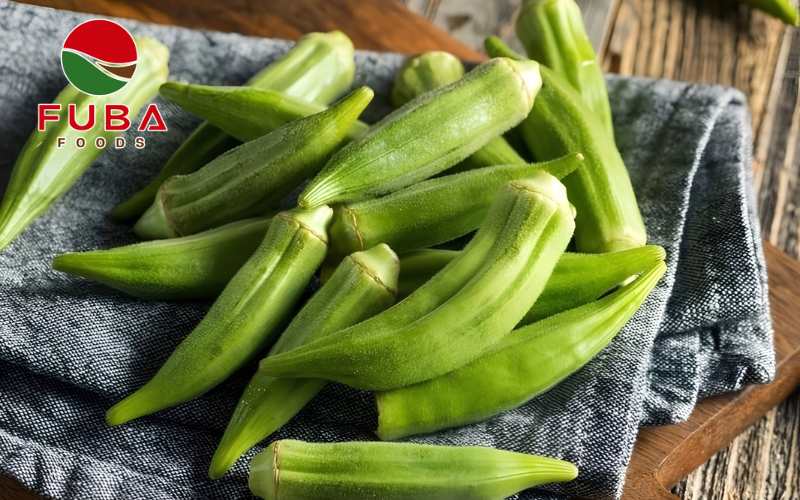
Frozen okra can typically maintain its intended quality for an extended period when it is properly processed, packaged, and continuously stored at the required frozen temperature.
For commercially produced IQF okra, shelf life can reach up to 24 months when stored at or below -18°C, although the actual shelf life depends on the product specification, packaging, processing controls, and cold-chain conditions.
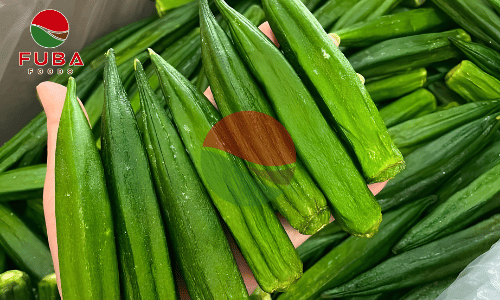
For food manufacturers, importers, distributors, and foodservice suppliers, frozen okra shelf life is more than a date printed on a package. It reflects how well the product has been handled from harvest and processing through IQF freezing, packaging, storage, and transportation. Understanding these factors helps buyers plan inventory more accurately, reduce product losses, and evaluate whether a frozen okra supplier can maintain consistent quality throughout the supply chain.
This article provides a practical overview of frozen okra shelf life for food manufacturers, importers, distributors, and foodservice suppliers. It explains what buyers should understand when evaluating the storage life and commercial suitability of frozen okra for ongoing supply and inventory planning.
How Long Does Frozen Okra Last?
Under appropriate commercial frozen-storage conditions, frozen okra can have a shelf life of up to 24 months when maintained at or below -18°C. This applies to properly processed and packaged frozen okra produced under controlled conditions. The stated shelf life should always be checked against the manufacturer’s product specification because different formulations, packaging formats, and processing conditions can result in different validated shelf-life periods.
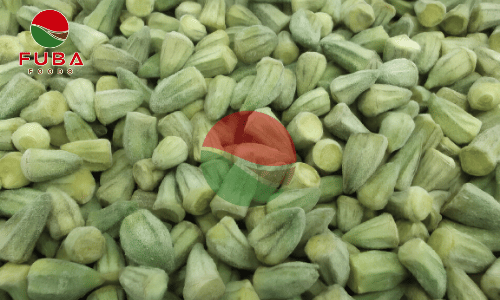
What Determines Frozen Okra Shelf Life?
Frozen okra shelf life is determined by several interconnected factors, beginning with the quality of the fresh vegetable and continuing through industrial processing and distribution. Freezing itself does not restore poor-quality raw materials; it stabilizes the product at the condition achieved before and during processing.
Raw Material Quality and Freshness
The condition of okra before processing has a direct influence on how well the finished product performs during frozen storage. Fresh, appropriately mature okra with suitable colour, texture, and physical condition provides a better starting point for frozen production.
A professional processing operation therefore controls raw materials before they enter the production line. Incoming vegetables need to be inspected and sorted according to defined quality requirements so that damaged, unsuitable, or inconsistent materials are removed before further processing.
This is particularly relevant for buyers because a long printed shelf life does not compensate for inconsistent raw material quality. The condition of the vegetable at the beginning of the process remains an important part of the final product’s quality profile.

Blanching and IQF Freezing
Processing conditions also affect frozen okra shelf life. Blanching is commonly used in frozen vegetable production to help control enzyme activity that can otherwise contribute to changes in colour, flavour, and quality during storage.
After preparation and blanching, IQF freezing rapidly freezes individual pieces. Rapid freezing helps preserve the natural characteristics of the product by limiting the formation of larger ice crystals associated with slower freezing methods.
For frozen okra, the objective is not simply to reach a low temperature. The freezing process needs to be controlled consistently so that the product reaches the required frozen condition efficiently and remains suitable for subsequent storage.
A factory equipped with dedicated IQF freezing lines can therefore control this stage more consistently than a fragmented supply chain where processing and freezing may be handled by separate parties.
Packaging and Protection From Moisture
Packaging is another important factor in frozen okra shelf life. Once the product has been frozen, the package needs to protect it from moisture loss, external contamination, and environmental exposure during storage and transportation.
Poor packaging can contribute to freezer burn, dehydration, ice accumulation, and changes in product appearance. These issues may not necessarily make the product immediately unsafe, but they can reduce its commercial and sensory quality.
For bulk supply, packaging is generally selected according to the distribution channel and customer requirements. Commercial formats may include foodservice packs or bulk export cartons with an inner liner designed to protect the frozen product during handling and shipment.
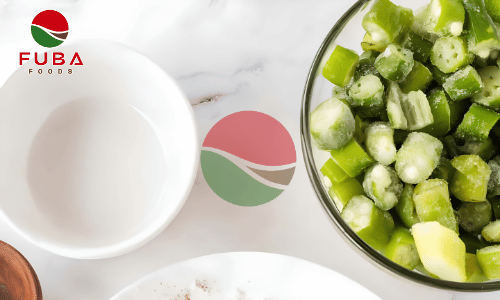
Why -18°C Matters for Frozen Okra Shelf Life
Maintaining a stable temperature of -18°C or below is one of the most important requirements for preserving frozen okra during storage. At this temperature, the product remains in a stable frozen state suitable for long-term frozen distribution.
Temperature stability matters because repeated fluctuations can cause ice crystals to melt partially and reform. Over time, this can negatively affect texture and appearance. It can also increase the risk of moisture migration within the package.
For this reason, cold-chain management needs to continue beyond the factory. A product that leaves the production line in excellent condition can still lose quality if it is exposed to inappropriate temperatures during transportation, warehousing, or distribution.
A reliable frozen vegetable supplier should therefore be able to demonstrate control over both processing and cold storage rather than treating freezing as an isolated production step.
How Should Frozen Okra Be Stored to Maximize Shelf Life?
Frozen okra should remain continuously frozen at -18°C or below, with the package kept properly sealed and protected from unnecessary temperature fluctuations. Commercial storage should also follow the manufacturer’s handling and product specifications.
Inventory rotation is important when managing frozen vegetables at scale. Even when a product has a stated shelf life of up to 24 months, buyers should organize stock according to production date and expiry date rather than assuming that all frozen inventory has unlimited storage potential.
The cold chain should also be considered as one continuous system. Frozen okra should remain under controlled conditions when it moves from factory cold storage to refrigerated transport, distribution warehouses, and the customer’s facility. Minimizing temperature fluctuations helps protect the quality established during processing.
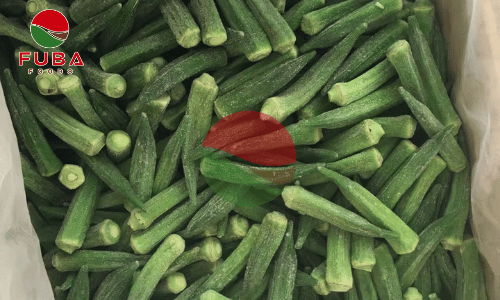
Does Frozen Okra Last Longer Than Fresh Okra?
Frozen okra generally offers a significantly longer storage window than fresh okra when properly processed and continuously frozen. Fresh okra is highly perishable and requires more immediate handling, while industrial freezing allows the vegetable to be stored and distributed for an extended period.
This difference is particularly valuable for food manufacturers that need year-round access to okra. Instead of depending entirely on short fresh-produce windows, frozen okra can be held in controlled inventory and supplied according to production schedules.
However, freezing does not mean that quality becomes permanently unchanged. Over an extended storage period, colour, texture, flavour, and appearance can gradually deteriorate if storage conditions or packaging performance are inadequate. This is why validated shelf life and proper cold-chain control need to be considered together.
What Happens If Frozen Okra Is Exposed to Higher Temperatures?
Temperature abuse can shorten the practical quality life of frozen okra. When frozen vegetables are repeatedly exposed to higher temperatures, ice crystals can grow or reform, moisture can migrate, and the texture may become less desirable after cooking.
Short-term exposure does not necessarily mean that the entire shipment is automatically unusable. The impact depends on the temperature reached, exposure duration, product condition, and subsequent handling. However, repeated temperature fluctuations create unnecessary quality risks and make inventory performance less predictable.
For buyers, this is why evaluating the supplier’s cold-storage and logistics controls is just as important as reviewing the stated shelf life. A “24-month shelf life” is meaningful only when the product is maintained under the conditions specified by the manufacturer.
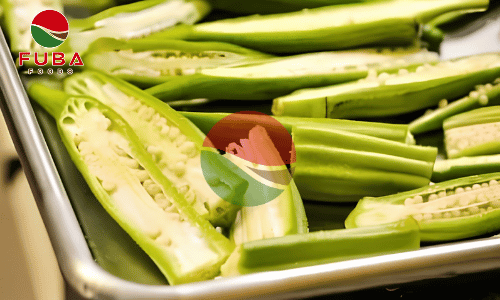
What Should Buyers Check When Sourcing Frozen Okra?
When purchasing frozen okra commercially, buyers should verify the product’s validated shelf life, storage temperature, packaging specification, production date, and batch traceability. These details allow importers, distributors, and food manufacturers to calculate inventory requirements and manage stock more effectively.
The supplier’s processing capabilities should also be considered. A direct manufacturer with control over raw material sourcing, preparation, IQF freezing, inspection, packaging, and cold storage can provide greater visibility into the factors that determine shelf life.
At FUBA, frozen okra is produced from Vietnamese raw materials and processed using IQF technology. The product range includes whole, sliced, and slant-cut frozen blanched okra, with the catalogue specifying storage at ≤ -18°C and shelf life of up to 24 months. The factory’s production system integrates raw material inspection, washing, sorting, preparation, IQF freezing, metal detection, packaging, cold storage, and export shipment, creating a controlled process from incoming materials to finished goods.
The manufacturing infrastructure also supports commercial-scale supply. The facility is listed with an annual capacity of 20,000 MT, six IQF freezing lines at 500 kg/hour each, three contact freezing lines, two air-blast freezing systems, three 500 MT cold-storage facilities, five metal detection systems, three X-ray inspection systems, and an in-house microbiological laboratory. Its quality systems include HACCP, ISO 22000, HALAL, and BRCGS, together with product traceability and temperature-controlled storage below -18°C.
This integrated factory structure is important when shelf life is a purchasing consideration because product longevity depends on more than the freezer itself. Raw material quality, processing consistency, packaging, inspection, storage, and export cold-chain handling all contribute to whether frozen okra can maintain its expected quality throughout its commercial life.
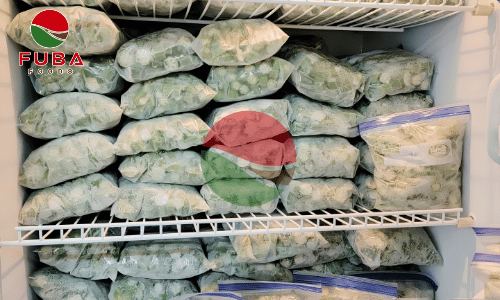
How Can Frozen Okra Shelf Life Support Inventory Planning?
A shelf life of up to 24 months gives commercial buyers greater flexibility when planning frozen vegetable inventory, particularly when products need to move through international supply chains. Longer validated storage periods can provide more room for production planning, container consolidation, seasonal purchasing, and distribution.
However, buyers should avoid treating the maximum shelf-life figure as the target storage period. Stock should still be managed according to actual demand, shipment schedules, warehouse conditions, and the remaining shelf life required by the destination market or customer.
For importers and distributors, this is particularly important because the product may spend considerable time moving through multiple stages before reaching the final customer. Manufacturing date, remaining shelf life at shipment, transportation duration, and warehouse turnover should therefore be considered together when establishing purchasing specifications.
Conclusion
Frozen okra can have a shelf life of up to 24 months when stored at or below -18°C, provided that it has been properly processed, packaged, stored, and maintained through a controlled cold chain. The actual quality of the product over this period depends on much more than freezing alone.
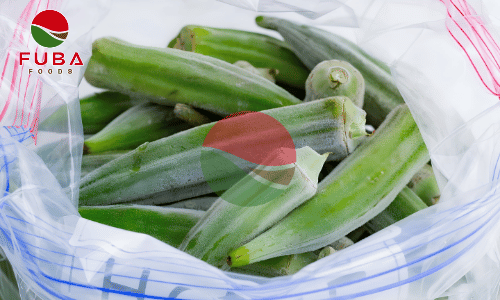
Fresh raw material quality, blanching, IQF technology, packaging protection, temperature stability, cold storage, and transportation all contribute to frozen okra shelf life. For commercial buyers, these factors provide a more useful basis for supplier evaluation than simply looking at the expiry date.
Choosing a manufacturer with integrated processing, quality control, IQF freezing, cold storage, traceability, and export capabilities can give buyers greater visibility into how shelf life is achieved and maintained. With the right processing and cold-chain controls, frozen okra can serve as a stable ingredient for food manufacturing and distribution throughout the year.


