


Frozen fruits and vegetables do not become export-ready simply by being harvested and placed in a freezer. Between the farm and the final shipment, raw materials must pass through multiple controlled stages, including sourcing, inspection, cleaning, sorting, preparation, freezing, quality control, storage, and cold-chain logistics. Each of these steps plays a critical role in determining the product’s appearance, texture, safety, shelf life, and overall consistency.
For importers, distributors, food manufacturers, and foodservice businesses, understanding this process is essential when evaluating a supplier. A competitive price alone does not guarantee reliable manufacturing capability. Buyers need clear insight into how raw materials are handled, how quickly they are processed after harvest, what freezing technologies are used, how quality is verified, and whether the factory has sufficient capacity to ensure consistent supply over time.
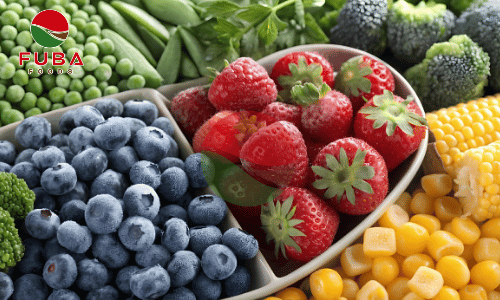
A well-controlled processing system effectively connects agricultural sourcing with industrial production. This farm-to-export approach enables frozen fruits and vegetables to retain their natural characteristics while meeting the strict requirements of international food supply chains.
This article explains how FUBA manages the entire processing chain from farm to export, highlighting key stages, quality control measures, and the operational standards required to deliver consistent, export-ready frozen products.
Key Steps in Frozen Fruit and Vegetable Processing
Frozen fruit and vegetable processing typically includes the following stages:
- Raw material sourcing
- Receiving and inspection
- Washing and cleaning
- Cutting and preparation
- Freezing (IQF or other methods)
- Quality control and inspection
- Packaging and cold storage
- Export and cold-chain logistics
What Is Frozen Fruit and Vegetable Processing?
Frozen fruit and vegetable processing is the controlled transformation of fresh agricultural products into frozen ingredients suitable for long-term storage, transportation, and commercial use. Depending on the product, processing can include raw material inspection, washing, sorting, trimming, cutting, blanching, cooking, frying, grilling, freezing, inspection, packaging, and cold storage.
The objective is not simply to freeze the product. The process must control microbial risks, physical defects, product specifications, moisture, temperature, and handling conditions while minimizing unnecessary quality deterioration.
Different fruits and vegetables also require different processing parameters. A mango cube, passion fruit pulp, avocado slice, eggplant dice, and whole okra cannot necessarily follow the same production sequence. Cut size, density, moisture content, maturity, and intended application all influence how the product should be prepared and frozen.
This is why buyers evaluating a frozen food supplier should look at the factory’s processing capabilities rather than focusing only on the finished product photograph or product specification sheet.
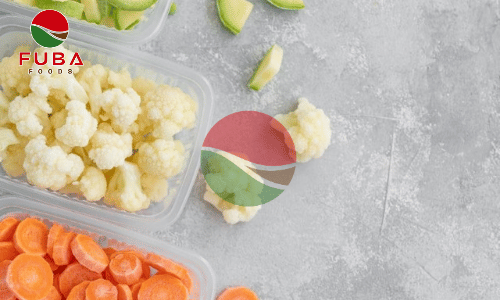
How Frozen Fruits and Vegetables Move from Farm to Factory
The first critical stage begins before the raw materials enter the processing line. Consistent frozen products depend heavily on the quality and availability of agricultural inputs.
Raw Material Sourcing and Harvest Management
Fresh fruits and vegetables naturally vary according to growing conditions, variety, maturity, weather, and harvest timing. A professional processing operation therefore needs a sourcing network capable of supplying raw materials that meet defined quality requirements rather than purchasing whatever is available on the spot market.
Harvest timing is particularly important because processing agricultural products too early or too late can affect color, firmness, flavor, moisture content, and processing yield. For frozen products, the factory must consider not only whether the raw material looks acceptable when received, but also whether it will perform properly after processing, freezing, storage, and subsequent cooking or thawing.
Vietnam’s diverse agricultural regions provide access to different fruit and vegetable growing areas throughout the year. FUBA combines sourcing relationships across these agricultural regions with processing operations, supporting a more stable supply of Vietnamese fruits and vegetables for international markets. The company has more than 15 years of experience in frozen fruit and vegetable processing and exports to more than 30 countries.
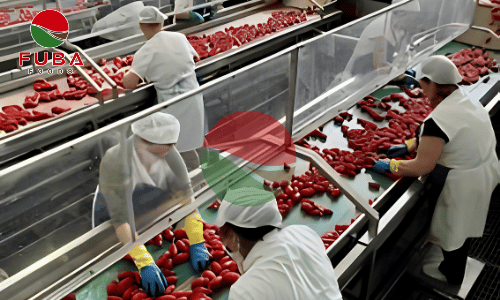
Receiving, Inspection, and Sorting
Once raw materials arrive at the factory, they should not move directly into production without inspection. Incoming materials need to be evaluated against predetermined specifications such as size, color, maturity, physical condition, and visible defects.
Sorting is especially important for products sold in standardized formats. If raw materials vary significantly in size or maturity, the finished frozen product can also show inconsistent color, texture, shape, or cooking behavior.
A controlled receiving and sorting process helps separate unsuitable materials before they consume processing capacity. It also provides an important quality-control point at the beginning of the production chain.
The Processing Stages That Determine Frozen Product Quality
After inspection, the raw material enters the processing stage. This is where the factory converts agricultural variability into a more standardized commercial product.
Washing and Cleaning
Fruits and vegetables are thoroughly washed and cleaned to remove soil, impurities, and other unwanted materials from the raw surface. Effective cleaning is an essential part of hygienic food processing because agricultural products are exposed to soil, water, handling, harvesting equipment, and transportation before reaching the factory.
However, washing alone does not guarantee food safety. It needs to be integrated into a broader system that controls hygiene, equipment sanitation, employee practices, processing conditions, and subsequent handling.
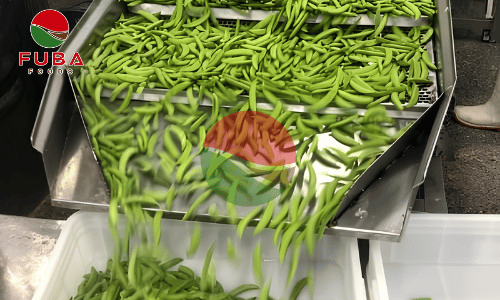
Cutting and Product Preparation
The next stage depends heavily on the required product specification. Fruits and vegetables may be processed into cubes, slices, chunks, halves, strips, random cuts, whole pieces, puree, or other customized formats.
Uniformity matters because piece size directly affects freezing time and subsequent cooking behavior. If pieces are significantly different in size, smaller pieces may freeze or cook faster than larger ones, creating inconsistencies in the final application.
For this reason, a commercial buyer should specify not only the raw material but also the required cut, size range, preparation method, and intended application. A factory capable of customized specifications can better align the processing process with the buyer’s production requirements.
The importance of format flexibility can be seen in FUBA’s frozen vegetable range, which includes multiple eggplant formats such as random cut, straight cut, dice cut, mini, coin cut, and whole eggplant, alongside both fried and grilled preparations.
Why Freezing Technology Matters in Frozen Food Processing
Freezing is one of the most important stages in the entire production process because it determines how effectively the product’s characteristics can be stabilized for storage and transportation.
IQF Freezing for Individual Pieces
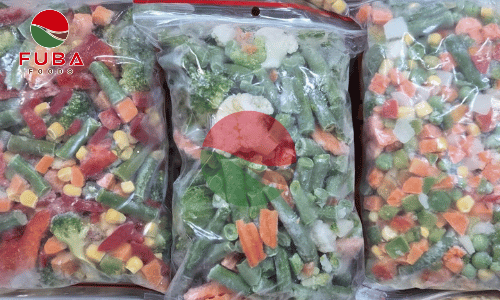
IQF, or Individually Quick Frozen, technology rapidly freezes individual pieces rather than allowing the product to form one large frozen mass. This is particularly useful for diced, sliced, chunked, or other portioned fruits and vegetables.
Rapid freezing can help limit the formation of large ice crystals within the product structure. For many frozen fruits and vegetables, this supports better retention of natural color, texture, flavor, and nutritional characteristics compared with poorly controlled freezing conditions.
The commercial advantage extends beyond product quality. Individually frozen pieces are easier to portion, weigh, handle, and introduce into production without requiring the entire package to be thawed. This can improve operational efficiency for food manufacturers and foodservice operators.
However, IQF technology should not be considered independently from the rest of the process. The quality of an IQF product depends on raw material condition, preparation, freezing parameters, equipment performance, packaging, storage, and cold-chain management.
Value-Added Processing Before Freezing
Not every frozen vegetable is simply washed, cut, and frozen. Some products require additional processing before freezing to achieve their intended characteristics.
Depending on the product, this can include steaming, blanching, frying, grilling, or other controlled treatments. These processes can change the product’s texture, flavor, cooking convenience, and final application.
This is particularly relevant for commercial buyers looking for ready-to-use ingredients. A manufacturer may prefer frozen grilled eggplant rather than raw frozen eggplant because the product can be incorporated into a prepared meal with less downstream processing.
A factory with multiple processing capabilities can therefore offer more than basic frozen raw materials. It can provide ingredients that are closer to the form required by the buyer’s production line.
Quality Control Does Not End After Freezing
A common misconception is that once a product has been frozen, most quality risks have already been eliminated. In reality, quality control continues through inspection, packaging, storage, and transportation.
Food Safety and Product Inspection
Foreign material detection and product inspection are important control points in industrial frozen food production. Modern processing facilities can integrate metal detection, X-ray inspection, laboratory testing, and other controls into the production system.
FUBA’s processing facilities include five metal detection systems, three X-ray inspection systems, and an in-house microbiological laboratory. Its quality systems include HACCP and ISO 22000, together with other international food-safety requirements such as FDA, BRCGS, and HALAL.
For buyers, the value of these systems is not simply the presence of certificates or equipment. What matters is whether quality control is integrated into the production process and consistently applied from incoming raw materials through finished products.
Packaging and Temperature-Controlled Storage
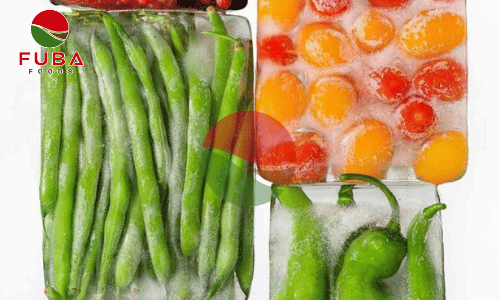
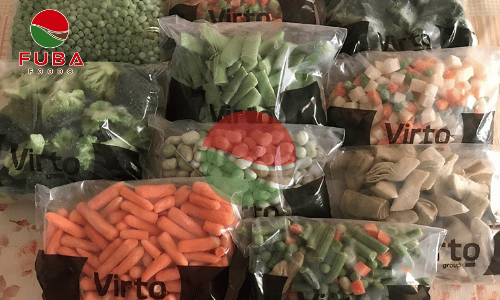
Packaging protects the finished product from physical damage and helps maintain product integrity during storage and transportation. The appropriate packaging format depends on the product, target market, order volume, and handling requirements.
Temperature control is equally important. Frozen products must remain within the required frozen condition after leaving the processing line. Temperature fluctuations during storage or transportation can affect product quality and may contribute to deterioration over time.
A reliable factory therefore needs sufficient cold-storage capacity as well as an organized logistics system. FUBA operates temperature-controlled cold storage at below -18°C, with three cold-storage units of 500 MT each, supporting larger-scale frozen product handling and export preparation.
From Factory to International Export
The final stage of frozen fruit and vegetable processing is not complete when the cartons leave the production line. Export readiness depends on maintaining product conditions throughout the logistics chain and ensuring that documentation and shipment requirements are properly managed.
Maintaining the Cold Chain
Frozen products can travel considerable distances between the processing factory and the final buyer. Maintaining appropriate temperature conditions during loading, storage, transportation, and shipment is therefore essential.
Cold-chain management should begin at the factory rather than only with the logistics provider. Products should enter temperature-controlled storage after processing and remain frozen until they reach the next stage of the distribution chain.
This is particularly important for buyers importing full-container quantities. A supplier may produce a high-quality frozen product, but inconsistent temperature management after production can undermine the quality achieved inside the factory.
Export Capacity and Supply Reliability
Long-term buyers also need to consider whether a supplier can handle commercial volumes consistently. Production capacity, equipment availability, cold storage, sourcing networks, workforce, and export experience all contribute to supply reliability.
A factory with multiple processing and freezing lines can distribute production across equipment and product categories more effectively than an operation dependent on a single production line. This becomes increasingly important when buyers require recurring shipments or customized specifications.
FUBA’s production infrastructure includes six IQF freezing lines with a stated capacity of 500 kg/hour per line, three contact freezing lines at 700 kg/hour, and two air-blast freezing systems at 600 kg/hour. The broader operation has an annual capacity of 20,000 MT and a workforce of more than 600 people.
What Buyers Should Look for in a Frozen Fruit and Vegetable Processing Factory
The most reliable way to evaluate a frozen food supplier is to examine the complete production chain rather than judging the product at the end of the process.
Start with raw material sourcing. Ask whether the supplier has access to reliable growing regions and whether raw materials are inspected against defined specifications. Then evaluate the factory’s processing capabilities, including washing, sorting, cutting, value-added processing, and freezing.
Next, examine food-safety controls. Certifications such as HACCP and ISO 22000 can provide useful evidence of a structured food-safety management system, but buyers should also consider the factory’s inspection equipment, laboratory capabilities, traceability procedures, and production controls.
Finally, assess cold storage, packaging, export experience, and production capacity. These factors determine whether a supplier can move from producing a good sample to delivering consistent commercial shipments.
The strongest manufacturing relationships are built when product specifications, production processes, quality requirements, packaging, and logistics expectations are clearly aligned from the beginning. This reduces the risk of unexpected variation between sample approval and subsequent bulk shipments.
Conclusion
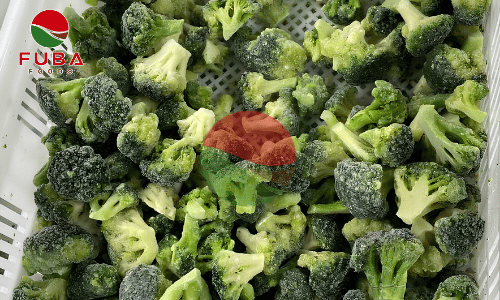
Frozen fruit and vegetable processing is a complete manufacturing system that begins with agricultural sourcing and continues through inspection, cleaning, preparation, freezing, quality control, storage, and export logistics. Every stage contributes to the quality and consistency of the final product.
For international buyers, understanding this process provides a better way to evaluate suppliers. Instead of asking only about price or product availability, buyers can assess whether a factory has the sourcing network, processing technology, food-safety controls, cold-storage infrastructure, and production capacity required for reliable long-term supply.
A strong farm-to-export operation turns fresh agricultural products into standardized frozen ingredients that can move efficiently through international food supply chains. That combination of agricultural sourcing, controlled manufacturing, and export capability is what makes frozen fruits and vegetables commercially reliable not simply the fact that they have been frozen.


