


Global demand for frozen fruit continues to grow as food manufacturers, distributors, and retailers seek reliable suppliers capable of delivering consistent quality, year-round availability, and compliance with increasingly strict international food regulations.
Frozen fruit export companies meet international standards by implementing certified quality management systems, applying advanced IQF freezing technology, maintaining complete traceability, and complying with food safety regulations such as HACCP, ISO 22000, BRCGS, FDA, or GlobalG.A.P. These standards help ensure product safety, preserve nutritional value, and enable consistent exports to global markets.
Understanding how an export company achieves these standards helps buyers reduce sourcing risks, evaluate supplier capabilities more effectively, and establish long-term partnerships. The following sections explain the certifications, manufacturing processes, and quality systems that distinguish professional frozen fruit exporters from ordinary suppliers.

What Is a Frozen Fruit Export Company?
A frozen fruit export company is a manufacturer or exporter that processes, freezes, packages, and supplies frozen fruit products to customers around the world. Unlike businesses that simply purchase products from different factories and resell them, professional manufacturers oversee the entire production process, allowing them to maintain tighter control over quality, food safety, and supply reliability.
For international buyers, understanding how a frozen fruit export company operates provides a stronger foundation for evaluating potential suppliers. The differences between manufacturers and trading companies extend beyond pricing—they directly influence product consistency, traceability, communication efficiency, and the long-term stability of the supply chain.
Factory-Based Exporters vs. Trading Companies
One of the first questions buyers should ask when evaluating a supplier is whether they are working directly with a manufacturer or through a trading company. While both may offer similar frozen fruit products, their ability to control production and guarantee consistent quality can differ significantly.
A factory-based frozen fruit export company manages every stage of production internally, from sourcing fresh fruit and inspecting raw materials to processing, IQF freezing, packaging, quality control, and export logistics. Because every stage is monitored under a unified management system, manufacturers can maintain consistent specifications across production batches, respond more efficiently to technical requirements, and provide greater transparency throughout the supply chain. This level of control is particularly valuable for food manufacturers that depend on stable ingredient performance for large-scale production.
Trading companies, on the other hand, often purchase products from multiple factories based on availability or pricing. Although this approach may provide access to a wider range of products, it can also result in differences in quality, packaging, documentation, or production standards between shipments. For importers supplying supermarkets, food service businesses, or industrial food manufacturers, these inconsistencies may increase operational risks and create unnecessary challenges in quality management.
For this reason, many international buyers prefer establishing long-term partnerships directly with manufacturers. Factory-based exporters typically offer more competitive pricing, better technical support, greater flexibility for OEM and private label projects, and stronger quality assurance throughout the entire procurement process.
This factory-based approach is also reflected in FUBA’s manufacturing model. By managing raw material sourcing, IQF processing, quality control, and export operations within a single production system, the company is able to maintain consistent product specifications while supporting the evolving requirements of international food manufacturers and distributors.

Common Frozen Fruit Products for Export
As consumer demand for healthy, convenient, and plant-based foods continues to expand, frozen fruit has become an essential ingredient across numerous food industries. Professional frozen fruit export companies therefore offer a broad portfolio of products that can support different manufacturing applications while meeting the quality requirements of international markets.
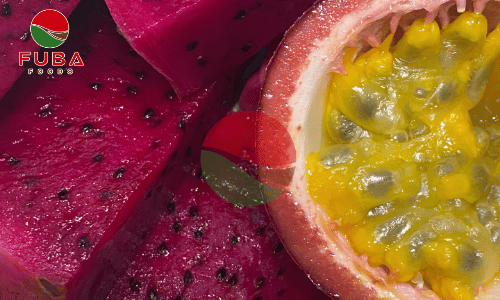
Among the most commonly exported products are frozen mango, avocado, pineapple, dragon fruit, passion fruit, banana, coconut, jackfruit, mixed tropical fruits, and fruit purées. Depending on customer requirements, many manufacturers also provide customized fruit blends, tailored product specifications, and OEM packaging solutions for private-label brands.
Most export products are processed using Individual Quick Freezing (IQF) technology. Unlike conventional freezing methods that create large blocks of frozen fruit, IQF freezes each piece individually within a very short period. This rapid freezing process helps preserve the fruit’s natural texture, vibrant color, fresh flavor, and nutritional value while preventing the pieces from sticking together.
For industrial buyers, these characteristics translate into greater production efficiency. IQF frozen fruit is easier to portion, reduces processing waste, shortens preparation time, and delivers more consistent performance across beverages, dairy products, desserts, bakery applications, and ready-to-eat foods.
Why International Buyers Prefer Certified Manufacturers
Meeting international market requirements involves much more than producing visually appealing frozen fruit. Buyers must also ensure that every shipment complies with food safety regulations, customer specifications, and import requirements in the destination country. As a result, certified manufacturers have become the preferred choice for businesses seeking reliable long-term supply partners.
Professional frozen fruit export companies invest heavily in standardized production systems that cover raw material selection, hygienic processing, laboratory testing, quality inspection, traceability, and cold-chain management. Rather than relying solely on final product inspections, they establish preventive quality control procedures throughout the entire manufacturing process, minimizing risks before products reach customers.
Equally important is the ability to provide complete export documentation. International buyers often require certificates such as Certificates of Analysis (COA), Certificates of Origin (CO), phytosanitary certificates, and other market-specific compliance documents before shipments can enter their destination countries. Manufacturers with established export experience understand these requirements and can prepare documentation accurately, helping customers avoid customs delays and unnecessary compliance issues.
Ultimately, working with a certified manufacturer provides more than regulatory compliance. It gives buyers greater confidence that every shipment will meet agreed specifications, arrive with complete documentation, and support a stable supply chain capable of sustaining long-term business growth.
How Frozen Fruit Export Companies Meet International Standards
Producing frozen fruit for international markets involves far more than harvesting fresh fruit and freezing it for export. Every shipment must comply with food safety regulations, customer specifications, and import requirements that vary across different countries and regions. To achieve this level of consistency, professional frozen fruit export companies establish integrated quality management systems that monitor every stage of production, from raw material selection to international logistics.
Frozen fruit export companies meet international standards through four essential pillars: internationally certified food safety management systems, advanced IQF freezing technology, rigorous quality control procedures, and comprehensive traceability throughout the supply chain. Together, these practices ensure every shipment meets regulatory requirements while delivering consistent quality to food manufacturers and distributors worldwide.
Rather than relying on final product inspections alone, reputable manufacturers focus on preventing quality issues before they occur. This proactive approach not only protects food safety but also enables buyers to receive products that consistently meet agreed specifications across multiple production batches.
Internationally Certified Food Safety Management Systems
For international buyers, food safety certifications are often the first indication that a supplier operates according to globally recognized manufacturing standards. These certifications demonstrate that quality is managed through documented procedures, routine audits, and continuous improvement rather than depending solely on manual inspections at the end of production.
Most professional frozen fruit export companies implement internationally recognized systems such as HACCP, ISO 22000, BRCGS, FDA compliance, and GlobalG.A.P. Although each certification serves a different purpose, together they establish a comprehensive framework for managing food safety throughout the supply chain. HACCP focuses on identifying and controlling critical food safety hazards, while ISO 22000 integrates food safety management across the entire production process. For exporters serving European retailers or multinational food brands, BRCGS certification provides additional assurance that manufacturing facilities comply with stringent retail standards. Meanwhile, FDA compliance and GlobalG.A.P. help suppliers satisfy the regulatory and agricultural requirements of specific export markets.
For buyers, these certifications represent more than compliance documents. They provide confidence that production follows standardized procedures, employees receive ongoing food safety training, and manufacturing processes are regularly verified through independent audits. As a result, certified suppliers are generally better equipped to reduce product recalls, minimize compliance risks, and support long-term business partnerships.

Advanced IQF Technology Preserves Product Quality
While certifications establish the foundation for food safety, production technology plays an equally important role in maintaining the quality of frozen fruit. Among the various freezing methods available today, Individual Quick Freezing (IQF) has become the preferred technology for exporting premium frozen fruit because it preserves the fruit’s natural characteristics far more effectively than conventional freezing techniques.
During the IQF process, each fruit piece is frozen individually within a very short period at extremely low temperatures. Because freezing occurs so rapidly, only small ice crystals form inside the fruit’s cellular structure. This significantly reduces tissue damage, helping preserve the fruit’s original texture, vibrant color, fresh flavor, and nutritional value after thawing.
The advantages extend beyond product appearance. For food manufacturers, IQF frozen fruit is easier to handle during production because individual pieces remain separate instead of freezing into solid blocks. This improves portion control, reduces raw material waste, shortens preparation time, and ensures more consistent performance in applications such as smoothies, beverages, dairy products, desserts, bakery fillings, sauces, and ready-to-eat meals. By combining product quality with manufacturing efficiency, IQF technology has become a key benchmark for professional frozen fruit exporters serving international markets.
At FUBA, IQF technology is applied to process tropical fruits at their optimal maturity, helping preserve natural color, texture, and flavor while supporting long-term frozen storage. Combined with standardized processing procedures, this approach allows the company to deliver products with consistent quality across multiple production batches.
Quality Control Throughout Every Stage of Production
Consistent exports begin long before the freezing process. Professional manufacturers recognize that maintaining product quality requires continuous monitoring at every production stage rather than relying on final inspections alone. This preventive approach allows potential issues to be identified and corrected before they affect finished products.
Quality control starts with raw material selection. Only fruits that meet predefined standards for maturity, freshness, size, and appearance are accepted for processing. Incoming raw materials are carefully inspected to remove damaged or unsuitable fruit before entering the production line, helping ensure greater consistency throughout subsequent processing stages.
Once production begins, every operation is performed under strict hygienic conditions. Washing, peeling, cutting, sorting, freezing, and packaging follow standardized operating procedures designed to minimize contamination risks while maintaining product integrity. Throughout the process, quality assurance personnel continuously monitor critical control points to verify that production remains compliant with food safety requirements.
Before products are approved for export, each production batch undergoes comprehensive verification. Manufacturers typically evaluate microbiological safety, physical characteristics, packaging integrity, labeling accuracy, product temperature, and compliance with customer specifications. Many exporters also conduct laboratory testing and foreign material detection to ensure products satisfy both regulatory requirements and individual customer standards before shipment.
By implementing multiple quality checkpoints instead of relying on a single final inspection, professional frozen fruit export companies can consistently deliver products that meet international expectations for safety, quality, and reliability.
How to Choose a Reliable Frozen Fruit Export Company
With hundreds of frozen fruit suppliers competing in the global market, selecting the right export partner requires evaluating much more than product pricing. A competitive quotation may appear attractive initially, but long-term success depends on the supplier’s ability to maintain consistent quality, comply with international regulations, and provide reliable support as business requirements evolve.
Rather than comparing suppliers based on cost alone, international buyers should assess the overall capability of a frozen fruit export company to deliver stable production, transparent quality management, and dependable customer service. A comprehensive evaluation helps reduce sourcing risks while establishing partnerships that support sustainable business growth.
Evaluate Manufacturing Capabilities Beyond Production Capacity
A supplier’s manufacturing capability extends far beyond the size of its factory or annual production volume. Buyers should understand how production is managed, what technologies are used, and whether the manufacturer can consistently meet quality requirements as order volumes increase.
Factory-based manufacturers generally provide stronger control over production because they oversee every stage of processing internally. This allows them to maintain consistent specifications, respond more efficiently to technical requests, and adapt production schedules to customer demand. Manufacturers with advanced IQF processing lines, modern quality control systems, and flexible packaging capabilities are also better positioned to support OEM projects and customized product requirements.
Equally important is the supplier’s ability to secure stable raw material supplies throughout the year. Manufacturers with established sourcing networks and long-term relationships with growers are generally better equipped to maintain consistent production, even during seasonal fluctuations. This stability becomes particularly valuable for food manufacturers that rely on uninterrupted ingredient availability to meet their own production schedules.
Verify Certifications and Export Experience
International certifications demonstrate that a supplier follows recognized food safety standards, but certifications alone do not guarantee successful export performance. Buyers should also consider the company’s practical experience in serving overseas markets and its ability to comply with destination-specific regulations.
Experienced frozen fruit export companies understand the documentation required for international shipments and can prepare Certificates of Analysis (COA), Certificates of Origin (CO), phytosanitary certificates, laboratory reports, and other compliance documents accurately and efficiently. Their familiarity with customs procedures and import regulations helps reduce clearance delays while minimizing the risk of rejected shipments.
Export experience also reflects a manufacturer’s ability to adapt to different customer requirements. Suppliers that regularly serve food manufacturers, distributors, and retailers across multiple markets often possess stronger technical knowledge, more efficient communication processes, and a better understanding of international quality expectations.
Assess Long-Term Supply Reliability and Customer Support
A successful supplier relationship is built on more than manufacturing capability. Long-term partnerships require responsive communication, consistent delivery performance, and a shared commitment to solving problems as business needs change.
Reliable frozen fruit export companies maintain transparent communication throughout production and shipping, keeping customers informed about lead times, production schedules, and potential supply challenges. They respond promptly to technical inquiries, support product customization when needed, and address quality concerns through structured corrective action rather than temporary solutions.
Strong after-sales support also reflects a supplier’s long-term commitment to customer success. Whether assisting with documentation, managing quality claims, or planning future production, responsive manufacturers become strategic partners rather than simply product suppliers. For buyers seeking stable, scalable supply chains, this level of cooperation often proves just as valuable as product quality itself.
Beyond manufacturing capability, FUBA places strong emphasis on long-term customer collaboration. From product specification discussions to export documentation and production planning, the company works closely with international buyers to support stable supply and consistent business operations.
Conclusion
Choosing the right frozen fruit export company is a strategic decision that influences far more than procurement costs. A reliable supplier helps businesses maintain consistent product quality, comply with international food safety regulations, and build a resilient supply chain capable of supporting long-term growth. While pricing remains an important consideration, international buyers should also evaluate a supplier’s manufacturing capabilities, food safety certifications, IQF technology, quality management systems, traceability, and cold chain expertise before making a sourcing decision.
As global food regulations continue to evolve, partnering with a manufacturer that invests in standardized production processes and continuous quality improvement becomes increasingly valuable. Suppliers that combine advanced processing technology with transparent quality management are better positioned to deliver consistent frozen fruit products while reducing operational risks for importers, distributors, retailers, and food manufacturers.
For businesses seeking a factory-based frozen fruit export partner, FUBA applies internationally recognized food safety standards, advanced IQF freezing technology, comprehensive quality control, and batch-level traceability throughout its manufacturing process. By focusing on product consistency, reliable supply, and long-term customer partnerships, FUBA supports global buyers with frozen fruit solutions designed to meet the quality expectations of international markets.


