

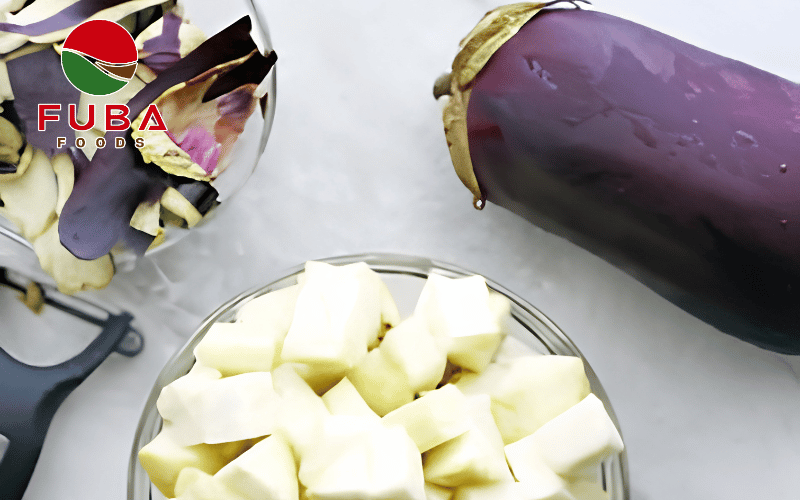
Frozen whole eggplant is used in commercial food production when manufacturers need a convenient vegetable ingredient that can be stored, portioned, and processed consistently throughout the year. Unlike pre-cut formats, whole eggplant retains its original form and gives manufacturers greater flexibility in preparation, cooking, and product presentation.
For food manufacturers, sourcing frozen whole eggplant is not simply about finding whole vegetables that have been frozen. Size consistency, raw material quality, freezing performance, texture, packaging, storage conditions, and supply stability all affect how the product performs after delivery. The right supplier should therefore be able to maintain a clear product specification while providing reliable production and cold-chain control.

This article explains what frozen whole eggplant (Kanoko) is, how it is processed, what manufacturers should evaluate before purchasing, and where this format can fit into commercial food production.
What Is Frozen Whole Eggplant (Kanoko)?
Frozen whole eggplant refers to eggplant that is processed and frozen while retaining its whole form rather than being diced, sliced, or cut into smaller pieces. The Kanoko format can be suitable for applications where the shape of the eggplant remains important to cooking or presentation.
The whole format also gives manufacturers more control over downstream processing. Depending on the final recipe, the eggplant can be further cooked, stuffed, grilled, fried, or sliced as part of the production process. This flexibility can be useful for manufacturers producing multiple products from the same ingredient.
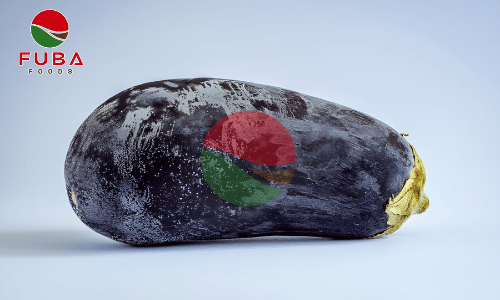
However, the whole format also places greater importance on raw-material quality. When the eggplant is not cut into smaller pieces, defects, bruising, inconsistent sizing, and surface damage remain visible. Effective sorting and grading are therefore important before freezing.
Why Food Manufacturers Choose Frozen Whole Eggplant
One of the main advantages of frozen whole eggplant is processing flexibility. A pre-cut product comes with a fixed shape and size, while whole eggplant can be further prepared according to the requirements of different recipes and production lines.
Frozen storage can also make inventory planning easier. Manufacturers can maintain an eggplant supply outside the fresh harvest window and reduce dependence on frequent fresh-vegetable purchasing. When the cold chain is properly maintained, frozen eggplant can remain available for scheduled production over an extended storage period.
Size specifications also support more predictable portioning and cooking. For products where the eggplant remains visually prominent, consistent sizing can help manufacturers achieve more uniform cooking times, filling quantities, and final presentation.
How Frozen Whole Eggplant Is Processed
Product quality starts with raw-material selection and continues through every stage of processing. A controlled production process helps reduce variation before the finished product reaches the cold store.
Raw Material Selection and Inspection
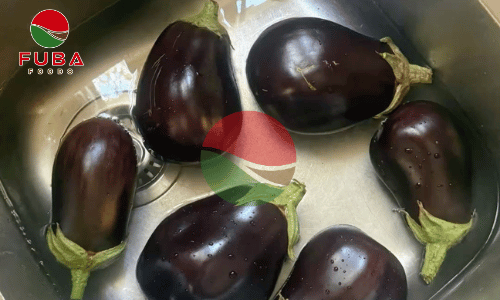
Eggplants are sourced from selected growing areas and inspected when they arrive at the processing facility. This stage is particularly important for whole eggplant because there is no cutting process to remove large portions of damaged or unsuitable material.
Size, color, maturity, physical condition, and overall quality should be assessed before production. Sorting and grading then help create a more consistent raw-material input for the following stages.
A stable agricultural sourcing network can also help reduce fluctuations in raw-material availability. FUBA works with growing regions across Vietnam to source agricultural products, including eggplant for frozen vegetable production.
Washing, Preparation, and IQF Freezing
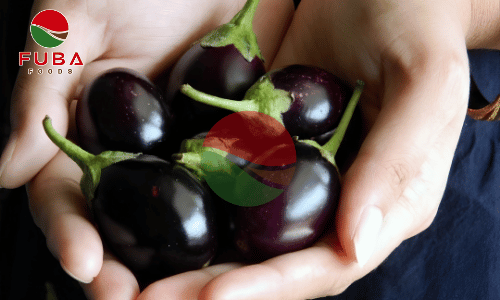
After inspection and grading, the eggplant is washed and prepared according to the product specification. Freezing is another critical stage because freezing conditions can affect texture, color, and performance during later cooking.
IQF technology rapidly freezes individual products, helping prevent them from forming one solid frozen block. This makes the product easier to handle and portion during subsequent processing.
A typical controlled processing flow includes raw-material inspection, washing, sorting and grading, preparation, IQF freezing, metal detection, packing, cold storage, and shipment.
For whole eggplant, maintaining the physical condition of each unit is particularly important. The freezing process needs to achieve the required temperature while maintaining consistent product quality across production batches.
Food Safety and Final Quality Control
Food safety controls continue after the freezing stage. Metal detection, product traceability, controlled storage, and documented quality procedures can help reduce risks before products are shipped.
For commercial frozen vegetable production, these controls are important because incoming ingredient quality can affect both the final product and the manufacturer’s own quality-assurance process.
Frozen Whole Eggplant Specifications Manufacturers Should Check
Before placing a commercial order, manufacturers should establish a clear product specification rather than comparing suppliers based on price alone.
Size and Appearance Consistency
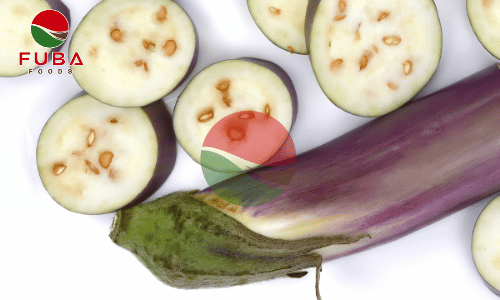
Size is one of the first specifications to define for whole eggplant. Different applications may require different dimensions because size affects cooking time, portioning, packaging, and final presentation.
Manufacturers should also clarify acceptable tolerances for color, shape, surface condition, bruising, and physical damage. A clearly defined specification gives both parties a common quality reference and makes batch inspection more objective.
Processing Method and Product Condition
Buyers should confirm whether the product is raw frozen, blanched, fried, grilled, or otherwise processed before freezing. These formats have different characteristics and should not be treated as interchangeable.
For Kanoko products, the processing method should be confirmed together with the product specification. Whole eggplant may be supplied in different conditions depending on the intended application, so buyers should verify whether the product is suitable for their recipe and production line.
For manufacturers purchasing whole eggplant for a specific application, confirming the processing method before ordering can help prevent formulation or production issues later.
Storage Temperature and Shelf Life
Frozen whole eggplant requires continuous temperature control from production through delivery. A storage temperature of -18°C or below is commonly used for frozen products, and buyers should confirm the supplier’s stated storage conditions and shelf life before shipment.
These conditions also need to be considered alongside the buyer’s own cold-storage and distribution system. Even a properly processed product can lose quality if temperature control is not maintained after arrival.
For international shipments, maintaining the cold chain throughout transportation is therefore part of the overall sourcing requirement.
Applications of Frozen Whole Eggplant in Food Manufacturing
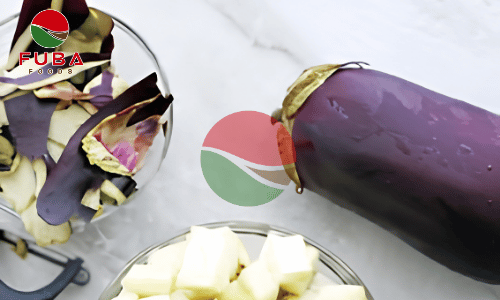
Whole eggplant is particularly useful when manufacturers want to retain the recognizable shape of the vegetable or perform additional processing at their own facility.
It can be incorporated into prepared meals, vegetable dishes, stuffed eggplant products, stir-fries, and foodservice preparations. Depending on the required texture and cooking method, manufacturers can further process the whole eggplant into a final format that matches their recipe.
The format can also provide flexibility for manufacturers operating multiple product lines. Instead of purchasing a separate pre-cut format for every application, whole eggplant can be processed according to individual production requirements, provided the manufacturer has suitable equipment and processes.
Frozen eggplant can be used in a range of commercial products, including salads, soups, stir-fries, pasta, ready meals, foodservice dishes, and pizza toppings. The most suitable format depends on the recipe, cooking method, and required final texture.
Choosing a Reliable Frozen Whole Eggplant Supplier
A reliable supplier should be evaluated on more than product appearance and quotation price. The key consideration is whether the supplier can consistently reproduce the agreed specification at commercial volumes.
Production and Processing Capability
Production capacity is one factor to consider when evaluating a long-term supplier. FUBA operates a frozen fruit and vegetable processing facility in Vietnam with an annual supply capacity of 20,000 MT and more than 600 workers.
Its processing infrastructure includes IQF freezing lines, contact freezing lines, air-blast freezing systems, metal detection, X-ray inspection, cold storage, and other processing equipment. These capabilities support different frozen product formats and production requirements.
Raw Material and Supply Stability
Supply reliability is equally important. Relationships with farming regions and growers can help reduce fluctuations in raw-material availability, while controlled processing provides greater consistency once the vegetables enter the factory.
For international buyers, export experience and cold-chain management are also important. The product needs to remain within the required temperature range throughout transportation and delivery.
Customized Specifications and Packaging
Manufacturers should also consider whether a supplier can support customized specifications or packaging formats. This can be useful when a standard catalogue product does not fully match a production line or finished-product requirement.
FUBA supports OEM and private-label manufacturing, including customized specifications and packaging formats. This can give manufacturers additional flexibility when developing commercial products.
Packaging and Commercial Supply Considerations
Packaging should match the buyer’s production volume, logistics model, and storage capacity. Foodservice and bulk formats are generally more practical for industrial purchasing, while smaller packs may suit operations with lower consumption volumes.
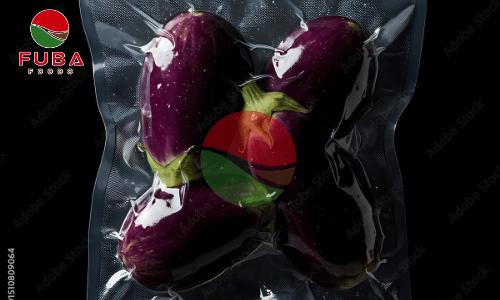
Available packaging options may include retail packs from 500 g to 2 kg, foodservice packs of 5 kg, and bulk export packaging using a 10 kg carton with PE inner liner. The appropriate format depends on the buyer’s production volume, warehouse capacity, and distribution requirements.
For larger commercial programs, buyers should also confirm carton configuration, inner packaging, palletization, container loading, labeling requirements, and documentation before shipment. These details affect warehouse handling, import procedures, production planning, and overall logistics costs.
Conclusion
Frozen whole eggplant (Kanoko) gives food manufacturers a flexible vegetable format that retains the whole form while allowing further processing according to specific production requirements. Its performance depends on more than the freezing process alone. Raw-material selection, size grading, processing control, freezing technology, food-safety procedures, packaging, storage, and cold-chain management all contribute to consistent quality.
When selecting a frozen whole eggplant supplier, manufacturers should therefore evaluate the complete production system behind the product. A supplier with reliable agricultural sourcing, controlled processing, appropriate inspection systems, freezing capacity, and export experience can provide greater consistency for long-term commercial supply.


