

For international food manufacturers, distributors, foodservice companies, and importers, sourcing frozen sweet potato is about more than finding a competitive quotation. Buyers need consistent raw-material quality, reliable product specifications, controlled processing, appropriate packaging, and a supply system that can support repeated commercial orders.
Frozen sweet potato offers manufacturers a practical way to work with a standardized vegetable ingredient while reducing the preparation required for washing, peeling, cutting, and processing fresh raw materials. Depending on the format, it can be incorporated into ready meals, foodservice products, side dishes, bakery products, snacks, and other processed foods.
For buyers, choosing a frozen sweet potato supplier involves more than evaluating the product itself. Consistent specifications, processing quality, and supply reliability all play an important role in supporting stable food production. This article explores the key factors to consider when sourcing frozen sweet potato from Vietnam and selecting a supplier for long-term commercial supply.

Why Source Frozen Sweet Potato from Vietnam?
Vietnam has a well-established agricultural base and a growing food-processing industry, creating opportunities for international buyers to source both fresh agricultural products and processed frozen ingredients.
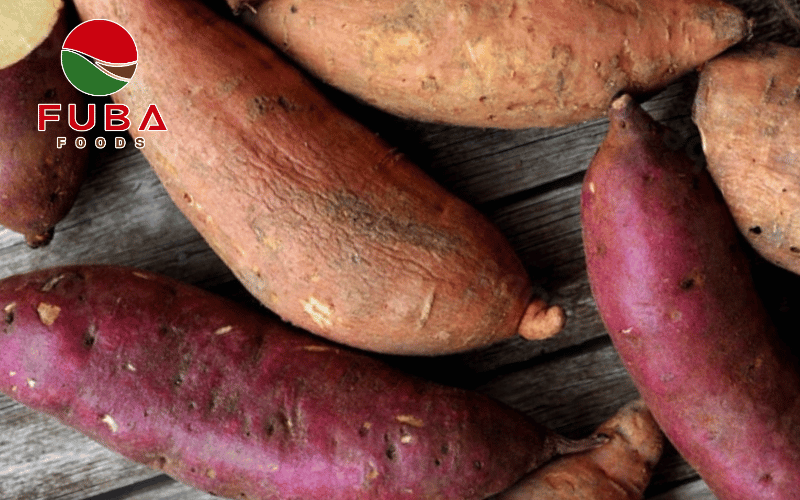
For frozen sweet potato, the advantage of industrial processing is particularly important. Fresh sweet potatoes can vary in size, color, maturity, moisture, and texture depending on growing and harvesting conditions. Food manufacturers, however, typically require ingredients that fit defined production specifications.
Processing and freezing can help convert agricultural raw materials into more standardized formats that are easier to store, transport, portion, and incorporate into commercial food production.
Vietnam’s Agricultural Supply Supports Industrial Sourcing
A reliable frozen sweet potato supply begins with appropriate raw materials. Sweet potatoes need to be selected according to characteristics relevant to the intended application, including maturity, size, color, texture, and overall condition.
A structured sourcing network can provide greater consistency than purchasing through fragmented spot markets. Raw materials can be assessed before entering production, allowing processors to establish quality requirements at the beginning of the supply chain.
For international buyers, this matters because raw-material variation can eventually affect product appearance, yield, texture, and cooking performance.
What Should Buyers Look for in a Frozen Sweet Potato Supplier?
Choosing a frozen sweet potato supplier should involve more than checking whether the product meets a general description. Buyers should evaluate whether the supplier can consistently control the characteristics that affect manufacturing performance.
Product Size, Color and Texture
Size consistency is important when frozen sweet potato is used in ready meals, side dishes, vegetable mixes, and other products where the ingredient remains visible.

Uniform pieces can also simplify portioning and improve production consistency. For manufacturers producing standardized meals, for example, variations in piece size can affect both the visual appearance and the amount of ingredient used per serving.
Color is another important consideration, particularly when sweet potato is a visible component of the finished product. Texture should also be assessed under the actual preparation conditions used by the buyer, since products intended for reheating, steaming, baking, or further processing may require different characteristics.
Processing Format Should Match the Application
Different frozen sweet potato formats can serve different production requirements. Uniform dice can be suitable for ready meals and products requiring controlled portioning, while random-cut pieces may be preferable where a more natural appearance is desired.
Other processed formats may be appropriate for formulations requiring specific sweetness, texture, or preparation characteristics.
The objective is therefore not to identify one universally “best” format, but to select a product that fits the buyer’s manufacturing process, equipment, yield requirements, and finished-product specifications.
IQF Freezing and Product Handling
IQF technology rapidly freezes individual pieces, helping maintain separation between frozen units rather than allowing them to form a single solid mass.
For food manufacturers, this can improve handling efficiency. Operators can take the required quantity from a carton without having to thaw or mechanically separate a large frozen block. This makes portioning and ingredient preparation more practical for standardized production.

Proper freezing also forms part of overall product-quality control, working together with raw-material selection, processing conditions, packaging, and frozen storage.
FUBA incorporates IQF freezing into its frozen vegetable processing system, alongside raw-material inspection, preparation, quality control, packaging, and cold storage. This provides an example of how freezing technology fits within a broader manufacturing process rather than functioning as an isolated production step.
Frozen Sweet Potato Applications in Food Manufacturing
The commercial value of frozen sweet potato comes from its flexibility across different food applications. The appropriate product format depends largely on how the ingredient will be incorporated into the finished product.
Ready Meals and Frozen Prepared Foods
Frozen sweet potato can be incorporated into ready meals alongside meat, grains, sauces, and other vegetables.
Uniform dice are particularly useful when manufacturers require controlled portioning and a consistent visual appearance. Because the ingredient has already undergone preparation, manufacturers can reduce the labor associated with washing, peeling, and cutting fresh sweet potatoes.
This can be particularly useful for high-volume production where ingredient preparation needs to remain consistent across multiple batches.
Foodservice and Side Dishes
Foodservice operators often require ingredients that can be stored conveniently and prepared with minimal additional processing.
Processed frozen sweet potato can be used as a side dish component or incorporated into mixed vegetable preparations. For distributors supplying restaurants, catering businesses, and institutional kitchens, frozen formats can also provide greater inventory flexibility than fresh raw materials.

Bakery, Snacks and Further Processing
Sweet potato can also contribute its natural sweetness, color, and texture to processed food formulations.
Depending on the product design, manufacturers may incorporate sweet potato into fillings, snacks, bakery products, vegetable-based preparations, and other value-added foods.
For these applications, the processing format should be discussed with the supplier in advance because the required cut, texture, and processing characteristics can differ considerably between finished products.
Processing and Food Safety Control
For international buyers, food safety should be evaluated as part of the supplier’s overall manufacturing system rather than through final-product testing alone.
From Raw Material Inspection to Frozen Product
A controlled production flow typically begins with inspection of incoming raw materials, followed by washing, cleaning, sorting, preparation, processing, freezing, inspection, packaging, and cold storage.
Each stage can influence the final product. Raw-material inspection helps control quality before processing, while sorting and preparation help establish more consistent specifications before freezing.
For buyers, a defined production flow also provides greater visibility into how the supplier manages quality across repeated orders.

Quality Systems and Traceability
Food manufacturers supplying international markets may require documentation covering food safety, traceability, product specifications, and shipment compliance.
A suitable supplier should therefore be able to provide the documentation required for the destination market and maintain sufficient batch information for quality verification when necessary.
These systems are particularly important for buyers that incorporate frozen sweet potato into their own finished products, as supplier documentation can become part of their internal quality-assurance process.
Cold Storage, Packaging and Shelf Life
Freezing the product correctly is only the beginning of frozen-product quality management. Storage and transportation conditions also need to remain controlled after processing.
Frozen sweet potato should be maintained at the supplier’s specified storage temperature throughout warehousing, loading, transportation, and distribution. Stable frozen conditions help protect the quality established during processing.
Packaging should also be selected according to the buyer’s distribution model. Food manufacturers may prioritize bulk formats for production efficiency, while foodservice distributors may require packaging that is easier to handle in commercial kitchens.
For international shipments, buyers should therefore evaluate the product specification, packaging configuration, cold-storage conditions, and logistics process together rather than considering them separately.
Production Capacity and Supply Reliability
A supplier may provide a satisfactory sample but still struggle to support recurring commercial orders. For this reason, production capacity should form part of the supplier-qualification process.

Buyers should consider:
- Raw-material sourcing capacity
- Processing and freezing capacity
- Cold-storage infrastructure
- Quality-control systems
- Packaging capability
- Export experience
- Ability to maintain specifications across repeated orders
FUBA’s manufacturing operation combines agricultural sourcing with frozen fruit and vegetable processing, supported by IQF freezing lines, quality-control equipment, cold-storage facilities, and export infrastructure. Its stated annual supply capacity of 20,000 MT and experience serving international markets provide an indication of the scale at which its frozen-product operations are structured.
How to Select the Right Frozen Sweet Potato Supplier Vietnam
The selection process should begin with the buyer’s actual manufacturing requirements.
Before requesting quotations, buyers should define the required product format, cut size, color, texture, processing method, packaging, annual volume, storage conditions, and destination-market requirements.
Samples should then be evaluated under actual production conditions rather than through visual inspection alone. Manufacturers should assess texture after cooking or reheating, portioning performance, yield, color retention, and overall compatibility with the finished product.

Supplier capability should also be assessed from a factory perspective. Buyers should determine whether the supplier has direct control over raw-material sourcing, processing, freezing, quality inspection, cold storage, packaging, and export documentation.
Finally, commercial evaluation should consider total procurement cost rather than quotation price alone. Consistent specifications, predictable yield, fewer quality deviations, reliable delivery, and suitable packaging can have a greater impact on long-term purchasing costs than a small difference in the initial unit price.
Conclusion
A reliable frozen sweet potato supplier Vietnam should provide more than a frozen agricultural product. For international food manufacturers, consistency needs to be maintained across raw-material sourcing, processing, freezing, quality control, packaging, storage, and export logistics.
Vietnam provides a strong sourcing base for frozen sweet potato, but the value of that sourcing depends on the supplier’s ability to transform agricultural raw materials into a consistent ingredient that performs reliably in commercial production.
For buyers, evaluating product specifications, processing capability, food-safety systems, supply capacity, packaging, cold-chain management, and export experience can help identify a supplier capable of supporting long-term production requirements. A factory-based approach, such as the manufacturing model used by FUBA, can provide greater visibility across these stages while allowing buyers to discuss product and packaging requirements directly with the processor.


