


Sweet potato has become a familiar ingredient in many prepared food products, valued for its naturally sweet flavour, distinctive colour, and versatility across different recipes. It is used in everything from ready meals and soups to vegetable mixes, side dishes, and foodservice preparations. As production moves to a larger scale, however, preparing and handling fresh sweet potatoes can have a noticeable impact on production time, labour, and ingredient consistency. Having the ingredient prepared in a consistent format can make the process much easier to manage, especially when sweet potato is used regularly.
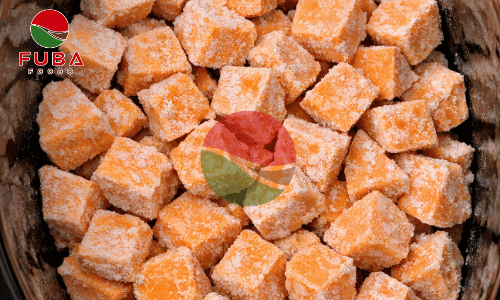
For this reason, frozen sweet potato cubes provide a practical ingredient option for food manufacturers and foodservice operators. The product is prepared, cut, and frozen before delivery, so it can be incorporated into production with less preparation at the destination. For commercial buyers, the value goes beyond convenience, as raw material quality, cube uniformity, processing, freezing, and storage all contribute to the consistency of the finished ingredient.
This article explains what frozen sweet potato cubes are, how they are processed, where they can be used, and what buyers should consider when evaluating a supplier. It also covers the main quality, packaging, storage, and production factors that can affect the suitability of frozen sweet potato cubes for commercial use.
What Are Frozen Sweet Potato Cubes?
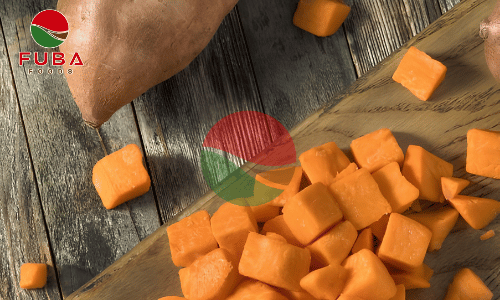
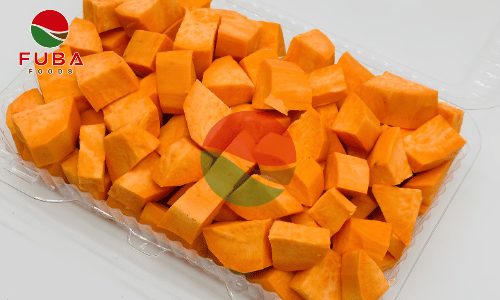
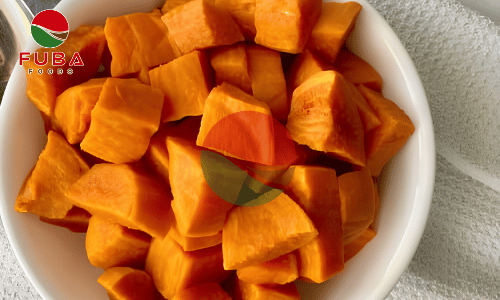
Frozen sweet potato cubes are prepared pieces of sweet potato that are cleaned, peeled or trimmed according to specification, cut into cubes, and rapidly frozen. The result is a standardized ingredient that can be used directly in different food applications with less preparation at the destination facility.
Cube uniformity is particularly important in commercial production. When pieces are produced within a defined size range, they are more likely to cook at a similar rate and provide a consistent appearance in the finished product.
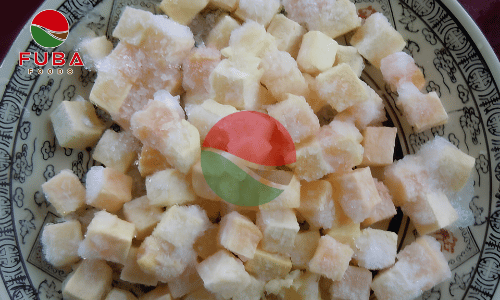
The IQF format also makes the product easier to handle. Instead of forming one solid frozen block, individually frozen cubes remain relatively separated, allowing users to take the quantity they need while keeping the remaining product frozen.
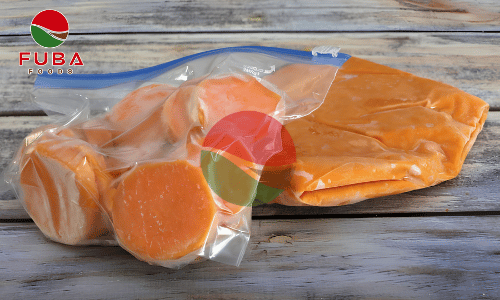
Why Use Frozen Sweet Potato Cubes in Food Manufacturing?
Fresh sweet potatoes usually need to be washed, peeled, trimmed, and cut before they can be used in a recipe. These steps require additional labour, equipment, preparation space, and production time.
Frozen sweet potato cubes move much of this preparation to the processing facility. Buyers receive a ready-to-use ingredient that can be incorporated into their production process with fewer preparation steps.
More Consistent Cooking and Portioning
Cube dimensions influence how quickly sweet potato cooks. If pieces vary considerably in size, smaller pieces may become soft before larger pieces are fully cooked.
A controlled cube size helps create more predictable cooking results and makes portioning easier. This can be particularly useful in ready meals, frozen foods, soups, and other products where several ingredients are processed together.
Reduced Preparation Work
Pre-cut frozen sweet potato removes much of the preparation required for whole fresh roots. Operators can take the required quantity from frozen storage and move it into the next production stage.
For larger operations, this can simplify workflow and reduce the variation that may occur with manual peeling and cutting.
More Flexible Inventory Planning
Fresh sweet potato availability can vary with harvest conditions and regional supply. Processing the crop into a frozen ingredient allows the prepared product to be stored and used according to production demand.
This gives manufacturers and foodservice operators more flexibility when planning inventory, particularly when sweet potato is used regularly throughout the year.
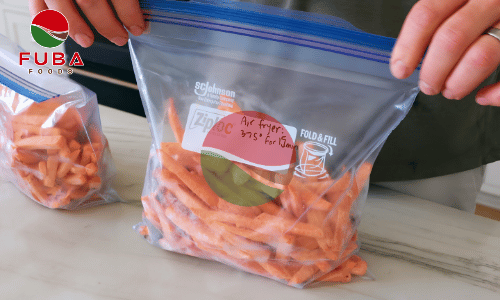
How Are Frozen Sweet Potato Cubes Processed?
The finished quality of frozen sweet potato cubes depends on several stages working together. Each stage helps determine the appearance, texture, cleanliness, and consistency of the final product.
Raw Sweet Potato Selection and Inspection
Processing starts with selecting suitable sweet potatoes. Incoming raw materials should be checked for maturity, freshness, physical condition, colour, and other characteristics required by the product specification.
Sorting at this stage helps remove unsuitable roots before they enter further processing. This is important because differences in raw material quality can affect the appearance and texture of the finished cubes.
A controlled agricultural sourcing system can give manufacturers greater visibility over the raw material before production begins.
Washing, Peeling, and Cutting
The selected sweet potatoes are washed to remove soil and surface impurities. Depending on the specification, they may then be peeled, trimmed, and prepared for cutting.
The cutting stage needs to produce cubes within the agreed size range. Consistent dimensions help manufacturers achieve more predictable cooking and maintain a uniform appearance across production batches.
Blanching and Cooling
Blanching may be used as part of the processing process to help control enzyme activity and maintain the desired characteristics of the prepared sweet potato before freezing.
The treatment needs to be carefully controlled. Excessive heat can affect firmness, while insufficient treatment may not provide the intended processing effect. Cooling after blanching prepares the product for the freezing stage.
IQF Freezing
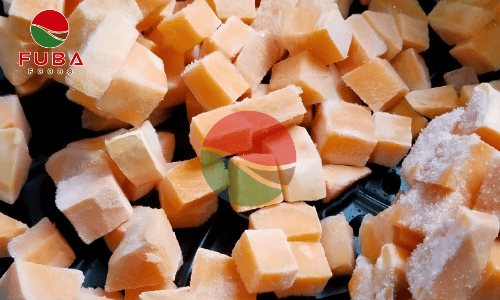
After preparation, the sweet potato cubes are rapidly frozen using IQF technology. Individual Quick Freezing helps keep the pieces separate instead of allowing them to freeze together into a single block.
This makes the product easier to weigh, portion, transfer, and mix during commercial production. Proper freezing and subsequent cold-chain management also help preserve the characteristics established during processing.
What Makes High-Quality Frozen Sweet Potato Cubes?
Quality should be assessed based on how consistently the product meets its specification and performs during use, rather than appearance alone.
Cube Size and Uniformity
Consistent cube dimensions are important for both cooking and portion control. When pieces are relatively uniform, heat can reach them more evenly, helping manufacturers achieve more predictable cooking results.
For commercial purchasing, buyers should define the required cube dimensions or acceptable size range clearly rather than relying only on general terms such as “diced sweet potato.”
Colour and Texture
Sweet potato varieties, maturity, and processing conditions can all influence colour and texture. These characteristics should therefore be considered when establishing the product specification.
Storage conditions are also important. Maintaining stable frozen temperatures helps protect the texture and overall condition of the cubes after processing.
IQF Separation
Good IQF separation allows individual cubes to remain relatively free-flowing after freezing. This makes the product easier to portion and handle, particularly in automated or high-volume production environments.
For manufacturers using weighing or dosing equipment, free-flowing frozen pieces can also make ingredient handling more efficient.
Applications of Frozen Sweet Potato Cubes
The cube format works across a range of applications because it provides both preparation convenience and a recognizable ingredient shape.
Ready Meals and Frozen Foods
Frozen sweet potato cubes can be used in ready meals, frozen vegetable mixes, grain-based meals, and other prepared foods. Their standardized size makes them easier to combine with meat, vegetables, grains, sauces, and other ingredients.
Because the product has already been prepared and frozen, manufacturers can reduce the number of fresh-ingredient preparation steps required at their own facility.
Soups, Stews, and Side Dishes
The cubes are also suitable for soups, stews, casseroles, and side dishes. Their shape allows sweet potatoes to remain visually identifiable while cooking together with other ingredients.
For foodservice operations, the frozen format can also reduce preparation work in the kitchen and simplify ingredient storage.
Foodservice and Central Kitchens
Central kitchens and foodservice businesses can use frozen sweet potato cubes when the same preparation standard needs to be maintained across different production batches or locations.
The pre-cut format eliminates the need to peel and cut fresh sweet potatoes before each production cycle, making the ingredient easier to portion and handle.
Frozen Sweet Potato Cubes Packaging and Storage
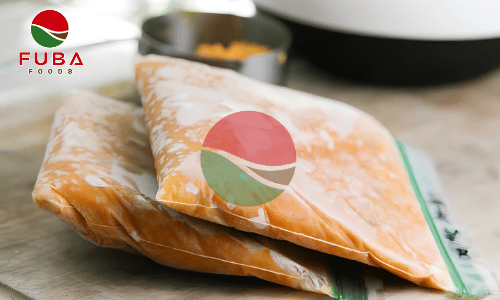
Frozen sweet potato cubes should remain under controlled frozen conditions from the factory through to the customer’s storage facility. Stable temperature management helps protect the product’s texture and quality during its shelf life.
Packaging should also be suitable for the intended distribution channel. Bulk packaging needs to withstand transportation and warehouse handling while protecting the product from moisture and physical damage.
For commercial buyers, the right package size depends on how the product will be used. Manufacturers may require larger packs for high-volume production, while foodservice operators may prefer formats that are easier to handle in the kitchen.
Cold-storage capacity is another consideration when evaluating a supplier. FUBA operates three cold-storage units with a listed capacity of 500 MT each, providing dedicated frozen storage before export.
Choosing a Frozen Sweet Potato Cubes Supplier
Choosing a supplier should involve more than comparing prices. Buyers should assess whether the manufacturer can consistently meet the required product specification while supporting the expected order volume.
Raw Sweet Potato Selection and Inspection
Processing starts with selecting suitable sweet potatoes. Incoming raw materials should be checked for maturity, freshness, physical condition, colour, and other characteristics required by the product specification.
At FUBA, raw material sourcing is connected with the factory’s processing system, allowing incoming sweet potatoes to be inspected before they enter washing, sorting, preparation, and cutting. This helps establish control over the raw material at an early stage and supports more consistent specifications throughout production.
Sorting at this stage helps remove unsuitable roots before they enter further processing. This is important because differences in raw material quality can affect the appearance and texture of the finished cubes.
A controlled agricultural sourcing system can give manufacturers greater visibility over the raw material before production begins.
Processing and Quality Control
The production process should be organized around a clear and repeatable specification. Washing, preparation, cutting, blanching where applicable, IQF freezing, inspection, metal detection, and packing all contribute to the finished product.
At FUBA, these stages are managed within an integrated factory production flow covering raw material inspection, washing and cleaning, sorting and grading, preparation, IQF freezing, metal detection, packing, cold storage, and export shipment. Managing the process within one operation provides greater control over product specifications from raw material intake through to the finished frozen product.
A factory that manages these stages within one operation can monitor the product more closely from raw material intake through finished-product storage.
The production flow includes farm sourcing, raw material inspection, washing and cleaning, sorting and grading, preparation, IQF freezing, metal detection, packing, cold storage, and export shipment.
Food Safety and Traceability
Food-safety systems are particularly important when frozen vegetables are supplied internationally. Buyers should review the supplier’s certifications, inspection procedures, and traceability system as part of the qualification process.
The factory lists HACCP, ISO 22000, HALAL, and BRCGS among its food-safety and quality systems. Its facilities also include metal detection, X-ray inspection, and an in-house microbiological laboratory.
Production Capacity
Production capacity should be considered alongside raw material sourcing and cold-storage availability. A supplier may be able to produce a small order successfully but still struggle to support larger or recurring requirements.
For buyers planning regular orders, these capabilities provide useful context when assessing whether the supplier has the infrastructure to support commercial-scale supply.
Why Direct Factory Sourcing Matters for Frozen Sweet Potato Cubes
For occasional purchases, supplier differences may not be immediately noticeable. With repeated commercial orders, however, variations in cube size, raw material quality, processing, packaging, or storage can create additional work further down the supply chain.
Direct factory sourcing gives buyers a closer connection to the production process. Product specifications can be discussed directly with the manufacturer, while requirements for packaging, production volume, or private-label programs can be coordinated closer to the source.
An integrated manufacturing operation can also manage sourcing, processing, freezing, storage, and export preparation within one system. This provides greater visibility into the product and can help reduce unnecessary handling between different parties.
For long-term supply, the key question is therefore not simply how much frozen sweet potato a supplier can provide. It is whether the manufacturer can consistently produce the required specification and maintain that standard across recurring shipments.
Conclusion
Frozen sweet potato cubes provide a convenient, standardized ingredient for food manufacturers, foodservice operators, importers, and distributors. By moving washing, preparation, cutting, and freezing to the processing facility, they can reduce fresh-ingredient preparation while making commercial production easier to plan.
The main factors to consider include cube size, raw material quality, colour, texture, IQF separation, packaging, frozen storage, food-safety controls, and production capacity. These characteristics determine not only how the product looks but also how consistently it performs during cooking and handling.
For long-term sourcing, evaluating the manufacturing operation behind the product is essential. Controlled agricultural sourcing, consistent processing, IQF freezing, quality inspection, traceability, cold storage, and sufficient production capacity provide the foundation for a reliable frozen sweet potato cubes supply.


