

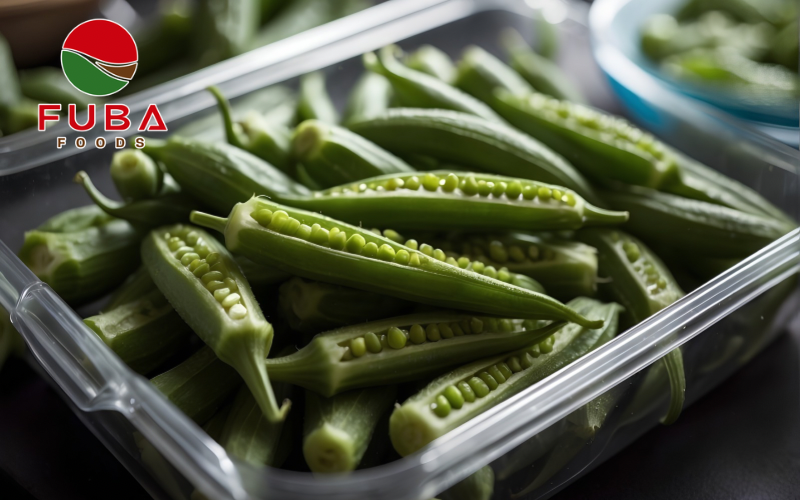
Frozen okra for foodservice gives restaurants, catering operations, central kitchens, and foodservice distributors a practical way to maintain a consistent supply of okra without depending entirely on daily fresh-vegetable preparation. The value goes beyond longer storage. For commercial kitchens, the right frozen okra can reduce preparation work, simplify portion control, and make menu production more predictable.
The key, however, is choosing a frozen okra supplier that can maintain consistent size, cut, quality, packaging, and supply across repeated orders. When frozen vegetables are used at a foodservice scale, even small variations can affect preparation time, cooking performance, food waste, and ultimately cost per serving.
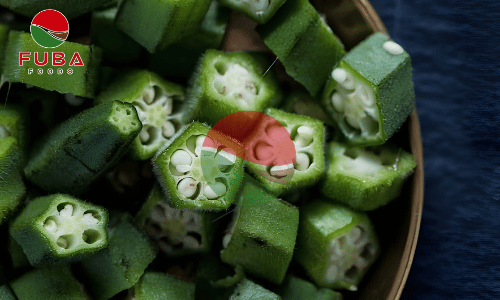
For this reason, sourcing frozen okra should be approached as a supply-chain decision rather than simply a product purchase. This article examines how frozen okra supports foodservice operations and what buyers should evaluate when selecting a manufacturing partner.
Why Frozen Okra Works for Foodservice Operations
Fresh okra can require frequent purchasing, inspection, trimming, washing, and preparation before it reaches the cooking line. These steps create additional labor and can make daily kitchen planning more difficult, especially when demand fluctuates.
Frozen okra shifts much of this preparation upstream to the processing facility. Once the product has been cleaned, prepared, and frozen, foodservice operators can take the required quantity from cold storage and use it according to their production schedule.
This is particularly useful for restaurants and central kitchens that need to reproduce the same dishes throughout the week. Instead of relying on the condition of fresh deliveries each day, kitchens can work with a standardized frozen ingredient.
Consistency Across Portions and Service Periods
Consistency is one of the most important reasons foodservice buyers use frozen vegetables. Uniform pieces are easier to portion and can provide more predictable cooking results than raw materials with significant differences in size and maturity.
For commercial production, consistency also matters beyond the individual plate. Central kitchens may prepare hundreds or thousands of portions according to standardized recipes, making variations in ingredient size or preparation yield more difficult to manage.
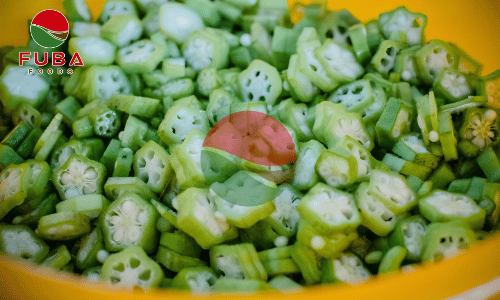
A properly processed frozen okra product can help reduce this variability. The manufacturer controls key processing stages before the product reaches the kitchen, allowing foodservice operators to work with a more standardized ingredient.
Less Preparation Work in the Kitchen
Labor is another important consideration. Fresh okra may require receiving, sorting, washing, trimming, cutting, and preparation before cooking, while frozen formats can significantly reduce the number of steps required at the point of use.
The exact labor saving depends on the product specification and kitchen process. Buyers should therefore compare not only the purchase price per kilogram but also preparation yield, labor requirements, storage requirements, and product loss.
This is where a standardized frozen ingredient can provide value that is not immediately visible on a supplier quotation.
Frozen Okra Helps Foodservice Buyers Control Cost
Food cost management depends on more than the price paid to a supplier. For frozen okra, buyers should consider the usable yield, preparation labor, storage life, waste, and consistency of supply.
Fresh vegetables can create additional losses when unsuitable pieces are removed during preparation or when excess stock deteriorates before use. Frozen products, when properly packaged and stored, allow kitchens to hold inventory for longer periods and take out only the quantity needed for production.
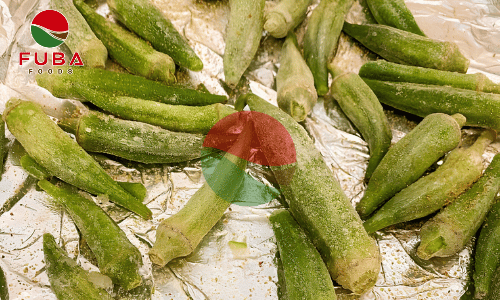
This supports more predictable purchasing and portion planning. A foodservice operation can align inventory with expected demand instead of purchasing fresh okra every day simply to maintain availability.
The result is better control over the total cost of using the ingredient, particularly in high-volume operations where small differences in yield or labor can accumulate significantly.
What Foodservice Buyers Should Look for in Frozen Okra
Not every frozen okra product is suitable for professional kitchens. Product specifications need to match the way the ingredient will actually be used.
Size, Cut and Processing Specification
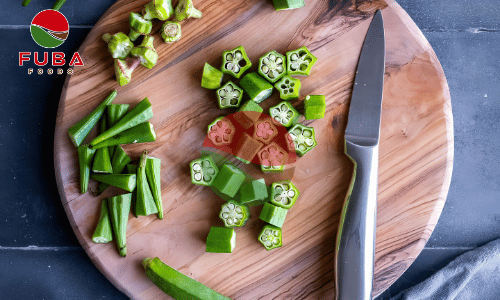
The required format depends on the menu and preparation method. Foodservice buyers may need whole okra for particular dishes, while other operations may prefer sliced or diced formats for soups, stews, mixed vegetables, or prepared meals.
Size consistency is equally important. If pieces vary significantly, they may cook at different rates, affecting the texture and appearance of the finished dish.
The supplier should therefore provide clear specifications rather than relying on broad descriptions such as “standard” or “premium.” Buyers should confirm the cut, size range, product weight, packaging format, and other relevant requirements before commercial production begins.
Texture and Cooking Performance
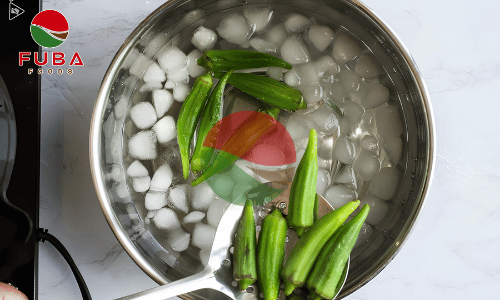
Okra is naturally associated with a distinctive texture, so freezing and processing conditions need to be carefully controlled. Excessive processing or unsuitable freezing conditions can affect the final eating quality.
IQF technology is useful because individual pieces are rapidly frozen rather than being frozen as one solid block. This makes the product easier to portion and helps retain the characteristics of the vegetable during frozen storage.
For foodservice buyers, product trials should ideally evaluate the okra after the intended cooking process. A sample that looks acceptable while frozen may perform differently after frying, boiling, stewing, or inclusion in a prepared dish.
Manufacturing Capability Matters More Than a Product Catalogue
A supplier may offer frozen okra, but that alone does not demonstrate the ability to support a foodservice program. Buyers should investigate the manufacturing system behind the product.
The factory should have sufficient processing capacity, freezing technology, cold storage, quality controls, and production planning to handle recurring demand. This becomes increasingly important when a distributor or foodservice group moves from occasional purchases to regular container-scale orders.
FUBA Foods operates a frozen fruit and vegetable processing facility in Ca Mau with an annual supply capacity of 20,000 MT. The facility has six IQF lines with a capacity of 500 kg per hour per line, alongside contact-freezing and air-blast freezing systems.
For a foodservice buyer, this type of infrastructure is relevant because supply reliability depends on actual production capability. A factory with established processing lines can manage production planning more systematically than a supplier whose role is primarily to source finished goods from elsewhere.
Quality and Food Safety in Frozen Okra Supply
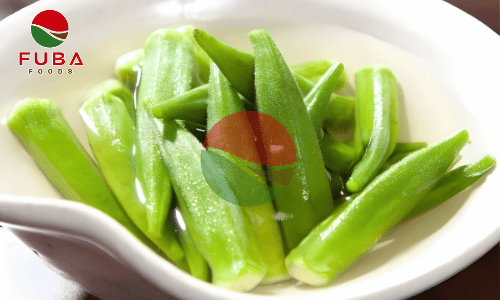
Foodservice products enter professional kitchens where food safety and traceability are essential. Quality control therefore needs to begin before the vegetable reaches the freezing stage.
Incoming raw materials should be inspected for suitability before processing. During production, sorting, cleaning, processing, freezing, inspection, packaging, and storage need to follow controlled procedures.
FUBA’s processing system includes incoming-material inspection, sorting, metal detection, X-ray inspection, and microbiological testing. The facility also maintains cold storage at temperatures of ≤ -18°C and has systems including HACCP, ISO 22000, HALAL, and BRCGS.
For international buyers, documentation should be matched to the destination market and agreed before shipment. Product specifications, food-safety documentation, traceability information, packaging details, and applicable export documents should form part of the purchasing process rather than being addressed only after an order has been confirmed.
Packaging and Storage Should Match Foodservice Demand
Foodservice purchasing often differs from retail purchasing. Professional kitchens generally need larger pack sizes that are practical for high-volume preparation and inventory management.
The appropriate packaging depends on consumption volume, storage capacity, distribution model, and the frequency with which the product is opened. Bulk packaging can be suitable for central kitchens and foodservice distributors, while smaller formats may be more practical for operations with lower consumption.
For buyers, packaging should be evaluated together with storage and distribution requirements. A technically suitable product can still become inefficient if the pack size does not match kitchen usage or creates unnecessary handling and storage costs.
How to Choose a Frozen Okra Supplier for Foodservice
The right supplier should be evaluated through the entire supply chain, from raw-material sourcing to finished-product delivery.
Start by confirming the product specification and intended application. Then assess whether the manufacturer has sufficient production capacity, appropriate freezing technology, controlled cold storage, food-safety systems, and the ability to maintain the same specification across repeated production runs.
Supply planning should also be discussed before entering a long-term agreement. Buyers should communicate expected order volumes and purchasing frequency, while the supplier should provide realistic production and shipment schedules.
A factory with established agricultural sourcing relationships can provide another layer of supply security. FUBA maintains sourcing partnerships with farming regions and growers across Vietnam, supporting access to agricultural raw materials for year-round processing.
This matters because reliable foodservice supply is ultimately connected to the availability and quality of the raw material. The freezing process preserves the product, but it cannot compensate for inconsistent raw-material sourcing.
Frozen Okra as a Long-Term Foodservice Ingredient
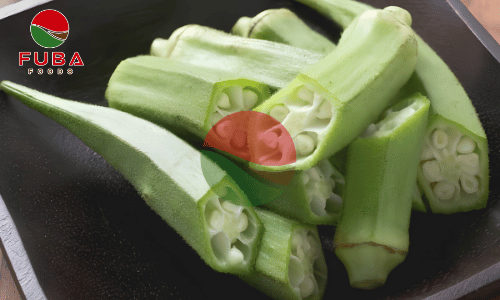
For foodservice businesses, frozen okra is most valuable when it becomes a predictable part of the operating system. Consistent specifications reduce uncertainty in preparation, while frozen storage gives purchasing teams greater flexibility when planning inventory.
The supplier relationship should therefore evolve beyond individual transactions. Clear specifications, sample approval, production planning, quality documentation, packaging requirements, and regular communication create a framework for repeatable supply.
For distributors, this also makes it easier to offer a dependable ingredient to restaurant and catering customers. For large foodservice operations, it can support standardized recipes across multiple locations without requiring every kitchen to perform the same raw-material preparation independently.
Conclusion
Frozen okra for foodservice offers practical advantages in consistency, preparation efficiency, inventory management, and cost control. However, these benefits depend heavily on the quality of the manufacturing and supply system behind the product.
Foodservice buyers should look beyond price and assess raw-material sourcing, processing technology, product specifications, food-safety controls, freezing capacity, cold storage, packaging, and the supplier’s ability to support recurring volumes.
A direct manufacturing partner with established processing infrastructure can provide greater control over these factors. When product consistency and supply planning are managed together, frozen okra becomes more than a convenient ingredient it becomes a dependable component of a professional foodservice supply chain.


