


Vietnam has become an increasingly competitive sourcing destination for tropical fruit ingredients, including frozen jackfruit. Known for its naturally sweet flavor, distinctive aroma, and versatile texture, jackfruit can be used in a wide range of food applications, from desserts and bakery products to fruit preparations and foodservice.
A reliable frozen jackfruit supplier from Vietnam should combine consistent raw material sourcing, controlled processing and freezing, food safety management, traceability, sufficient production capacity, and reliable export support. For global food manufacturers, these capabilities help ensure that frozen jackfruit meets defined product specifications not only in a single shipment, but consistently across ongoing orders.
In this article, we explore why Vietnam is a strong sourcing destination for frozen jackfruit, how frozen jackfruit is processed, what to consider when evaluating a supplier, which product formats are available, and why working directly with a manufacturer can support more reliable long-term supply.

Common Challenges When Sourcing Frozen Jackfruit
For international buyers, sourcing frozen jackfruit can involve several challenges that may not be immediately visible during initial supplier evaluation.
These include:
- Inconsistent maturity across batches, affecting flavor, sweetness, and texture
- Variation in cut size, leading to inefficiencies in portioning and processing
- Differences in freezing conditions that impact product performance
- Supply fluctuations due to seasonal raw material availability
- Limited traceability when sourcing through intermediaries
- Packaging inconsistencies affecting storage and transportation
While initial samples may meet expectations, these variations can become more apparent across repeated shipments and large-scale production.
For this reason, supplier evaluation should focus not only on product quality at a single point in time, but also on the ability to maintain consistency across sourcing, processing, and delivery.
Why Vietnam Is a Strong Source for Frozen Jackfruit
Vietnam offers favorable growing conditions for tropical fruits, including jackfruit, with production distributed across different agricultural regions. This agricultural base gives processors access to raw materials that can be selected according to maturity, quality, and processing requirements.
For frozen fruit buyers, the quality of the agricultural supply chain is important because the characteristics of the finished ingredient begin with the raw material. Jackfruit harvested or handled at an unsuitable stage may differ in sweetness, aroma, texture, color, or appearance, and these differences can remain noticeable after freezing.
Vietnam's established agricultural and food-processing sector also supports a supply chain that can connect raw material sourcing, collection, processing, freezing, packaging, storage, and export preparation.
This can be particularly valuable for international manufacturers with recurring demand. Instead of evaluating Vietnam only as a source of fresh jackfruit, buyers should consider whether a supplier can consistently convert available fruit into a frozen ingredient that meets defined product specifications.
The sourcing advantage therefore comes not only from where the jackfruit is grown, but also from how effectively the supplier manages the process from raw material selection to finished product.
From Fresh Jackfruit to Frozen Ingredients
Fresh jackfruit can be challenging to manage for industrial production because its condition may change depending on maturity, handling, transportation, and storage. Processing the edible portion into a frozen ingredient provides manufacturers with a more practical format for inventory planning, transportation, and repeated production.
While the exact process varies according to the product format and customer specification, commercial frozen jackfruit production typically follows a controlled sequence from raw material receiving to finished-product storage. Each stage is monitored to maintain the required quality, safety, and product specifications.
- Raw material selection – Jackfruit is selected according to maturity, quality, and processing requirements.
- Preparation – The edible portion is separated and prepared for further processing.
- Cutting or portioning – The fruit is processed into the required piece size or format.
- Quality inspection – Product characteristics and potential defects are checked against established specifications.
- Freezing – Prepared jackfruit is frozen under controlled conditions.
- Packaging – The frozen product is packed according to product, storage, and transportation requirements.
- Frozen storage – Finished products are maintained under appropriate frozen conditions until shipment.
Each stage contributes to the final product specification. Raw material selection affects maturity, flavor, texture, and appearance, while cutting and handling determine consistency and hygiene. Freezing, packaging, and frozen storage then help maintain these characteristics through transportation and delivery.
For this reason, buyers should evaluate not only the freezing method but the manufacturer’s ability to control the entire production flow from incoming fruit to finished product.
What to Look for in a Frozen Jackfruit Supplier in Vietnam
The main objective of supplier evaluation is to reduce variability in the buyer's own production.
A frozen jackfruit shipment may meet expectations during receiving inspection but still create problems if later batches differ in maturity, cut size, texture, appearance, foreign material control, packaging, or other agreed specifications.
Before establishing a long-term supply relationship, food manufacturers should evaluate several key areas.
Raw Material Quality and Maturity
Jackfruit maturity directly influences flavor, aroma, texture, and appearance. A reliable processor therefore needs clear criteria for selecting raw materials rather than relying solely on availability.
This is particularly important for frozen ingredients because freezing preserves the condition of the fruit at the time of processing. It cannot correct inconsistent maturity or compensate for poor raw material quality.
Buyers should ask how the supplier sources and selects jackfruit, how raw material quality is assessed, and how the supplier maintains consistency when sourcing across different production periods.
At FUBA, factors such as jackfruit maturity, appearance, and incoming raw-material condition are considered before processing, as these characteristics can influence the quality and consistency of the finished frozen product.
Processing and Freezing Technology
Processing and freezing conditions play an important role in producing frozen jackfruit suitable for industrial applications.
A capable manufacturer should have defined procedures for raw material handling, preparation, cutting, freezing, inspection, packaging, and frozen storage. The freezing method should also be selected according to the product format and required specifications. For example, IQF freezing can be suitable for individually separated jackfruit pieces where portion control, convenient handling, and product separation are important.
Beyond the freezing method itself, manufacturers should monitor critical quality-control points throughout processing. Measures such as metal detection, X-ray inspection where applicable, temperature monitoring, and laboratory testing can support food safety and help maintain consistent product quality across batches.
When evaluating a supplier, buyers should therefore look beyond whether the factory has freezing equipment. The more important question is whether its production and quality-control system can consistently deliver the required specification at commercial scale.

Food Safety and Traceability
International food manufacturers need confidence in how frozen fruit is handled from raw material intake through finished-product storage.
Food safety procedures, quality inspections, product specifications, traceability systems, and export documentation should therefore form part of the supplier evaluation process. For suppliers serving international markets, food safety systems are often aligned with recognized standards such as HACCP, ISO 22000, BRCGS, or Halal certification, depending on the destination market and customer requirements.
For international buyers, certification alone is not enough; the supplier should also be able to demonstrate how its food safety and traceability systems are applied in daily production. Batch identification, production records, quality inspections, and relevant documentation should allow the manufacturer to trace a finished product back through its processing history and raw material records when required.
Depending on the destination market and customer requirements, buyers may require documents such as product specifications, certificates of analysis, certificates of origin, or other applicable export and compliance documentation.
If a quality issue occurs, a traceable production system allows the relevant batch to be identified and its raw material and processing history reviewed.
Frozen Jackfruit Formats for Different Food Applications
Frozen jackfruit can be supplied in different formats depending on the buyer's application and manufacturing process.
The appropriate format should be determined by how the ingredient will be handled, portioned, incorporated, and presented in the finished product rather than by appearance alone.
Whole or Large Jackfruit Pieces
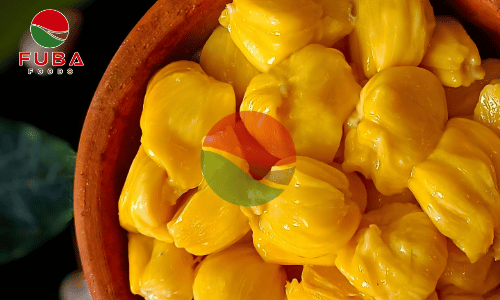
Larger jackfruit pieces are suitable for applications where the recognizable appearance and natural texture of the fruit are important.
Potential applications include:
- Desserts
- Foodservice preparations
- Fruit toppings
- Fruit-based products
- Products where visible fruit pieces contribute to the final presentation
Larger pieces provide a more recognizable fruit profile, but buyers should also consider handling requirements, portion control, and production-line efficiency.
When requesting this format, buyers should define the desired piece size, maturity, appearance, texture, packaging, and acceptable tolerance for variation.

Diced and Cut Jackfruit
Diced or smaller-cut jackfruit can be convenient for industrial applications where controlled portion size and efficient ingredient distribution are important.
Potential applications include:
- Bakery fillings
- Dessert formulations
- Fruit preparations
- Yogurt and dairy-based products
- Toppings
- Other processed food products
Consistent piece sizing can simplify portioning and help distribute fruit more evenly throughout a formulation.
For this reason, buyers should specify the required cut size and acceptable size tolerance rather than simply requesting "diced jackfruit".
Customized Frozen Jackfruit Specifications
For industrial buyers, the most suitable frozen jackfruit format may depend on the requirements of the finished product and production line. Manufacturers may need to specify parameters such as piece size, maturity, appearance, texture, packaging configuration, and acceptable tolerance levels according to the application.
A bakery manufacturer, dessert producer, fruit preparation company, and foodservice operator may therefore require different specifications even when purchasing the same type of frozen jackfruit. Discussing the intended application and production process with the supplier can help determine the appropriate format before commercial production begins.
Why Work Directly with a Frozen Jackfruit Manufacturer?
The value of working directly with a manufacturer becomes more apparent as order volumes increase, specifications become more detailed, and supply requirements become more complex.
A direct manufacturer typically has greater visibility into production scheduling, processing, quality inspection, packaging, inventory, and raw material planning. This can make communication more direct and provide buyers with better visibility into how their product is produced.
Better Control Over Product Specifications
When the manufacturer is directly responsible for processing, requirements such as maturity, cut size, appearance, texture, packaging, and other specifications can be communicated to the team responsible for production.
This can reduce the risk of important product requirements being misunderstood or lost between the buyer, intermediary, and processing facility.
More Direct Quality Communication
Product specifications may need to be adjusted after a trial order or during ongoing production.
Working directly with the manufacturer allows buyers to communicate feedback with the team responsible for processing and quality control. This can make it easier to discuss product deviations, clarify requirements, and establish corrective actions when necessary.

Greater Visibility into Supply Planning
Recurring orders require more than one successful shipment. Buyers need confidence that a supplier can coordinate raw materials, production, packaging, storage, and shipment schedules as demand changes.
A manufacturer with established sourcing and production capabilities can have greater control over these activities than a trading company that purchases finished products from another processor.
For international food manufacturers, this visibility can become increasingly important as order volumes, product specifications, and supply requirements become more complex.
How to Evaluate a Frozen Jackfruit Supplier in Vietnam
A supplier should not be selected solely because its sample meets expectations or its initial quotation is competitive.
For long-term sourcing, buyers should evaluate whether the supplier can maintain the agreed product requirements across repeated shipments.
Confirm Product Specifications
Before placing an order, clearly define:
- Jackfruit variety, where relevant
- Maturity requirements
- Cut or piece size
- Appearance
- Texture
- Foreign material requirements
- Packaging format
- Net weight
- Storage conditions
- Other application-specific requirements
A detailed product specification gives both parties a consistent reference for sampling, production, inspection, and future orders.
Review Quality and Export Documentation
Ask the supplier which quality and export documents can be provided for the product and destination market.
Documentation requirements vary depending on the importing country, customer requirements, and intended food application. What matters is whether the supplier has an organized process for preparing accurate and consistent documentation for each shipment.
Evaluate Production Capacity
A supplier may successfully complete a small trial order but encounter difficulties when order volumes increase. A supplier’s ability to handle commercial volumes should be assessed based on its actual production capacity, available raw materials, production scheduling, and ability to maintain specifications as order volumes increase.
A successful trial order does not necessarily demonstrate long-term supply capability. Buyers should discuss expected volumes, lead times, seasonal raw material availability, production planning, and the supplier’s ability to support repeat shipments before establishing a long-term purchasing program.
For recurring purchasing, buyers should discuss:
- Production capacity
- Lead times
- Production scheduling
- Raw material availability
- Order planning
- Seasonal considerations
- Ability to support repeat shipments
Production capacity should always be considered together with quality consistency. High output is valuable only when the supplier can maintain the required product specifications at scale.
Assess Traceability and Quality Control
Traceability should cover the major stages of production, from incoming raw materials through processing, freezing, packaging, and finished-product storage.
Buyers should also understand how quality is monitored during production rather than relying only on final-product inspection.
A structured quality-control system can help identify deviations earlier and provide useful information if a particular batch needs to be investigated.
Consider Packaging and Frozen Storage

Packaging needs to protect the product during frozen storage, transportation, handling, and receiving.
Before confirming an order, buyers should discuss:
- Packaging material
- Bag or carton configuration
- Net weight
- Labeling requirements
- Storage temperature
- Shipping conditions
- Handling requirements
Clear packaging and storage specifications can help reduce receiving issues and ensure that the product arrives in a condition suitable for the buyer's warehouse and production environment.
Why Consistency Matters in Long-Term Frozen Jackfruit Sourcing
For food manufacturers, supplier performance should be evaluated across repeated shipments rather than based on one successful order.
A difference in raw material maturity can affect flavor and texture. Variation in cut size can influence portioning and processing efficiency. Differences in processing or freezing can affect the finished ingredient, while packaging inconsistencies can create problems during transportation or warehouse handling.
These variations may appear minor at the supplier level but become significant when frozen fruit is incorporated into large-scale manufacturing.
Consistent control across sourcing, processing, freezing, packaging, and storage gives buyers a stronger foundation for maintaining their own finished-product specifications.
For manufacturers with recurring demand, this reliability can ultimately be more valuable than achieving the lowest possible price on an individual shipment.
From FUBA’s manufacturing perspective, maintaining consistent product specifications requires control across processing, freezing, and storage rather than focusing on a single production stage. This approach helps ensure that frozen jackfruit can meet defined requirements across different production batches.
Choosing the Right Frozen Jackfruit Supplier in Vietnam
Choosing the right frozen jackfruit supplier in Vietnam ultimately depends on how well the manufacturer can match the buyer’s product, quality, volume, and supply requirements. Rather than comparing quotations alone, buyers should consider raw material control, processing capability, product specifications, food safety systems, traceability, packaging, production capacity, and export support as part of the overall supplier evaluation.
For recurring orders, the most valuable supplier is one that can maintain these requirements consistently across production cycles. Direct communication with the manufacturer can also make it easier to align specifications, resolve quality issues, plan production, and coordinate future shipments.
FUBA’s experience in frozen fruit processing highlights the importance of aligning raw-material control, processing specifications, quality checks, and cold storage when preparing products for recurring export orders.

Next Steps for Buyers
For manufacturers evaluating frozen jackfruit suppliers in Vietnam, the next step is to define the product specification based on the intended application and production requirements. Buyers can then request samples, review quality and export documentation, confirm packaging and storage conditions, and discuss expected order volumes and lead times.
Starting with clear specifications helps both buyer and manufacturer establish the right product requirements before moving to commercial production and recurring shipments.
Conclusion
Finding the right frozen jackfruit supplier from Vietnam requires more than comparing prices or evaluating a single product sample. For global food manufacturers, supplier selection should consider raw material maturity, processing and freezing control, product specifications, food safety, traceability, packaging, production capacity, and consistency across repeated shipments.
Vietnam offers a strong sourcing base for tropical fruit ingredients, but the real value lies in choosing a manufacturer that can consistently convert available jackfruit into a frozen ingredient that meets defined requirements. For long-term sourcing, reliable quality, clear communication, and consistent supply are ultimately more important than the lowest quotation.


