

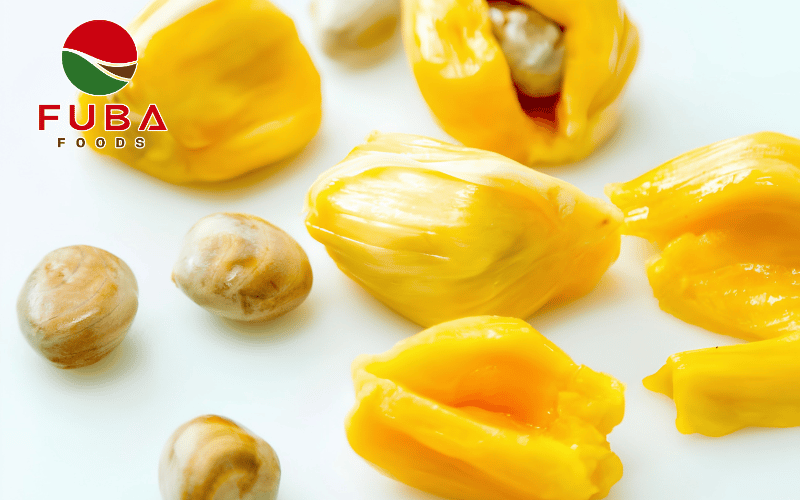
As demand for tropical fruit ingredients continues to grow, food manufacturers are looking for ways to incorporate jackfruit into commercial products without relying entirely on fresh fruit. Frozen jackfruit puree offers a practical solution by providing a ready-to-use fruit ingredient with a smooth texture, natural sweetness, and easier storage for year-round production. For beverages, desserts, bakery products, and other processed foods, the right puree can help simplify preparation while maintaining a consistent fruit profile.
Frozen jackfruit puree is a versatile fruit ingredient used by food manufacturers in beverages, desserts, sauces, fillings, and other processed food applications. Its ready-to-use format allows manufacturers to incorporate the natural flavor, color, and fruit characteristics of jackfruit into commercial formulations while simplifying fruit preparation and processing.
For manufacturers sourcing frozen jackfruit puree, product consistency, processing quality, freezing technology, packaging, and supply capability are important factors to consider when selecting a supplier. This article explores how frozen jackfruit puree is used across beverage, dessert, and food manufacturing, what buyers should consider when evaluating its quality, and how sourcing from a reliable processor in Vietnam can support consistent production and supply.

Why Frozen Jackfruit Puree Fits Modern Food Production
Fresh jackfruit has a distinctive tropical aroma, naturally sweet taste, and rich fruit texture, but handling whole fresh fruit at an industrial scale can require additional preparation, labor, and processing space. Removing the fruit from the rind, separating the edible portion, and preparing it for formulation can also create additional steps before production.
Frozen jackfruit puree changes this equation by providing the fruit in a processed form that can be incorporated directly into suitable formulations. Instead of managing the initial fruit preparation internally, manufacturers can receive a standardized ingredient and focus their production resources on formulation and finished-product development.
This makes puree particularly relevant for manufacturers that need fruit ingredients in repeatable quantities. It can also provide greater flexibility in inventory planning because the product can be maintained under controlled frozen storage rather than being used immediately after fresh harvest.
For industrial applications, the value of frozen jackfruit puree therefore comes not only from the fruit itself, but from turning a seasonal agricultural product into a more convenient manufacturing ingredient.
What Makes Frozen Jackfruit Puree Suitable for Processing?
The performance of a fruit puree depends on more than its ability to blend. Texture, flavor, raw-material quality, and processing consistency all affect the final formulation.
Smooth Texture for Easy Formulation
One of the primary advantages of puree is its smooth texture. Unlike whole or chunked jackfruit, puree can be incorporated into formulations without requiring extensive mechanical breakdown at the production site.
This makes it suitable for products where the fruit needs to be evenly distributed throughout the formulation. It can also simplify mixing and blending processes, particularly when jackfruit is used as a flavor and fruit component rather than as a visible whole-fruit inclusion.
FUBA’s frozen jackfruit puree is made from 100% jackfruit and processed into a smooth, ready-to-use format. This consistency makes it suitable for manufacturers looking to incorporate jackfruit into a range of beverage, dessert, and food applications while simplifying formulation and processing.

Natural Sweetness and Tropical Fruit Character
Jackfruit is naturally characterized by its sweet taste and distinctive tropical aroma. Preserving these characteristics is important when the ingredient is used to create products where jackfruit needs to remain recognizable.
FUBA’s frozen jackfruit products are made from selected Vietnamese jackfruit and processed to retain the fruit’s natural sweetness, characteristic aroma, and texture. With no preservatives, these products provide a convenient fruit ingredient for manufacturers developing beverages, desserts, and other food applications.
For manufacturers, this can make the ingredient particularly interesting for formulations positioned around tropical fruit flavors, where the authenticity of the fruit profile is part of the finished product experience.
Frozen Jackfruit Puree Applications Across Food Manufacturing
The versatility of puree comes from its ability to function as a fruit base rather than a single-purpose ingredient. Depending on the formulation, it can be incorporated into beverages, desserts, bakery products, and broader food-processing applications.

Beverage Production
In beverage manufacturing, frozen jackfruit puree can be incorporated into smoothies, blended beverages, fruit drinks, and other formulations that require a recognizable tropical fruit profile.
Its smooth consistency makes it more suitable for blending than larger fruit pieces when a uniform beverage texture is required. It can also help manufacturers develop jackfruit-based products without carrying out extensive fruit preparation before blending.
For beverage producers, the key consideration is consistency. When the puree is used repeatedly, variations in texture or fruit characteristics can influence the finished beverage. This makes controlled processing and clearly defined product specifications important when selecting a supplier.
Desserts and Ice Cream
Jackfruit’s natural sweetness and tropical aroma also make it suitable for dessert applications. Frozen jackfruit puree can be incorporated into ice cream, fruit-based desserts, and other products where the fruit contributes both flavor and texture.
Puree is especially useful when the objective is to distribute jackfruit throughout the product rather than maintain distinct pieces. This can create a more uniform fruit profile and reduce the need for additional preparation during production.

Bakery and Food Processing
Beyond beverages and desserts, jackfruit puree can be incorporated into bakery fillings, fruit preparations, and other processed foods where a smooth fruit ingredient is preferred.
The format can be particularly useful when manufacturers need to combine jackfruit with other ingredients while maintaining a consistent mixture. Instead of adding whole fruit and processing it further, puree provides a prepared fruit base that can be incorporated according to the formulation requirements.
What to Consider When Sourcing Frozen Jackfruit Puree
Not every frozen puree will perform identically in production. Before selecting a supplier, manufacturers should evaluate several factors beyond price.
Raw Material and Product Consistency
A reliable supplier should have a controlled approach to raw-material sourcing and inspection. FUBA’s processing flow begins with farm sourcing and raw-material inspection before washing, cleaning, sorting, preparation, freezing, packing, storage, and export shipment.
This integrated process matters because the final puree depends on the quality of the fruit entering production. Strong sourcing relationships across Vietnamese farming regions can also help support a more stable supply of raw materials throughout the year.
Processing and Food Safety Control
For frozen fruit ingredients, consistent processing and food-safety control are essential to maintaining product quality and reliability. FUBA applies quality-control measures throughout its production process, including metal detection, X-ray inspection, and microbiological testing through its in-house laboratory. Its quality-assurance system includes FDA, HACCP, ISO 22000, HALAL, and BRCGS standards.
The production flow covers key stages from raw-material inspection, cleaning, and sorting to preparation, freezing, metal detection, packing, cold storage, and export shipment. This controlled process helps maintain product consistency and supports the quality requirements of international food manufacturers.
For buyers, this type of process visibility can provide greater confidence than evaluating a puree solely from a product sample.

Storage, Packaging and Export Capability
Proper storage and transportation are essential for maintaining the quality of frozen jackfruit puree after processing. Frozen fruit products are typically stored at temperatures below -18°C to help preserve their quality throughout storage and shipment. Packaging also needs to be suitable for bulk handling, foodservice applications, and international transportation, depending on the buyer’s requirements.
For manufacturers purchasing larger volumes, reliable cold-chain management and appropriate packaging are just as important as the product specification itself. A supplier should be able to maintain suitable storage conditions from processing through shipment while providing packaging formats that support efficient handling and international logistics.
Why Direct Manufacturing Capability Matters
For manufacturers sourcing frozen jackfruit puree, working directly with a processor can provide greater control and visibility across the supply chain. Raw-material sourcing, processing, quality control, freezing, packaging, storage, and export can be managed within one production system rather than being handled by multiple intermediaries.
This direct manufacturing model can help buyers achieve more consistent specifications, clearer quality control, and better coordination for larger or recurring orders. It can also make it easier to request customized specifications, packaging formats, or OEM/private-label solutions when required.
FUBA operates a fruit-processing facility in Ca Mau with large-scale production capacity, IQF and freezing systems, cold-storage facilities, and quality-control equipment. These capabilities support its role as a direct Vietnamese processor serving international markets rather than solely acting as a trading intermediary.

Choosing Frozen Jackfruit Puree for Your Production
The right frozen jackfruit puree ultimately depends on the finished product and manufacturing process. Beverage producers may prioritize smooth blending and a consistent fruit profile, while dessert and bakery manufacturers may focus more heavily on texture, flavor intensity, and formulation compatibility.
Before placing an order, manufacturers should therefore assess the puree against actual production requirements and confirm product specifications, packaging, storage conditions, documentation, and supply capacity.
A supplier’s ability to provide a consistent ingredient over repeated shipments is often more important than a low initial quotation. For long-term production, consistency reduces the risk of formulation adjustments, unexpected processing losses, and interruptions caused by unstable raw-material supply.
Conclusion
Frozen jackfruit puree provides food manufacturers with a convenient way to incorporate Vietnamese jackfruit into beverages, desserts, bakery products, smoothies, and other processed foods. Its smooth texture, natural sweetness, and ready-to-use format can simplify production while giving manufacturers greater flexibility in managing tropical fruit ingredients.
The supplier, however, remains just as important as the ingredient itself. Consistent raw-material sourcing, controlled processing, food-safety systems, frozen storage, appropriate packaging, and export capability all contribute to a dependable supply.
With direct sourcing and processing capabilities in Vietnam, manufacturers such as FUBA can connect agricultural raw materials with industrial-ready frozen fruit formats, helping international customers build a more consistent and manageable jackfruit ingredient supply chain.


