

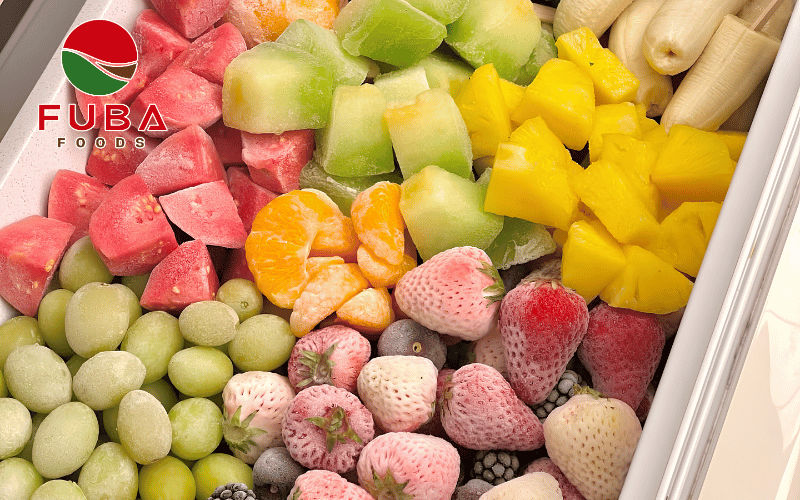
Launching a frozen fruit product under your own brand requires more than finding a supplier that can provide frozen fruit. The manufacturer must be able to turn your product concept into clear specifications, maintain consistent quality, develop suitable packaging, and support reliable production and export.
Frozen fruit OEM private label manufacturing in Vietnam allows distributors, importers, food manufacturers, retail brands, and foodservice businesses to develop customized frozen fruit products without investing in their own processing facilities. Depending on the project, products can be customized by fruit type, cut, format, specifications, packaging, and other production requirements.
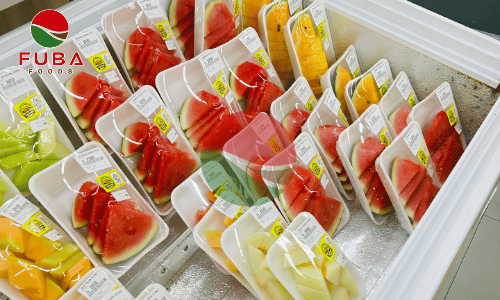
This article explains how frozen fruit OEM and private label manufacturing works in Vietnam, what capabilities to evaluate, and how to choose a reliable factory for consistent quality and long-term supply.
What Is Frozen Fruit OEM & Private Label Manufacturing?
Frozen fruit OEM and private label manufacturing allows a company to sell frozen fruit under its own brand while outsourcing production to an experienced manufacturer. Instead of building its own processing line, freezing system, cold storage, and quality-control infrastructure, the buyer works with a factory to produce according to agreed specifications.
OEM production can involve much more than applying a private label to an existing product. Depending on the manufacturer, buyers may define the fruit variety, product form, cut size, Brix, dry matter, seed content, processing method, packaging format, storage conditions, and other technical requirements.
This model is particularly useful when a brand needs a product that differs from standard frozen fruit available on the market. For example, a smoothie brand may require a specific avocado cube size, while a beverage manufacturer may need passion fruit puree with a defined Brix range.
The objective is to create a repeatable product specification that the manufacturer can reproduce across commercial production batches.
Why Choose Vietnam for Frozen Fruit OEM Private Label?
Vietnam is well positioned for frozen fruit manufacturing because of its tropical agricultural resources, established growing regions, and developing food-processing infrastructure.
The country provides access to fruits such as mango, passion fruit, avocado, dragon fruit, jackfruit, and durian. Different agricultural regions and harvest periods can also support sourcing across multiple seasons.
For OEM production, however, agricultural availability alone is not enough. Raw materials need to meet requirements for maturity, color, size, sweetness, texture, and overall quality before entering processing.
A manufacturer with established sourcing relationships can coordinate raw-material supply with production requirements more effectively. FUBA works with farming regions and growers across Vietnam as part of its raw-material sourcing network, supporting the supply of tropical fruits for frozen processing.
Vietnam can also offer advantages in production costs when sourcing, processing, freezing, packaging, storage, and export operations are managed within an integrated manufacturing system.
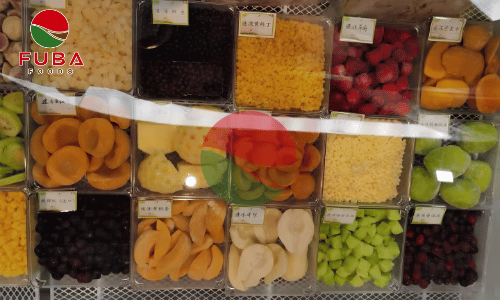
How Does the Frozen Fruit OEM Process Work?
A successful OEM project should move through clearly defined stages, from product specification to final shipment. This helps ensure that the finished product matches the buyer’s technical and commercial requirements.
Define Product Specifications
The first step is to convert the product concept into measurable specifications. These may include:
- Fruit variety
- Product form
- Cut dimensions
- Brix or dry matter
- Seed or seedless requirements
- Color and texture
- Defect tolerance
- Packaging format
- Net weight
- Storage temperature
- Shelf life
The exact specifications depend on the intended application. For example, frozen fruit for smoothies may require different characteristics from fruit supplied to a retail product or food manufacturer.
Source and Inspect Raw Materials
Once the specification is established, suitable raw materials need to be sourced and inspected before processing.
Fruit quality can vary significantly depending on maturity, growing conditions, harvest timing, and handling. These differences can affect the final product’s color, flavor, texture, yield, and processing performance.
A controlled manufacturing process should therefore include raw-material inspection before washing, sorting, preparation, and freezing.
Process and Freeze the Fruit
The processing method depends on the required product format. Fruit can be prepared as cubes, slices, halves, chunks, pulp, or puree before freezing.
IQF technology is particularly suitable for fruit pieces because individual pieces can be rapidly frozen while remaining separated. This helps preserve important product characteristics while making the ingredient easier to portion and handle.
For manufacturers using frozen fruit as an ingredient, individually frozen pieces can also reduce preparation requirements and simplify production handling.
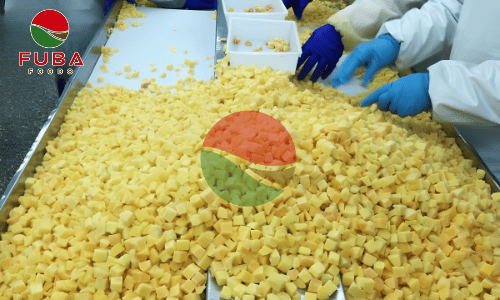
Control Quality and Food Safety
For private label products, quality control is particularly important because the finished product carries the buyer’s brand.
A reliable manufacturer should have controls throughout the production process, including raw-material inspection, process monitoring, foreign-object detection, microbiological testing, packaging inspection, storage control, and traceability.
Finished products are also maintained under controlled frozen storage conditions before export.
Package and Prepare for Export
Packaging should be determined according to the target market and distribution channel.
Retail brands may require smaller consumer packs, while foodservice and industrial buyers generally need larger formats for efficient storage and production handling. Export cartons, inner liners, labeling, and other packaging details should be agreed during the OEM development stage.
FUBA’s frozen product portfolio includes retail, foodservice, and bulk export packaging options, with customized specifications and packaging available for OEM and private label projects.
Which Frozen Fruits Can Be Produced Under Private Labels?
One advantage of working with an established frozen fruit manufacturer is the ability to develop multiple products within the same supply relationship.
Frozen Mango
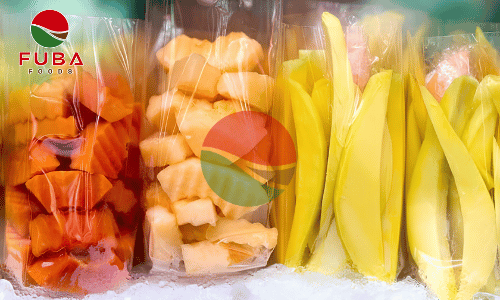
Mango can be processed into IQF cubes, half-cut pieces, or puree. These formats can be used in smoothies, beverages, desserts, yogurt, bakery products, and other food applications.
Different mango varieties and Brix requirements can be specified depending on the intended product.
Frozen Passion Fruit
Passion fruit can be supplied in formats such as pulp, puree, and seed-containing or seedless preparations depending on the application.
These formats are suitable for beverages, sauces, desserts, yogurt, ice cream, and other formulations where passion fruit flavor and acidity are required.
Frozen Avocado
Frozen avocado is available in formats including cubes, slices, and puree.
For industrial applications, dry matter is an important specification because it can influence texture and formulation performance.
Frozen Dragon Fruit, Jackfruit and Durian
Dragon fruit can be supplied as cubes, slices, or puree, while jackfruit can be processed into bulbs, chunks, or puree. Durian is available in formats including IQF pulp, chunks, and puree.
The appropriate format should be selected according to the finished product, processing method, and required texture.
What Should Buyers Check Before Choosing a Frozen Fruit OEM Manufacturer?
The right manufacturer should be evaluated on its ability to consistently reproduce an approved product specification rather than simply offering a competitive quotation.
Raw Material Sourcing
Check where the manufacturer sources its fruit and how it manages seasonal availability. A stable sourcing network can help reduce variation in raw-material quality and supply.
Processing and Freezing Capability
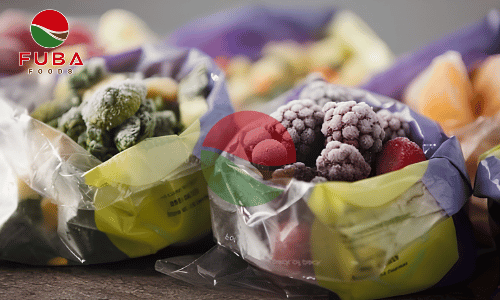
The factory should have suitable processing and freezing equipment for the required product format. Buyers should also understand how cutting, preparation, IQF freezing, and storage are controlled.
Quality and Food Safety
Check the manufacturer’s food-safety systems, inspection equipment, laboratory capabilities, certifications, and traceability procedures. These factors become especially important when products are exported to multiple markets.
Packaging and Customization
OEM buyers should confirm whether the manufacturer can support required pack sizes, labeling, packaging materials, product specifications, and private-label requirements.
Production and Storage Capacity
A manufacturer may successfully handle a sample order but struggle with recurring commercial volumes. Buyers should therefore assess production capacity and cold-storage infrastructure before moving to long-term purchasing.
How OEM Manufacturing Can Control Total Product Cost
The financial advantage of private label manufacturing is not limited to avoiding investment in a factory.
Working with an established manufacturer allows buyers to avoid building their own processing lines, freezing equipment, cold storage, specialized labor, and quality-control systems.
However, buyers should evaluate total landed cost rather than focusing only on the quoted price per kilogram. Inconsistent specifications, rejected batches, excessive waste, repacking, or delayed shipments can create additional costs that quickly outweigh a lower initial quotation.
An experienced OEM manufacturer can help control these costs by coordinating sourcing, processing, freezing, packaging, storage, and export operations within one production system.
Why Manufacturing Consistency Matters for Private Label Growth
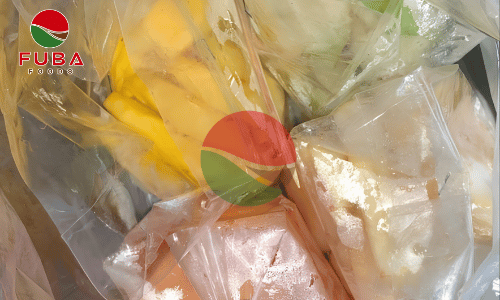
Private label products often require repeat production once they enter the market. The manufacturer must therefore reproduce the approved product with consistent taste, appearance, texture, specifications, and packaging across subsequent orders.
This makes production consistency one of the most important factors when selecting an OEM partner.
FUBA combines agricultural sourcing, frozen fruit processing, IQF freezing, quality control, cold storage, and export operations within its manufacturing system.
For brands developing multiple SKUs, working with a manufacturer that can support different fruit formats can also simplify supplier management as the product portfolio expands.
Conclusion
Choosing a frozen fruit OEM private label manufacturer is ultimately about more than finding a factory with competitive pricing. Buyers need a manufacturing partner that can control raw-material sourcing, processing, specifications, food safety, packaging, cold storage, and export logistics.
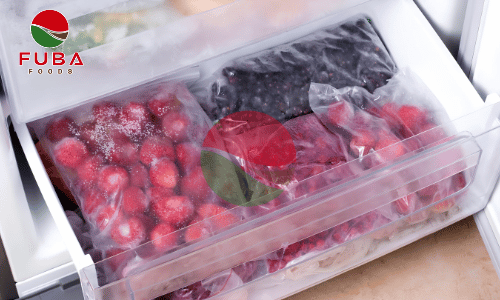
Vietnam offers strong potential for frozen fruit OEM production through its tropical fruit resources and growing food-processing capabilities. However, the factory’s manufacturing system determines whether these advantages can be converted into consistent commercial products.
FUBA Foods combines more than 15 years of frozen fruit and vegetable processing and export experience with IQF freezing technology, Vietnamese agricultural sourcing, quality-control systems, cold storage, and customized product and packaging capabilities.
For businesses developing their own frozen fruit brand, the best starting point is to define the fruit, format, specifications, packaging, target market, and expected volume. With these requirements clearly established, the right OEM manufacturer can develop a production solution around the actual needs of the brand.


