

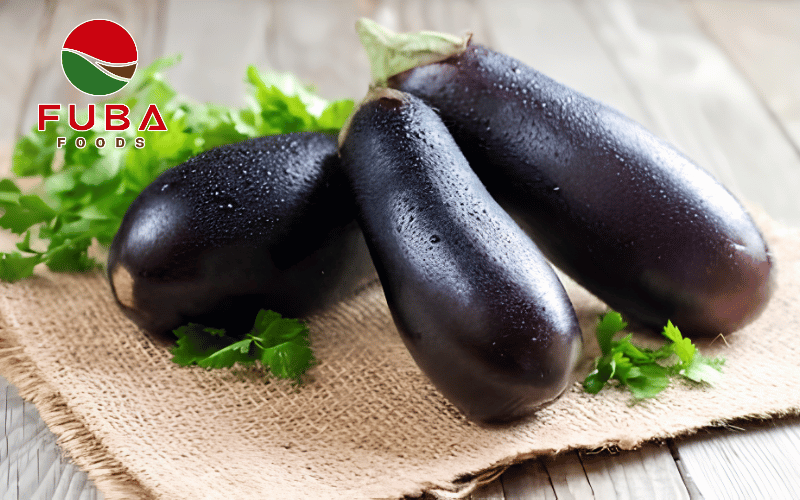
Preparing eggplant from fresh raw materials can require significant labor, kitchen space, frying equipment, oil management, and process control. For foodservice operators and food manufacturers, these additional steps can increase production time and make product consistency more difficult to maintain.
Frozen fried eggplant offers a more convenient alternative by providing eggplant that has already been prepared and fried before freezing. Frozen fried eggplant can help reduce preparation requirements while providing a more standardized ingredient for ready meals, foodservice dishes, appetizers, vegetable mixes, sauces, and other processed foods.
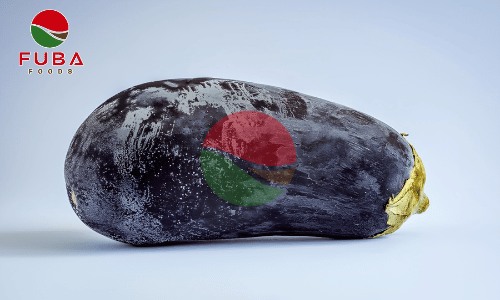
The right product, however, depends on more than price. Cut format, raw material quality, frying conditions, freezing technology, packaging, and storage all influence how the eggplant performs after delivery. This article explains the main frozen fried eggplant formats, processing considerations, quality factors, and supplier capabilities to evaluate when sourcing for commercial food production.
What Is Frozen Fried Eggplant?
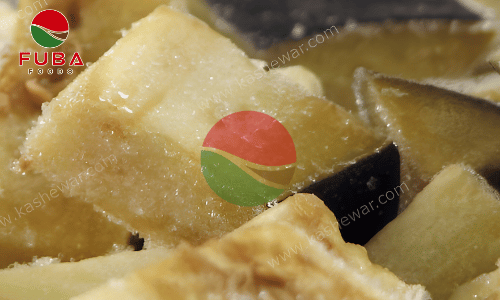
Frozen fried eggplant is eggplant that is prepared and fried before being frozen for storage, transportation, and later use. Instead of receiving fresh eggplant and completing washing, cutting, and frying at their own facility, buyers can receive a partially prepared ingredient ready for further cooking, reheating, assembly, or processing.
The format can be produced in different cuts depending on the final application. Random cuts may suit sauces and mixed dishes, while dice cuts can provide more even distribution in prepared foods. Straight cuts, mini eggplant, and whole eggplant can be selected when shape and presentation are more important.
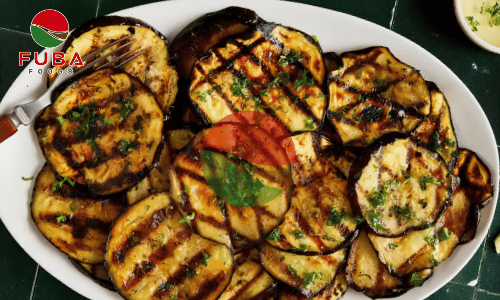
FUBA’s frozen eggplant range includes fried random cut, fried straight cut, fried dice cut, fried mini eggplant, and fried whole eggplant, alongside grilled eggplant formats.
Why Use Frozen Fried Eggplant for Commercial Food Production?
The main advantage is the reduction of preparation work.
Fresh eggplant requires several steps before it can enter a recipe, including cleaning, trimming, cutting, frying, and managing cooking oil. These processes require labor, equipment, production space, and quality control.
With frozen fried eggplant, part of this preparation is transferred to the processing facility. Foodservice kitchens can focus on final cooking and plating, while food manufacturers can introduce the prepared ingredient into their existing production process.
This can be particularly useful for:
- Ready meals and frozen meals
- Appetizers and prepared dishes
- Vegetable mixes
- Sauces and fillings
- Foodservice products
- Further food processing
For businesses operating multiple kitchens or production facilities, using a standardized frozen ingredient can also help reduce differences caused by manual preparation.
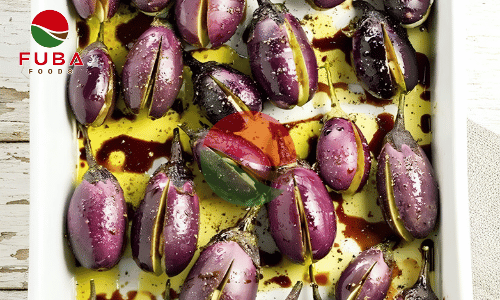
Frozen Fried Eggplant Formats for Different Applications
The appropriate format depends on how the eggplant will be used after delivery. Buyers should define the required cut before production rather than selecting a format based only on appearance.
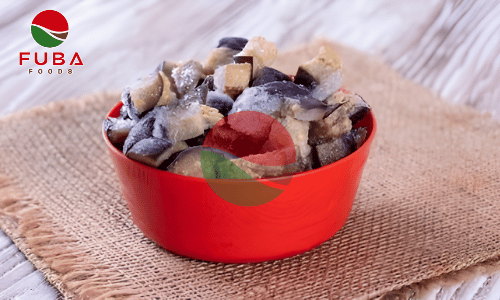
Fried Eggplant Dice
Diced fried eggplant is suitable for applications where smaller pieces need to distribute evenly throughout the finished product.
It can be used in ready meals, sauces, fillings, vegetable mixes, and other processed foods where portion distribution and consistent sizing are important.
Fried Eggplant Straight Cut
Straight-cut eggplant provides a more defined shape and can work well in prepared meals, foodservice dishes, and recipes where the vegetable remains clearly recognizable.
Consistent dimensions can also support more predictable cooking and portioning.
Fried Eggplant Random Cut
Random-cut eggplant can be suitable for applications where exact geometry is less important. It can be incorporated into sauces, fillings, mixed dishes, and industrial food formulations.
This format can provide greater flexibility when visual uniformity is less critical than ingredient functionality.
Fried Mini and Whole Eggplant
Mini and whole eggplant are more presentation-oriented formats. They can be used when the shape and appearance of the vegetable are part of the finished dish.
Because size variation is more visible in these formats, raw material selection and grading become particularly important.
How Frozen Fried Eggplant Is Processed
The quality of a frozen fried eggplant product begins before the frying stage. Raw material selection, preparation, frying, freezing, and storage all contribute to the final result.
Raw Material Selection and Preparation
Eggplant should be inspected according to requirements for size, maturity, color, firmness, and physical condition. These characteristics can affect cutting performance, oil absorption, texture, and appearance after frying.
FUBA’s production flow includes incoming raw material inspection, washing and cleaning, sorting according to size, color, and quality requirements, followed by preparation according to the product specification.
Controlling these steps helps establish a more consistent starting point for frying and freezing.
Controlled Frying
Frying conditions directly influence the appearance, flavor, texture, and oil absorption of eggplant.
Commercial processing therefore requires controlled parameters rather than relying on manual cooking. Temperature, frying time, raw material condition, oil quality, and product loading can all affect the finished product.
Rapid Freezing
After frying, the product needs to be frozen efficiently to stabilize it for storage and transportation.
IQF technology can be used for individual frozen pieces, helping keep pieces separated rather than forming one solid frozen mass. This makes the product easier to portion and handle during subsequent production.
What Quality Factors Should Buyers Check?
A frozen fried eggplant sample should be evaluated under the conditions in which it will actually be used.
Cut consistency is important because uneven pieces may cook differently and affect portion control.
Frying quality should also be assessed through appearance, texture, flavor, and oil absorption. Excessive variation may indicate differences in raw material or frying conditions.
Freezing performance matters because the product should remain manageable after frozen storage and perform according to the agreed preparation method.
Buyers should also establish measurable specifications covering cut size, raw material requirements, processing method, defect tolerance, microbiological parameters, packaging, storage temperature, and shelf life.
Food Safety and Quality Control
Food safety should be assessed as part of supplier qualification rather than separately from product quality.
A commercial frozen-food facility should have controls covering raw material inspection, sanitation, processing, foreign-material detection, microbiological monitoring, packaging, storage, and traceability.
FUBA’s facility includes five metal detection systems, three X-ray inspection systems, and an in-house microbiological laboratory. Its stated quality systems include HACCP, ISO 22000, FDA, HALAL, and BRCGS.
These systems provide control points throughout the production process and are particularly relevant when frozen eggplant is supplied to international foodservice and food manufacturing operations.
Packaging and Cold Storage
Packaging should match the buyer’s handling requirements, storage capacity, and production volume.
Foodservice operations may prefer practical pack sizes for kitchen use, while industrial manufacturers often require larger bulk formats that can be integrated into their production and warehouse systems.
Maintaining controlled temperatures after freezing is essential for protecting product quality during storage and international transportation.
How Frozen Fried Eggplant Can Improve Cost Efficiency
The value of frozen fried eggplant should be assessed through total production cost rather than purchase price alone.
When using fresh eggplant, businesses need to account for labor, trimming, cutting, frying equipment, cooking oil, cleaning, processing losses, and production time. These costs can become significant at commercial scale.
A prepared frozen product transfers many of these activities to the supplier. This can allow the buyer to reduce preparation requirements and focus its own resources on higher-value production stages.
For high-volume operations, the resulting labor and process savings may offset a higher purchase price compared with raw frozen eggplant.
How to Choose a Frozen Fried Eggplant Supplier
Supplier evaluation should cover the complete production chain.
First, check whether the manufacturer has suitable equipment for raw material preparation, frying, freezing, packaging, and storage.
Second, examine how raw materials are sourced and inspected. Consistent raw materials are essential for consistent fried eggplant.
Third, confirm whether the supplier can provide the required cut and processing format. Specifications should be agreed before commercial production.
Finally, assess food safety systems, inspection equipment, cold-storage capacity, export experience, and production scalability.
Frozen Fried Eggplant vs. Fresh Eggplant Processing
The choice between fresh eggplant and frozen fried eggplant depends on the buyer’s production model.
Fresh eggplant gives the operator complete control over preparation and frying but requires additional labor, equipment, oil, storage, and process management.

Frozen fried eggplant transfers these initial preparation stages to a specialized manufacturer. This can simplify kitchen or factory operations while providing a more standardized ingredient.
For businesses with high labor costs, limited kitchen capacity, or standardized multi-location production, this difference can be particularly valuable.
Conclusion
Frozen fried eggplant can simplify food preparation while providing a more consistent processed ingredient for foodservice and food manufacturing applications.
The most important factors are not limited to price. Buyers should evaluate cut consistency, raw material quality, frying performance, freezing technology, food safety, packaging, cold storage, production capacity, and export capability.
FUBA Foods combines Vietnamese agricultural sourcing with frozen vegetable processing, frying equipment, IQF freezing systems, inspection infrastructure, microbiological testing, and controlled cold storage. Its range of fried eggplant formats allows different applications to be matched with suitable product specifications.
For commercial sourcing, the most practical approach is to define the required cut, processing method, packaging, and quality parameters first, then evaluate samples under the actual cooking or manufacturing conditions. This provides a stronger basis for selecting a supplier that can deliver consistent frozen fried eggplant across repeated orders.


