

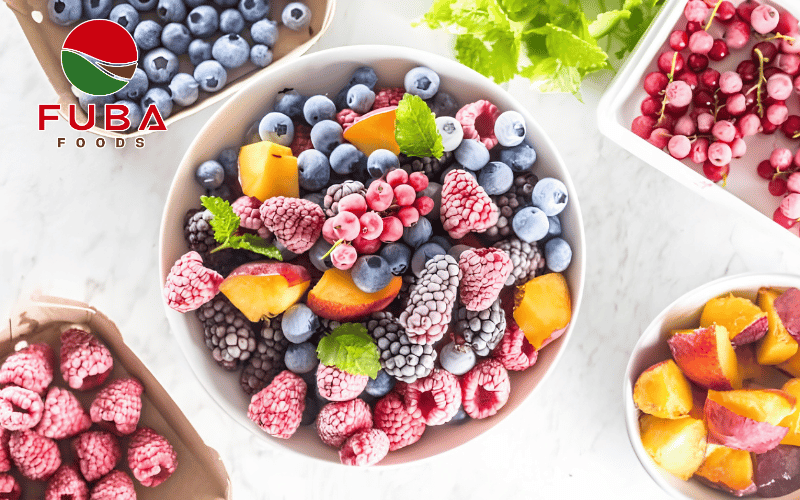
Choosing a frozen food supplier is not simply a matter of comparing prices. For international buyers, selecting the wrong partner can lead to inconsistent product specifications, unstable supply, food safety risks, and challenges in cold-chain management, documentation, and delivery schedules. These issues can directly affect business operations, brand reputation, and long-term profitability.
To minimize these risks, buyers need a structured approach to supplier evaluation. A frozen food supplier checklist helps standardize the assessment process, allowing importers, distributors, food manufacturers, and foodservice companies to evaluate potential partners based on production capability, quality control systems, sourcing practices, and export readiness rather than relying solely on product samples or quotations.

This article presents a practical frozen food supplier checklist for international buyers, outlining the key criteria to assess suppliers and the critical factors that determine whether a factory can support stable, long-term cooperation.
Start Your Frozen Food Supplier Checklist With Factory Capability
The first question should be simple: does the supplier actually manufacture the products, or does it mainly source them from other factories? This distinction matters because direct manufacturers generally have greater control over raw materials, processing parameters, product specifications, quality inspection, and production scheduling.
A capable frozen food factory should be able to explain its production flow clearly, including raw material receiving, inspection, washing, sorting, preparation, freezing, inspection, packing, storage, and shipment. The more control a factory has over these stages, the easier it is to maintain consistent quality and respond to customer-specific requirements.
Factory capacity is another important checkpoint. A supplier may provide good samples but struggle when order volumes increase. Buyers should therefore evaluate annual production capacity, workforce, freezing lines, storage capacity, and experience handling export orders.
Check Raw Material Sourcing and Supply Stability
Product quality starts before the raw material reaches the factory. A supplier may have advanced processing equipment, but unstable or inconsistent raw materials can still lead to differences in color, size, maturity, texture, flavor, and yield.
Your frozen food supplier checklist should therefore include questions about where raw materials come from, how suppliers or growing regions are selected, and how seasonal fluctuations are managed. A strong sourcing network across different agricultural regions can reduce dependence on a single production area and help maintain supply throughout the year.
This is particularly important for tropical fruits and vegetables, where harvest periods and growing conditions can vary significantly.
FUBA works with farming regions and growers across Vietnam, supporting a more stable supply of raw materials while sourcing products from different agricultural areas.
International buyers should also ask whether the factory has a defined raw material inspection process. Incoming materials should be checked against agreed specifications before they enter production. This prevents quality problems from being carried further into the processing line.

Verify Product Specifications Before Comparing Prices
One of the most common mistakes when sourcing frozen food is comparing suppliers based only on price per kilogram. A lower price does not necessarily represent better purchasing value if the product does not meet the required specifications.
Your checklist should cover product variety, cut size, piece weight, maturity, color, texture, moisture, packaging format, storage temperature, shelf life, and any customer-specific requirements. For processed fruits and vegetables, the freezing format also matters. Depending on the application, buyers may require IQF slices, cubes, chunks, halves, puree, or another customized format.
A factory with flexible processing capabilities can be more suitable when buyers need products developed for specific recipes or manufacturing processes. The product specification should be agreed before commercial production begins. This gives both parties a clear reference for sample approval, production inspection, and shipment quality.
Evaluate Freezing Technology and Processing Controls
Freezing technology directly affects the quality and usability of frozen food. For many fruits and vegetables, IQF freezing is especially important because it freezes individual pieces rapidly rather than producing one large frozen block.
A proper frozen food supplier checklist should therefore examine not only whether the supplier uses IQF technology, but also how the product is prepared before freezing. Sorting, cutting, blanching, cooking, or other value-added processes can influence the final result just as much as the freezing stage itself.
Equipment capacity is another useful indicator. A factory operating several freezing systems can have greater flexibility in handling different products and production requirements.
FUBA’s processing facilities include six IQF freezing lines rated at 500 kg/hour each, alongside contact and air-blast freezing systems. Its quality-control infrastructure also includes metal detection, X-ray inspection, and an in-house microbiological laboratory.
However, equipment alone does not guarantee quality. Buyers should also understand the factory’s process controls and how specifications are maintained from preparation through freezing and packing.

Review Food Safety Standards and Quality Assurance
Food safety should be one of the most important sections of any frozen food supplier checklist. International buyers need confidence that the supplier can consistently manufacture products under controlled food safety systems rather than relying only on final-product inspection.
Ask which food safety management systems and certifications the factory maintains, whether the certification scope covers the relevant production site and products, and how quality is monitored during production. Traceability is equally important because buyers should be able to identify where raw materials came from and how finished products moved through the production process.
The factory’s inspection capabilities should also be considered. Metal detection, X-ray inspection, microbiological testing, and documented quality-control procedures can provide additional layers of control.
Examine Cold Storage and Cold-Chain Management
Frozen products remain dependent on temperature control after leaving the production line. A supplier can manufacture a high-quality product but still create problems if storage, loading, transportation, or shipment handling is poorly managed.
Your checklist should cover the factory’s cold storage conditions, storage capacity, loading procedures, and temperature monitoring. For frozen products, maintaining the required storage temperature throughout the supply chain is essential for protecting product quality and stability.
A supplier with its own controlled cold storage can provide better coordination between production and export scheduling.
FUBA’s factory uses temperature-controlled cold storage below -18°C and supports international shipments through cold-chain logistics systems.
International buyers should also clarify how products are prepared for container loading, how temperature requirements are communicated to logistics partners, and what documentation accompanies each shipment.

Assess Export Experience and Documentation
A supplier may be technically capable but still difficult to work with internationally if its export processes are weak. Importers and distributors should therefore evaluate how experienced the supplier is with international shipments, documentation, logistics coordination, and destination-market requirements.
A practical checklist should include export markets served, experience with similar destinations, product documentation, packing specifications, shipping terms, lead times, and communication procedures. Buyers should also confirm that the supplier understands the documentation requirements of the destination market rather than assuming that domestic production experience is sufficient.
Export experience can be particularly valuable when orders involve customized packaging, private labels, or different market requirements. A factory that already handles international shipments is more likely to have established processes for coordinating production, documentation, logistics, and delivery schedules.
Compare Supply Capacity With Your Actual Demand
Before selecting a supplier, compare your expected purchasing volume with the supplier’s real production capability. This is especially important for distributors, food manufacturers, and importers planning recurring orders.
A supplier should be able to explain how it manages production during peak seasons, how much volume can be allocated to a specific product, and how it handles increases in demand. Capacity should not be judged only by a single production line or the quantity available for one shipment.
The stronger approach is to evaluate capacity together with raw material sourcing, freezing equipment, workforce, storage infrastructure, and export experience. These elements determine whether the supplier can maintain supply when your business grows.

Evaluate Pricing From the Total Supply Cost
Price remains important, but it should be assessed after product specifications and supplier capability have been confirmed. A cheaper quotation may become more expensive if it involves inconsistent quality, excessive product defects, unreliable delivery, or additional handling costs.
Instead of asking only for the lowest price, compare the complete commercial offer. Consider product yield, packaging, minimum order quantity, lead time, shipping arrangements, quality consistency, and the supplier’s ability to meet your required specifications.
Direct manufacturing can also provide advantages in cost control because sourcing and processing are managed within the production system. Efficient raw material sourcing and production processes can help a factory offer competitive pricing without relying on unnecessary intermediary layers.
Request Samples and Validate the Supplier Before Scaling
A supplier should not be approved based solely on a catalogue, quotation, or sales presentation. Product samples provide the first practical opportunity to compare the supplier’s actual output with your specifications.
Sample evaluation should cover appearance, cut uniformity, color, texture, flavor, packaging, labeling, and performance after thawing or cooking when relevant to the final application. For industrial users, the product should also be tested in the actual manufacturing process whenever possible.
The sample approval stage is also the right time to confirm technical specifications, packaging requirements, production lead times, documentation, and quality expectations. Once these details are clearly agreed, moving from trial orders to regular commercial supply becomes much less risky.

Use the Frozen Food Supplier Checklist Before Signing a Long-Term Contract
The best frozen food supplier is not necessarily the company offering the lowest initial quotation. It is the supplier that can consistently deliver the right product, at the required specification, volume, quality level, and delivery schedule.
A complete supplier evaluation should therefore connect five areas: manufacturing capability, raw material supply, product quality, food safety, and export execution. If one of these areas is weak, the risk can eventually appear as inconsistent shipments, production interruptions, rejected goods, or unexpected costs.
For international buyers, the frozen food supplier checklist should ultimately answer one question: Can this supplier reliably support my business beyond the first order? A factory with direct production control, established sourcing, appropriate freezing technology, strong quality systems, sufficient cold storage, and international export experience is much better positioned to become a long-term supply partner.
Conclusion
Choosing a frozen food supplier requires more than checking a product list and comparing quotations. Buyers need to investigate the factory behind the product, from raw material sourcing and processing technology to quality assurance, cold storage, production capacity, and export execution.
Using a structured frozen food supplier checklist helps importers, distributors, food manufacturers, and foodservice businesses identify suppliers that can meet both immediate specifications and long-term commercial requirements. The goal is not simply to find a supplier that can ship frozen food, but to find a manufacturing partner capable of delivering consistent quality and dependable supply as your business grows.


