

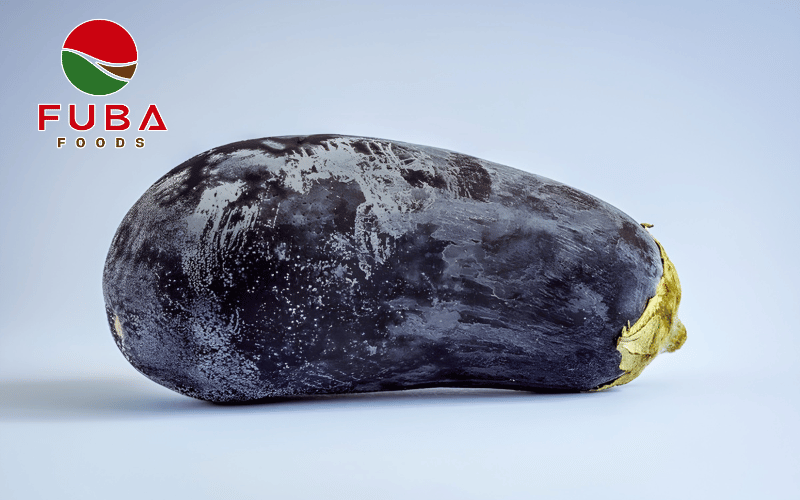
For global food manufacturers, sourcing frozen eggplant is not simply about finding a supplier with a competitive price. The more important challenge is maintaining consistent raw material quality, cut specifications, processing characteristics, food safety, and supply across repeated shipments. These factors can directly affect production efficiency, recipe consistency, and the quality of finished foods.
A reliable frozen eggplant supplier Vietnam should be able to control the product from agricultural sourcing and raw material inspection through preparation, freezing, packaging, cold storage, and export. For manufacturers, this means evaluating not only the finished product but also the supplier’s processing technology, quality systems, product formats, and ability to meet specific production requirements.
This article explores why Vietnam is becoming a practical sourcing market for frozen eggplant. It covers the available product formats, the role of IQF and the factors that global buyers should consider when choosing a reliable long-term supplier.

Why Choose a Frozen Eggplant Supplier from Vietnam?
Vietnam has a diverse agricultural base and an established food-processing industry serving both domestic and international markets. For frozen vegetable buyers, this provides access to agricultural raw materials alongside processing, freezing, cold storage, packaging, and export infrastructure.
However, reliable frozen eggplant supply depends on more than agricultural availability. Eggplant can vary in size, maturity, color, firmness, moisture, and physical condition. These differences can affect cutting performance, cooking behavior, texture, and final appearance.
A capable processor therefore needs effective sourcing and raw material controls before the product reaches the freezing line.
For global manufacturers, this farm-to-factory approach can help create more consistent frozen eggplant specifications across commercial shipments.
What Frozen Eggplant Formats Can Manufacturers Source?
The right frozen eggplant format depends on the buyer’s application and downstream processing requirements. Manufacturers may need raw IQF pieces or customized cuts rather than a single standard product.
IQF, or Individually Quick Frozen technology, rapidly freezes individual eggplant pieces instead of creating one solid frozen block. This helps maintain piece separation and makes the product easier to portion, measure, and process.
Depending on the application, eggplant can be prepared in different cuts such as dice, straight cut, random cut, or coin cut. The appropriate format should be agreed according to the manufacturer’s recipe, cooking method, and equipment.
This format can be useful for ready meals, appetizers, prepared dishes, foodservice products, and other processed foods where fried eggplant is part of the finished recipe.
FUBA incorporates IQF freezing into its frozen vegetable processing system and offers multiple frozen eggplant formats for industrial applications.

How to Evaluate Frozen Eggplant Specifications
For industrial purchasing, product specifications should be measurable rather than based only on general descriptions such as “premium quality.”
Buyers should define parameters including:
- Eggplant variety and origin
- Cut type and dimensions
- Size range and tolerances
- Color and maturity
- Defect allowance
- Processing method
- Moisture or other relevant technical parameters
- Microbiological requirements
- Foreign-material controls
- Packaging format
- Storage temperature
- Shelf life
Cut consistency is particularly important for automated and high-volume production. Uneven pieces may cook differently, affect portion distribution, or create variations in the finished product.
Processing method should also be clearly specified. Raw IQF eggplant, blanched eggplant, fried eggplant, and grilled eggplant have different characteristics and should not be treated as interchangeable products.
A reliable manufacturer should be able to convert these requirements into a documented production specification that can be reproduced across future batches.

Why IQF Technology Matters for Frozen Eggplant
Freezing technology influences how frozen eggplant performs during storage, handling, and subsequent processing.
IQF freezing rapidly freezes individual pieces, helping maintain separation and allowing manufacturers to use only the required quantity without thawing an entire frozen block.
Multiple freezing technologies provide flexibility when processing different products and formats. For buyers, however, equipment capacity should be considered alongside raw material quality, preparation, freezing parameters, packaging, storage, and cold-chain management.
The freezing system alone does not determine final product quality.
Quality Control Begins with Raw Material Inspection
Freezing cannot compensate for unsuitable raw materials. Eggplant with inconsistent maturity, excessive physical damage, unsuitable size, or poor appearance can affect the finished product even after careful processing.
For this reason, incoming inspection is an important part of supplier qualification.
This controlled sequence allows quality requirements to be addressed at different stages rather than relying only on final-product inspection.
For manufacturers, evaluating this process can provide more useful information about supplier reliability than reviewing a product sample alone.

Food Safety Requirements for Global Buyers
Food manufacturers should assess the food safety system behind a frozen eggplant supplier before approving commercial supply.
Important controls include raw material inspection, sanitation, process hygiene, microbiological monitoring, foreign-object detection, traceability, storage temperature, and export documentation.
These systems provide a foundation for manufacturers supplying retail, foodservice, and industrial markets where supplier compliance forms part of the overall finished-product quality system.
Packaging and Cold Storage for International Orders
Packaging needs to match the buyer’s production and distribution model. Industrial manufacturers generally require bulk formats that are practical for high-volume handling, while foodservice and retail channels may require different pack sizes.
Storage conditions are equally important. Finished frozen products should remain under controlled temperatures throughout storage and transportation to protect quality and minimize temperature-related deterioration.
FUBA operates three cold-storage facilities with a stated capacity of 500 MT each, while finished products are maintained below -18°C before export.
For international buyers, packaging, pallet configuration, storage temperature, shipping schedule, and cold-chain requirements should therefore be agreed as part of the overall product specification.

How Frozen Eggplant Can Improve Production Efficiency
The value of frozen eggplant is not limited to raw material preservation. A properly prepared frozen ingredient can also reduce labor and preparation requirements at the buyer’s facility.
For example, uniform IQF cuts can simplify portioning and distribution. Fried or grilled formats can eliminate additional processing steps. Consistent specifications can also reduce sorting, recipe adjustments, and production interruptions.
For this reason, manufacturers should compare suppliers based on total production economics rather than price per kilogram alone. Product yield, preparation requirements, labor, storage, transportation, rejected product, and production efficiency can all influence the actual cost.
Conclusion
Choosing a frozen eggplant supplier Vietnam requires more than confirming product availability or comparing quotations. Global food manufacturers should evaluate raw material sourcing, processing methods, cut consistency, IQF capability, food safety systems, packaging, cold storage, production capacity, and export experience together.

Vietnam offers a strong agricultural and processing base for international frozen vegetable sourcing, but the supplier’s manufacturing system ultimately determines whether this advantage translates into consistent commercial supply.
For manufacturers sourcing frozen eggplant for international production, the best starting point is a clearly defined product specification followed by sample testing and production evaluation. This approach helps ensure that the selected supplier can consistently deliver the required format, quality, volume, and documentation for long-term supply.


