

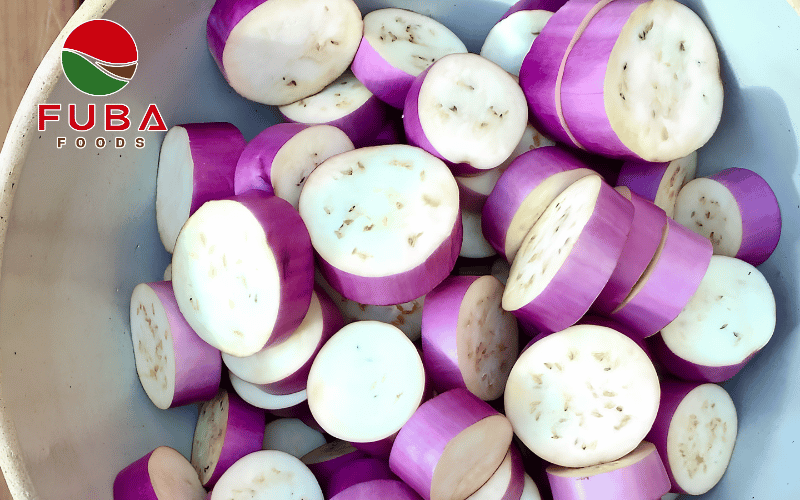
Ready meals require ingredients that can move efficiently through a standardized production process while maintaining consistent appearance, texture, and flavor. Eggplant can be particularly challenging because its soft structure and high moisture content make it sensitive to cutting, cooking, freezing, and reheating conditions. Using fresh eggplant may also create additional work around preparation, seasonal availability, labor, and raw-material variation.
For manufacturers searching for frozen eggplant for ready meals, the main consideration is therefore not simply whether the eggplant is frozen. The more important question is whether the ingredient can deliver consistent performance across batches, fit the production line, and maintain an acceptable eating quality after the finished meal is cooked and reheated. IQF processing has become an effective solution because individual pieces can be frozen separately, making them easier to portion, handle, and integrate into industrial recipes.
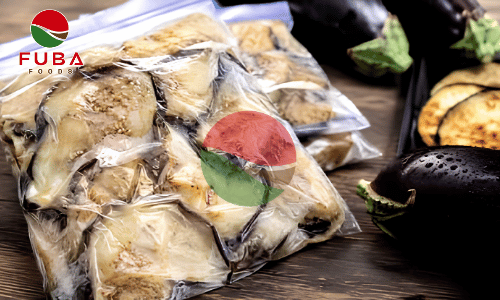
This article explains why IQF frozen eggplant is suitable for ready-meal manufacturing, which product formats can support different recipes, what specifications manufacturers should evaluate, and how processing, quality control, packaging, and cold-chain management affect the final ingredient performance.
Why Frozen Eggplant Works Well for Ready Meals
Ready-meal production depends heavily on repeatability. A manufacturer may produce thousands of trays, bowls, pouches, or frozen meal portions using the same formulation. When one vegetable ingredient varies significantly in size, moisture, texture, or cooking behavior, that variation can affect the entire production process.
Frozen eggplant helps reduce several of these challenges by shifting part of the preparation work from the ready-meal factory to the ingredient-processing stage. The eggplant can already be washed, sorted, cut, and processed according to a defined specification before reaching the food manufacturer. This reduces preparation requirements and makes the ingredient easier to incorporate into standardized recipes.
Another advantage is availability. Fresh eggplant is influenced by harvest conditions, transportation, and seasonal fluctuations. A properly processed frozen ingredient can be stored and supplied according to production planning, allowing manufacturers to maintain recipes without depending entirely on daily fresh-vegetable procurement.
For ready meals, this consistency is particularly important because eggplant may be combined with sauces, grains, meat, pasta, other vegetables, or plant-based proteins. The ingredient needs to remain compatible with the complete cooking process rather than simply looking good when first delivered.
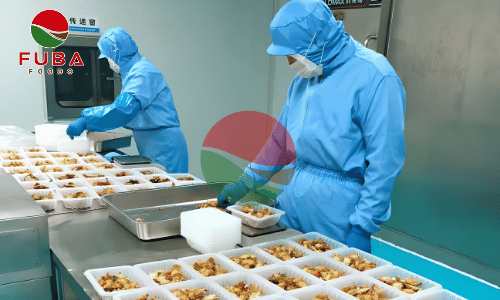
How IQF Frozen Eggplant Improves Ready-Meal Production
IQF, or Individually Quick Frozen, technology freezes individual pieces separately rather than forming them into one solid block. This seemingly simple difference has significant practical value for industrial food production.
Individual Pieces Make Portioning Easier
In a ready-meal factory, ingredients are often dosed according to a predetermined recipe. Frozen eggplant pieces that remain separated after freezing can be weighed, portioned, and transferred more easily than a frozen block that needs to be broken apart before use.
This is especially useful when eggplant represents only one component of a multi-ingredient formulation. The production team can take the required quantity without thawing the entire package.
The individual-freezing format can also help reduce unnecessary handling. Ingredients can move more directly from frozen storage into preparation or cooking operations, supporting a more streamlined workflow.
IQF Helps Preserve Product Characteristics
Eggplant contains substantial moisture and has a naturally tender structure. Freezing inevitably affects plant tissues, but rapid freezing can help limit the formation of large ice crystals that may cause excessive structural damage.
The objective is not to make frozen eggplant identical to freshly harvested eggplant. Instead, the goal is to maintain a suitable combination of color, flavor, texture, and appearance for the intended application.
This is particularly relevant for ready meals because the eggplant may undergo additional heating after incorporation. A product that already suffers from excessive structural breakdown before entering the meal-production process may become too soft after cooking and reheating.
FUBA combines preparation and IQF freezing with controlled quality checks. Its eggplant range is positioned for applications including ready meals, food processing, pasta, soup, stir-fry, and pizza toppings, demonstrating how different frozen formats can be adapted to industrial recipes.
Choosing the Right Frozen Eggplant Format for Ready Meals
Not every ready meal requires the same eggplant format. The appropriate specification depends on the recipe, cooking method, portion size, visual presentation, and desired texture.
Frozen Eggplant Dice for Sauces, Bowls, and Mixed Meals
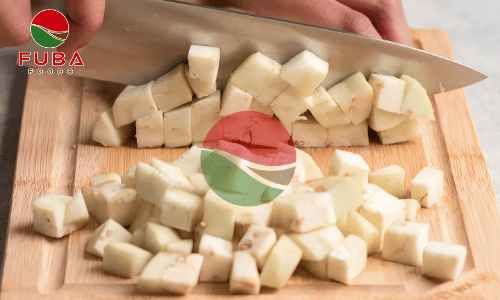
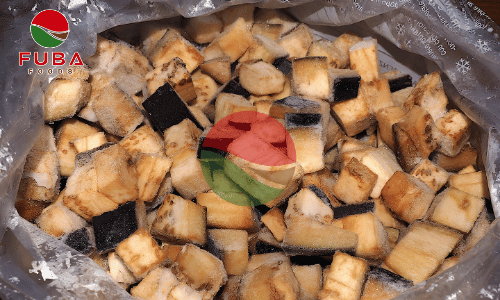
Diced eggplant is practical when the vegetable needs to be distributed throughout a recipe rather than presented as a prominent whole piece. It can work well in prepared sauces, vegetable mixes, pasta dishes, grain-based meals, curries, and other formulations where uniform distribution is important.
Consistent cutting dimensions are worth specifying because large variations in piece size can lead to uneven cooking. Smaller pieces may soften more quickly, while larger pieces may require longer heating. For industrial production, cut size should therefore be evaluated together with the manufacturer’s cooking process rather than considered as an isolated specification.
Straight-Cut Eggplant for Structured Recipes
Straight-cut eggplant provides a more recognizable shape while remaining convenient for automated or semi-automated processing. It can be suitable for meals where the vegetable needs to remain visually identifiable, such as vegetable combinations, pasta dishes, stir-fries, and prepared side dishes.
The advantage of a defined cut is greater control over portion appearance. When every production batch follows a similar cut specification, manufacturers can maintain a more consistent finished product.
Grilled Eggplant for Ready Meals with a Cooked Flavor Profile
Grilled eggplant is useful when manufacturers want to incorporate a more developed cooked flavor without performing the grilling step themselves.
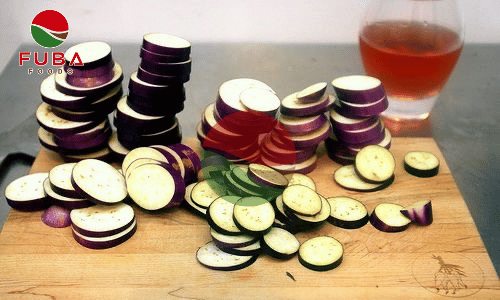
A grilled coin-cut format, for example, can provide a recognizable vegetable shape and grilled character that works in prepared meals, vegetable sides, layered dishes, or recipes where the eggplant is intended to remain visually prominent.
Fried Eggplant for Convenient Recipe Integration
Fried eggplant can be considered when the desired recipe requires a pre-cooked ingredient with a characteristic fried profile. Available formats can include dice, straight cut, random cut, mini eggplant, and whole eggplant, depending on the intended application.
For ready meals, pre-processing can reduce the number of operations required inside the meal-production facility. However, manufacturers should evaluate oil absorption, coating requirements if applicable, texture after reheating, and compatibility with the final recipe before approving a specification.
What Manufacturers Should Check Before Buying Frozen Eggplant
Selecting frozen eggplant based only on price can create problems further down the production line. A lower ingredient cost may not represent a lower total cost if the product generates excessive breakage, inconsistent portions, high preparation requirements, or poor texture after cooking.
Raw Material Consistency
The first consideration is the quality and consistency of the raw eggplant. Size, maturity, color, physical condition, and seasonal variation can influence the final frozen product.
A reliable processor should have a structured sourcing and incoming-inspection process rather than simply freezing whatever raw material is available. This helps establish a more consistent starting point for subsequent sorting, cutting, cooking, and freezing.
A strong sourcing network can also help manufacturers manage supply continuity. FUBA works with farming regions and growers across Vietnam to support year-round raw-material supply, while its processing flow includes incoming inspection, washing, sorting, grading, preparation, freezing, and final shipment.
Cut Size and Product Specification
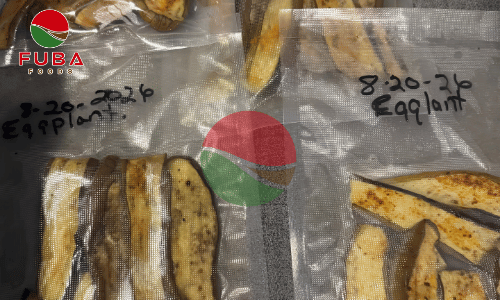
For ready meals, specifications should go beyond simply stating “frozen eggplant.” Buyers should define the desired format, approximate dimensions or size range, processing method, appearance requirements, packaging format, storage temperature, and other quality parameters relevant to the recipe.
This becomes particularly important when the ingredient is used in automated portioning or standardized formulations. Consistent specifications make it easier for the manufacturer to control recipe yield and finished-product appearance.
Food Safety and Quality Control
Food safety is another critical consideration because frozen vegetables are ingredients in products that may enter multiple international markets.
A professional processing facility should have controls covering raw-material inspection, sanitation, processing, foreign-material detection, storage, traceability, and shipment. These controls need to operate as an integrated system rather than relying on final-product inspection alone.
Processing and Cold-Chain Management Matter as Much as IQF
IQF technology is only one part of frozen ingredient quality. The condition of the product before and after freezing also has a direct effect on its performance.
After freezing, maintaining the appropriate storage temperature is essential. Frozen eggplant is stored at ≤ -18°C, with a stated shelf life of up to 24 months under the specified conditions. Packaging options include bulk export cartons with PE inner liners, alongside other pack formats depending on the product range and market.
For international buyers, the cold chain should therefore be considered from factory storage through transportation and arrival at the customer’s facility. Temperature control is not simply a logistics requirement; it is part of maintaining the ingredient’s original quality throughout its commercial life.
Packaging should also match the buyer’s handling system. Bulk packs may be more appropriate for industrial production, while smaller foodservice formats can suit operations with lower ingredient consumption. The right format depends on production volume, warehouse capacity, dosing practices, and how quickly the package will be consumed after opening.
Why Direct Factory Supply Can Improve Cost Control
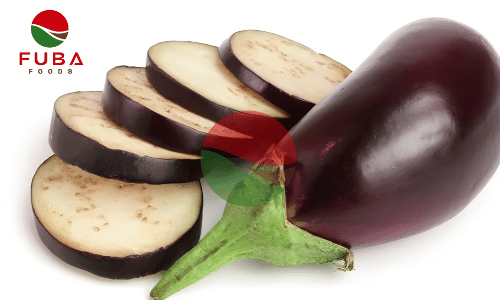
For manufacturers, the cost of frozen eggplant should be evaluated as a total production cost rather than only a purchase price per kilogram.
A processed ingredient that arrives already sorted, prepared, cut, and frozen can reduce internal labor and preparation requirements. Consistent piece sizes can also reduce process variation, while IQF packaging allows manufacturers to use the quantity required for a production run without necessarily thawing an entire block.
Direct factory sourcing can provide another layer of cost control because the buyer works closer to the actual production process. This can make it easier to discuss specifications, packaging, production schedules, and customized requirements without adding unnecessary intermediary steps.
FUBA combines raw-material sourcing, processing, cold storage, and export logistics within its frozen food operation. Its stated production infrastructure includes six IQF lines with a listed capacity of 500 kg/hour each, three contact-freezing lines, controlled cold-storage facilities, and dedicated value-added processing equipment.
Frozen Eggplant for Ready Meals: What a Long-Term Supplier Should Provide
A suitable supplier should be able to do more than deliver frozen eggplant according to a standard catalogue specification. Ready-meal manufacturers often need ingredients adapted to their recipes, production equipment, target market, and packaging requirements.
This is where manufacturing flexibility becomes important. The supplier should be able to discuss cut specifications, processing methods, packaging, shipment quantities, and other technical requirements before commercial production begins.
A supplier with both processing capability and export experience can also provide greater continuity when the buyer moves from product testing to larger-scale procurement. Documentation, food-safety requirements, cold-chain coordination, and shipment preparation all become increasingly important as order volumes grow.
The ability to support customized specifications is particularly relevant for manufacturers developing private-label or proprietary ready meals. Instead of redesigning the recipe around whatever standard ingredient is available, the frozen vegetable specification can be developed around the requirements of the finished product.
Conclusion
For ready-meal manufacturers, frozen eggplant for ready meals offers more than year-round ingredient availability. The real value lies in receiving a standardized ingredient that can be portioned efficiently, integrated into established production processes, and maintained under controlled frozen conditions.
IQF technology makes frozen eggplant particularly practical because individual pieces are easier to handle and portion, while rapid freezing helps preserve key product characteristics. However, IQF alone does not determine ingredient quality. Raw-material sourcing, cut consistency, pre-processing, food-safety controls, packaging, storage, and cold-chain management all contribute to the final result.
For manufacturers evaluating suppliers, the most reliable approach is to assess the complete production system rather than focusing on price alone. A capable direct manufacturer with controlled sourcing, modern freezing and inspection systems, flexible specifications, and established export infrastructure can provide a more consistent foundation for long-term ready-meal production.


