


For international food manufacturers, distributors, foodservice companies, and importers, sourcing frozen edamame from Vietnam is not simply about finding a competitive price. Buyers need consistent bean quality, reliable specifications, food-safety controls, suitable packaging, and stable supply across repeated shipments.
A reliable frozen edamame supplier Vietnam should be able to connect agricultural sourcing with controlled processing, IQF freezing, quality inspection, cold storage, packaging, and export logistics. This integrated approach helps buyers reduce quality variation and maintain a more predictable frozen vegetable supply chain.
For buyers, the right supplier is therefore not simply the company offering the lowest quotation. Production capability, product consistency, food-safety management, supply capacity, and export experience all need to be evaluated before establishing a long-term sourcing relationship.
This article explains why Vietnam is a practical source of frozen edamame, what determines product quality, how different edamame formats are used in food manufacturing, and what international buyers should consider when selecting a supplier.
Why Source Frozen Edamame from Vietnam?
Vietnam has developed a growing agricultural processing industry supported by diverse growing regions and established export infrastructure. For international buyers, the country’s value lies not only in agricultural production but also in its ability to convert raw materials into standardized frozen ingredients for overseas markets.
Frozen edamame is particularly suitable for this model because the quality of the finished product depends on how quickly and consistently the beans are handled after harvesting. Maturity, color, texture, processing speed, freezing conditions, and storage can all influence the final product.
Processing edamame closer to its agricultural source can help reduce unnecessary handling before freezing. Once processed, the product can be stored and transported under controlled frozen conditions, giving manufacturers greater flexibility when planning production throughout the year.
For buyers, therefore, sourcing from Vietnam can provide access to both tropical and subtropical agricultural resources and an increasingly capable frozen-food processing industry.
What Makes a Reliable Frozen Edamame Supplier?
When evaluating a frozen edamame supplier Vietnam, buyers should look beyond price and consider how consistently the supplier can meet the technical and commercial requirements of the intended application.
Key areas to evaluate include:
- Raw-material sourcing and quality
- Product size, color, and appearance
- IQF freezing capability
- Processing and food-safety controls
- Packaging and storage conditions
- Traceability and documentation
- Production capacity
- Cold-chain and export logistics
- Ability to maintain specifications across repeat orders
A supplier that performs well across these areas is more likely to provide consistent product quality than one that simply purchases and resells frozen vegetables from different sources.
Raw Material Quality and Edamame Consistency
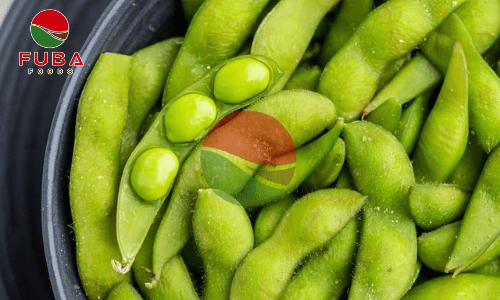
The quality of frozen edamame begins with the raw material. Beans and pods intended for commercial freezing need to meet defined requirements for maturity, color, size, texture, and overall condition.
Harvest timing is particularly important. Edamame harvested at different stages of maturity can show differences in tenderness, sweetness, color, and texture after processing.
For manufacturers, these variations can become more noticeable when the ingredient is used repeatedly in standardized recipes. A change in bean size or texture can affect portioning, cooking performance, visual appearance, and the consistency of the finished product.
A structured sourcing system can therefore provide an advantage by allowing the processor to establish quality requirements before the raw material reaches the production line.
IQF Technology and Its Role in Edamame Quality
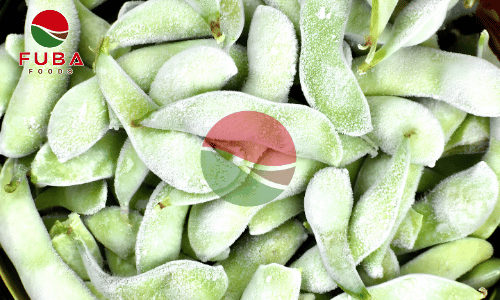
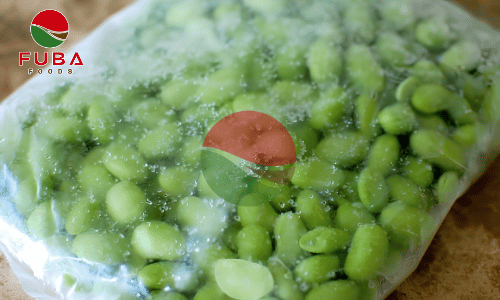
IQF, or Individual Quick Freezing, rapidly freezes individual pieces rather than allowing them to freeze together into a solid block.
This is particularly useful for edamame because the finished beans or pods remain separated and can be portioned according to production requirements. Manufacturers can take the required quantity without thawing the entire package.
Properly controlled rapid freezing can also help retain important characteristics such as:
- Natural green color
- Tender texture
- Fresh flavor
- Individual piece separation
- Convenient portioning
For industrial food production, the value of IQF technology therefore extends beyond preservation. It creates a frozen ingredient that is easier to handle and integrate into standardized manufacturing processes.
Frozen Edamame Formats for Different Applications
The most suitable format depends on the final product and the manufacturer’s processing requirements.
IQF Shelled Edamame
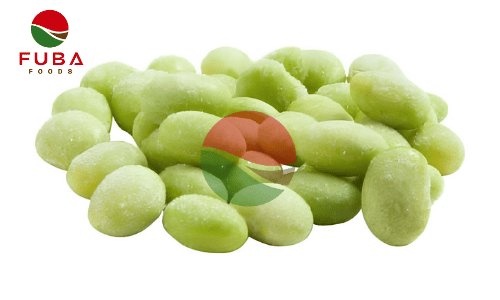
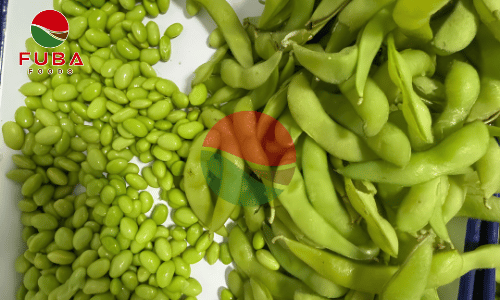
Shelled edamame is particularly convenient when manufacturers need the beans without the pod. The format can reduce preparation requirements and make the ingredient easier to portion and incorporate into recipes.
It can be used in salads, rice bowls, sushi products, vegetable mixes, ready meals, soups, and other prepared foods.
For automated or large-scale production, the absence of the pod can also simplify ingredient handling and reduce unnecessary preparation steps.
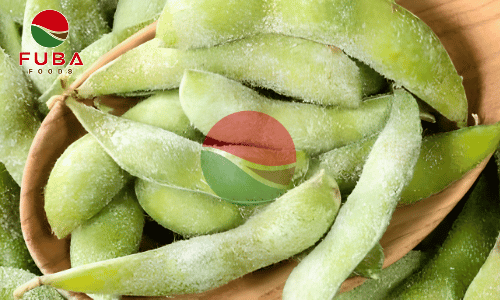
IQF Edamame in Pod
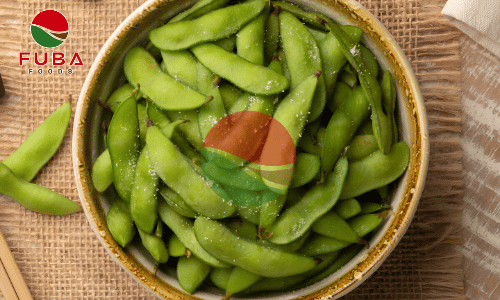
Edamame in pod provides a more recognizable product format and can be particularly suitable for foodservice, retail, appetizers, and Asian-inspired food products.
In these applications, pod appearance, size uniformity, color, and texture become important because the whole product remains visible to the consumer.
Frozen Edamame Puree
Frozen edamame puree provides a different format for applications that do not require identifiable whole beans.
A smooth puree can be incorporated into sauces, spreads, fillings, plant-based formulations, and other processed food products where a uniform ingredient base is preferred.
Choosing between shelled beans, pods, and puree should therefore depend on the finished product rather than treating all frozen edamame formats as interchangeable.
Applications of Frozen Edamame in Food Manufacturing
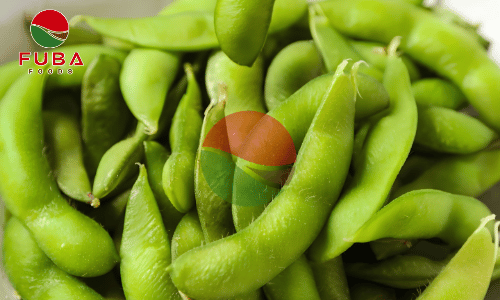
Frozen edamame has applications across both traditional Asian-inspired foods and broader modern food categories.
Ready Meals and Prepared Foods
IQF edamame can be incorporated into rice bowls, noodle dishes, mixed vegetable meals, prepared foods, and frozen ready meals.
Because individual pieces can be portioned directly from the package, manufacturers can incorporate edamame according to predefined formulations without having to separate frozen blocks.
This can be particularly useful for high-volume production where ingredient quantities need to remain consistent between batches.
Salads, Sushi and Asian-Inspired Products
Shelled edamame is suitable for salads, sushi, rice bowls, and other products where its bright green color and recognizable appearance contribute to the finished product.
Edamame in pod can be more suitable for applications where the pod itself forms part of the product presentation, such as foodservice dishes or retail packs.
Soups and Vegetable Mixes
Edamame can also be incorporated into soups and mixed vegetable products. Its green color provides visual contrast alongside ingredients such as carrots, corn, peas, beans, and other vegetables.
For these applications, consistency in size and texture becomes important because the edamame needs to perform similarly to the other components in the finished product.
Further Food Processing
Beyond whole-bean applications, frozen edamame can be processed into sauces, spreads, fillings, and plant-based formulations.
The appropriate format depends on whether the manufacturer needs identifiable pieces or a smooth ingredient base. Buyers should communicate the intended application before confirming product specifications.
Processing and Food Safety Control
Food safety should be evaluated as part of the complete production process rather than through final-product inspection alone.
A controlled frozen vegetable process may include:
- Raw-material inspection
- Washing and cleaning
- Sorting and grading
- Preparation according to specifications
- IQF freezing
- Foreign-material detection
- Packaging
- Cold storage
- Export shipment
Each stage contributes to the consistency and safety of the finished product.
For international buyers, relevant quality systems may include HACCP, ISO 22000, BRCGS, HALAL, and other certifications or documentation required by the destination market.
FUBA’s manufacturing system includes raw-material inspection, IQF processing, metal detection, X-ray inspection, microbiological testing, controlled cold storage, and export logistics. Its quality-assurance framework also covers internationally recognized food-safety systems.
For buyers, these capabilities provide a useful basis for assessing whether a supplier has the infrastructure required for international food production rather than relying only on a product sample.
Cold Chain, Packaging and Frozen Product Stability
Freezing the product correctly is only the beginning of frozen-product management. Edamame must remain under appropriate frozen conditions throughout storage and transportation.
A storage temperature of ≤ -18°C is commonly used for frozen vegetable products, but buyers should always follow the specific storage requirements stated in the applicable product specification.
Temperature control should cover the complete logistics chain, including:
- Factory cold storage
- Container loading
- International transportation
- Port and customs handling
- Import warehouse storage
- Distribution
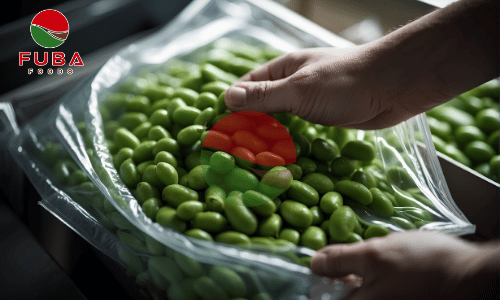
Packaging is equally important. Suitable inner and outer packaging helps protect the product against physical damage, moisture loss, and handling conditions during long-distance transportation.
For buyers, packaging should also be selected according to the intended distribution model, whether retail, foodservice, or bulk industrial supply.
Production Capacity and Supply Reliability
A supplier may offer a suitable product but still be unable to support a long-term commercial program.
Before placing recurring orders, buyers should evaluate:
- Annual production capacity
- Availability of raw materials
- Processing capacity
- Cold-storage infrastructure
- Ability to maintain specifications
- Minimum order quantities
- Lead times
- Export experience
These factors become particularly important when frozen edamame is incorporated into a regular production schedule. Supply interruptions can affect manufacturing plans even when the product itself meets all technical requirements.
For international procurement, production scale should therefore be considered together with quality consistency and logistics capability.
How to Choose the Right Frozen Edamame Supplier Vietnam
The supplier-selection process should begin with the buyer’s actual requirements.
Before requesting quotations, manufacturers should define:
- Required edamame format
- Bean or pod size
- Color and appearance requirements
- Product composition
- Packaging size
- Annual purchasing volume
- Storage requirements
- Destination market
- Food-safety documentation
- Private-label or customized requirements
After specifications are established, buyers should request samples and evaluate them under the actual intended application.
For example, a manufacturer producing ready meals should assess appearance and texture after preparation, while a supplier of sauces or plant-based products may place greater emphasis on the performance of puree.
This application-based evaluation provides a more meaningful comparison than judging suppliers solely by price per kilogram.
Why Direct Manufacturing Can Matter to Buyers
Direct manufacturing can provide greater visibility into the stages that determine product quality, including sourcing, processing, freezing, inspection, packaging, and storage.
It can also simplify communication when buyers need customized specifications, packaging changes, recurring production schedules, or additional quality documentation.
The main advantage is not simply removing a trading intermediary. More importantly, buyers gain a clearer connection between the agreed product specification and the manufacturing process responsible for producing it.
Conclusion
Choosing the right frozen edamame supplier Vietnam is ultimately a supply-chain decision rather than a simple price comparison.
International buyers should evaluate raw-material quality, IQF processing, product specifications, food-safety controls, packaging, cold-chain management, production capacity, traceability, and export capability before establishing a long-term supply relationship.
Vietnam provides a practical sourcing base for frozen edamame because agricultural production can be combined with modern processing and export infrastructure. For manufacturers and distributors, however, the real value comes from finding a supplier that can consistently transform suitable raw materials into a standardized frozen ingredient and maintain that quality throughout international shipment.
A factory-based processor with controlled sourcing, modern freezing technology, food-safety systems, adequate cold-storage capacity, and experience with international requirements can therefore provide a more reliable foundation for recurring frozen edamame supply.


