

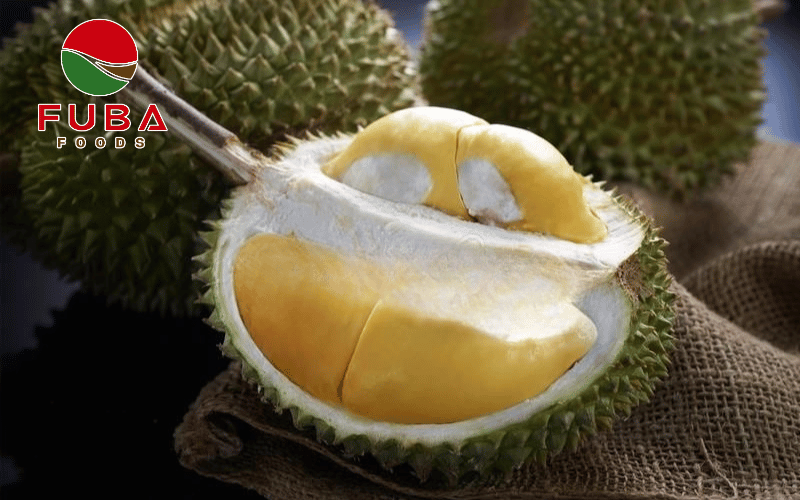
Frozen durian shelf life is an important consideration for importers, distributors, food manufacturers, and foodservice businesses managing frozen fruit ingredients. Compared with fresh durian, frozen formats provide greater flexibility for storage, transportation, and production planning when the product is maintained under appropriate conditions.
Frozen durian shelf life can reach up to 24 months when the product is continuously stored at ≤ -18°C under appropriate storage and handling conditions. The actual quality retained throughout this period depends on freezing technology, packaging integrity, temperature stability, and cold-chain management.
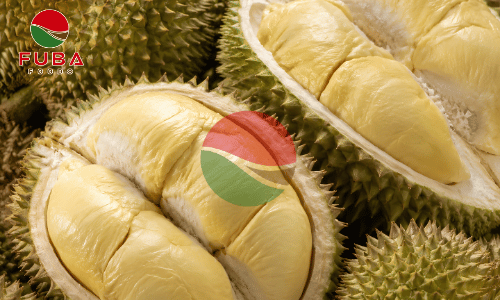
For commercial buyers, shelf life is closely connected with storage temperature, freezing technology, packaging integrity, and cold-chain management. Understanding how these factors work together can help businesses protect product quality and manage frozen durian more effectively throughout the supply chain. This article covers the key factors that influence frozen durian shelf life, recommended storage conditions, the role of IQF technology, and practical considerations for maintaining product quality during storage and distribution.
What Is Frozen Durian Shelf Life?
Frozen durian shelf life refers to the period during which the product is expected to maintain its specified quality and safety characteristics when stored under the recommended conditions.
For buyers, shelf life is not simply a date printed on the packaging. It can affect purchasing quantities, warehouse planning, international transportation, inventory turnover, and production scheduling.
Freezing significantly slows the processes responsible for fruit deterioration, allowing durian to be stored for much longer than fresh fruit. However, the stated shelf life assumes that the product remains under appropriate storage and handling conditions throughout this period.
This is why buyers should consider shelf life together with the supplier’s storage requirements and cold-chain practices rather than evaluating the shelf-life figure on its own.
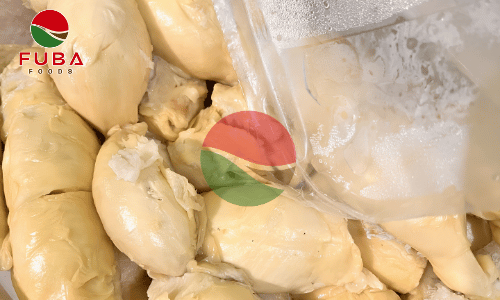
Why Shelf Life Matters in Commercial Frozen Durian Supply
For manufacturers and distributors, predictable shelf life provides greater flexibility when managing imported ingredients.
Frozen durian may spend time in international transportation, customs clearance, cold storage, distribution warehouses, and manufacturing facilities before reaching its final application. A suitable shelf-life period gives businesses more flexibility to manage these stages without the short-term pressure associated with fresh fruit.
It can also support larger-volume purchasing and more predictable production planning, particularly for manufacturers using durian as a recurring ingredient.
However, a long shelf life is only commercially useful when the product can retain its expected quality throughout storage and distribution.
Recommended Storage Temperature for Frozen Durian
Frozen durian should generally be maintained at ≤ -18°C throughout storage and distribution. This temperature helps keep the product in a stable frozen state and supports the conditions under which its stated shelf life is established.
Loading, unloading, transportation, warehouse transfers, and receiving procedures can all expose frozen products to warmer conditions. Effective temperature monitoring should therefore cover the complete cold chain rather than focusing only on the final storage freezer.
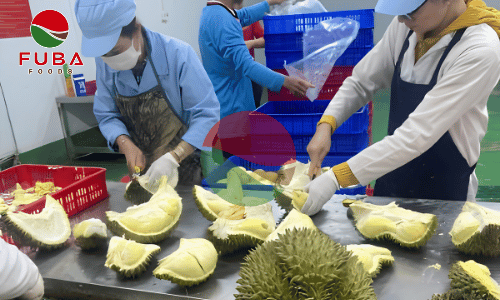
Why Temperature Stability Matters
Low temperatures slow biological and chemical changes that can affect frozen fruit quality. Stable conditions help protect characteristics such as aroma, flavor, color, and texture over the intended storage period.
Repeated temperature fluctuations can contribute to ice recrystallization and gradual deterioration. For manufacturers handling commercial volumes, avoiding unnecessary temperature changes is therefore an important part of maintaining usable product quality.
The storage requirement should also be considered alongside the supplier’s cold-storage infrastructure and transportation practices. A well-managed cold chain helps ensure that the conditions established during processing are maintained until the product reaches the buyer.
From FUBA’s manufacturing perspective, maintaining frozen product quality does not end when the durian is frozen. Controlled cold storage and appropriate handling after processing are also important for keeping the product within its required conditions before shipment and throughout the supply chain.
How Freezing Technology Influences Product Quality
Freezing technology plays an important role in determining how well frozen durian retains its characteristics and how easily it can be handled after processing.
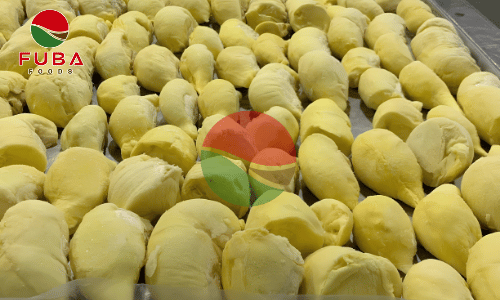
IQF, or Individual Quick Freezing, rapidly freezes individual fruit pieces rather than forming one solid frozen block. This allows the pieces to remain separate and makes them easier to portion, handle, and incorporate into different production processes.
For buyers, this is particularly useful when production requires flexible portioning or when frozen fruit needs to be added gradually to a formulation.
FUBA applies IQF technology within its frozen fruit processing operations, alongside other freezing systems and controlled cold-storage infrastructure. This type of processing setup allows frozen fruit to be prepared and handled at commercial scale while maintaining defined product formats.
Choosing the Right Frozen Durian Format
Frozen durian is available in several formats, and the appropriate option depends on the intended application and production process.
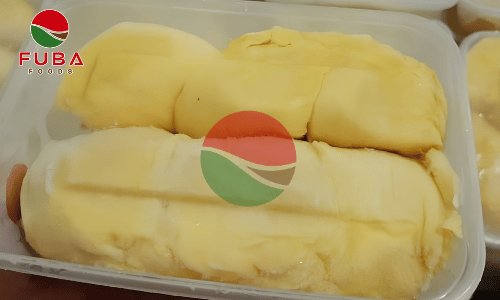
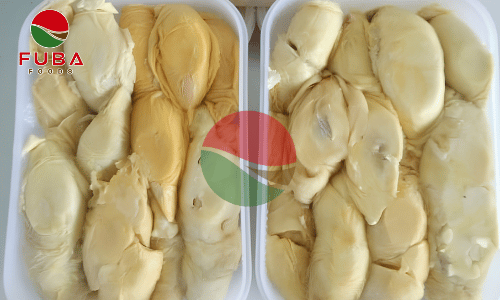
Frozen Durian Pulp
Frozen durian pulp is suitable for applications where the fruit needs to be incorporated as a creamy or semi-smooth ingredient. It can be used in desserts, fillings, beverages, ice cream, and other processed food formulations.
Because the fruit has already undergone preparation before freezing, manufacturers can reduce the need for fresh-fruit handling within their own facilities.
Frozen Durian Chunks
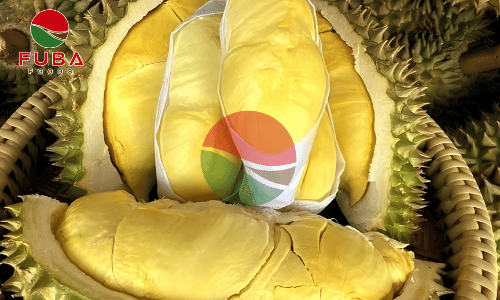
Frozen durian chunks are more suitable when the finished product requires recognizable fruit pieces or a defined texture.
Depending on the specification, buyers may need to confirm factors such as piece size, appearance, seed removal, moisture characteristics, packaging, and storage requirements before placing a commercial order.
Frozen Durian Puree
Frozen durian puree provides a smooth fruit base for formulations where individual fruit pieces are not required. It can be incorporated into beverages, sauces, fillings, desserts, and other products requiring consistent texture.
The format should therefore be selected according to the manufacturer’s formulation, processing equipment, and desired finished-product characteristics.
Best Practices for Maintaining Frozen Durian Quality
Maintaining the recommended storage temperature is the foundation of frozen durian storage, but day-to-day handling also affects how well the product retains its quality.
Maintain a Consistent Cold Chain
Frozen durian should remain within the required temperature range from processing through transportation and final storage.
For international shipments, temperature control should cover loading, transit, customs handling, receiving, and warehouse storage. Monitoring these stages helps identify potential breaks in the cold chain and reduces unnecessary exposure to warmer conditions.
Protect Packaging During Storage and Transport
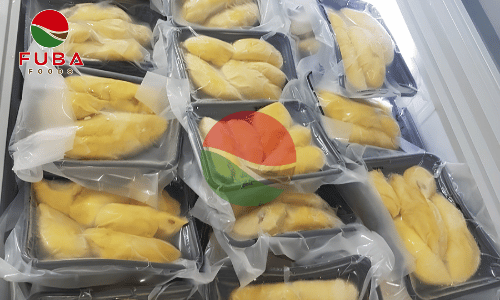
Packaging should remain intact throughout handling and distribution. Damaged cartons or compromised inner packaging can reduce product protection and create additional risks during long-distance transportation.
Buyers should also select packaging formats that match their storage capacity, handling systems, order volume, and intended application.
Use FIFO or FEFO Inventory Management
A long shelf life does not mean inventory should remain in storage until the final months of its stated period.
FIFO or FEFO inventory practices can help businesses use older stock first and reduce unnecessary inventory aging. Batch identification, production-date tracking, and regular stock checks are especially useful for distributors and manufacturers managing multiple frozen fruit products.
What Should Buyers Check Before Choosing a Supplier?
When evaluating frozen durian shelf life, buyers should look beyond the number of months stated on a product specification.
A reliable supplier should be able to demonstrate appropriate raw-material sourcing, controlled processing, suitable freezing technology, food-safety management, cold-storage capability, and export handling.
Buyers should also confirm:
- Recommended storage temperature
- Stated shelf life and applicable storage conditions
- Product format and specifications
- Packaging configuration
- Batch identification and traceability
- Quality and food-safety documentation
- Cold-storage and transportation procedures
- Experience with international shipments
- Ability to maintain consistent specifications across repeat orders
These factors provide a more complete picture of whether a supplier can support reliable frozen durian sourcing over the long term.
Why Vietnam Can Be a Practical Source
Vietnam provides access to established durian-growing regions as well as an expanding fruit-processing sector. For international buyers, this combination creates opportunities to source durian in standardized frozen formats rather than relying entirely on fresh-fruit distribution.
The advantage is not simply the availability of Vietnamese durian. A practical sourcing model connects agricultural production with processing, freezing, cold storage, quality control, packaging, and export logistics.
For manufacturers, this integrated supply chain can make frozen durian easier to incorporate into regular production schedules while reducing some of the operational challenges associated with handling fresh whole fruit.
Conclusion
Frozen durian shelf life depends on more than the stated storage period. Temperature stability, freezing technology, packaging, inventory management, and cold-chain handling all contribute to how well the product retains its expected quality throughout storage and distribution.
For buyers, the most reliable approach is to evaluate shelf life as part of the complete supply chain. The right supplier should be able to provide clear specifications, appropriate product formats, controlled processing, suitable storage conditions, and the documentation required for international trade.
Vietnam offers a practical sourcing base for frozen durian, but supplier capability remains an important factor in achieving consistent results. Choosing a processor with the infrastructure and experience to manage the product from raw-material sourcing through export can help manufacturers and distributors build a more predictable frozen durian supply.


