

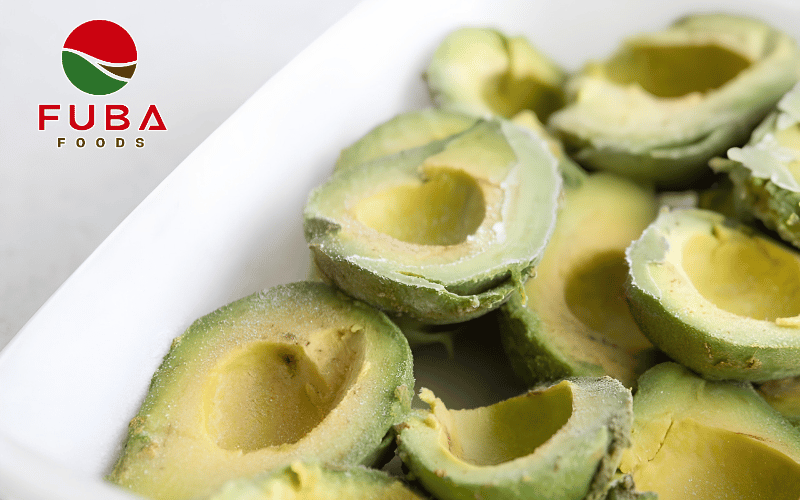
Avocado is widely used in foodservice because its creamy texture and mild flavour work across breakfast dishes, salads, sandwiches, bowls, desserts, smoothies, and other prepared recipes. However, working with fresh avocado at foodservice scale can create practical challenges. Ripening is difficult to control, preparation takes time, and usable quality can vary from one batch to another.
Frozen avocado slices for foodservice provide a convenient alternative by delivering pre-cut avocado in a ready-to-use format that can simplify preparation, reduce handling, and support more consistent portioning. Instead of purchasing fresh fruit and managing ripeness, peeling, cutting, and yield in-house, foodservice operations can work with a frozen format designed around predictable preparation requirements.
For restaurants, catering companies, central kitchens, hotels, distributors, and foodservice suppliers, the decision is not simply about replacing fresh avocado with frozen fruit. It is about determining whether the slice format can improve preparation efficiency while maintaining the appearance, texture, and flavour required for the final dish. This article examines the practical benefits of frozen avocado slices, where they fit in foodservice operations, and what to consider when selecting a reliable supplier.

Why Frozen Avocado Slices Work for Foodservice
The main advantage of frozen avocado slices is preparation convenience. Fresh avocado requires several steps before it can be used: selecting fruit at the appropriate ripeness, washing, cutting, removing the pit and skin, and preparing portions according to the recipe. Each step requires labour and can introduce variation.
Frozen slices shift much of this preparation to the processing stage. The foodservice operator receives avocado in a defined shape that can be portioned and incorporated into recipes according to the intended application.
This can be particularly useful for operations that prepare a high number of dishes every day. When kitchen staff are handling dozens or hundreds of portions, reducing repetitive preparation work can make a meaningful difference to workflow.
Frozen avocado also provides a different approach to inventory management. Instead of depending entirely on fresh fruit reaching the correct ripeness at the right time, foodservice operators can maintain frozen inventory under controlled storage conditions and use the product according to production requirements.
How Frozen Avocado Slices Simplify Food Preparation
Less Cutting and Peeling in the Kitchen
One of the most obvious advantages of frozen avocado slices is the reduction in manual preparation. Fresh avocado must be opened, pitted, peeled, and sliced before it reaches the plate. These tasks may seem simple, but they become significant when repeated throughout a busy foodservice operation.
Pre-cut slices can help kitchens move more directly from storage to recipe preparation. Staff can focus on assembly and cooking rather than spending additional time preparing individual fruits.
This is particularly relevant for central kitchens and foodservice operations where standardised preparation procedures are important. A pre-cut ingredient can help reduce variation between different employees and shifts.
More Predictable Portioning
Slice format can also support portion control. When avocado is purchased as whole fruit, usable yield can vary depending on size, ripeness, flesh condition, and preparation losses. The amount of usable avocado obtained from each fruit is therefore not always predictable.
With frozen slices, the product arrives in a defined cut format. This can make it easier to estimate the amount required for a recipe and maintain more consistent serving sizes.
For foodservice operators managing food costs, this matters because portion consistency affects not only purchasing but also recipe costing and menu profitability. A defined ingredient format can make production planning easier when the same recipes are prepared repeatedly.

Frozen Avocado Slices for Foodservice Applications
Frozen avocado slices can fit a wide range of foodservice applications because the format retains the recognisable shape of the fruit while eliminating much of the initial preparation.
Breakfast, Toast, and Sandwiches
Avocado slices are commonly used as toppings for toast, sandwiches, wraps, and breakfast dishes. The slice format is particularly practical in these applications because the avocado remains visually identifiable rather than becoming part of a blended mixture.
For commercial kitchens, the ability to portion avocado according to the dish can help streamline assembly during busy service periods. The same frozen avocado format can potentially be used across several menu items instead of requiring different forms of avocado for each recipe.
Salads and Bowls
Salads, grain bowls, poke-style dishes, and other assembled meals often require ingredients that can be portioned and added quickly. Avocado slices can provide a visible fruit component while fitting naturally into these prepared meals.
This format can also help foodservice operations standardise presentation. Consistent slices make it easier to reproduce a similar appearance across multiple servings, although final appearance will still depend on thawing and handling conditions.
Smoothies and Blended Recipes
Although puree is often the most direct format for smoothie production, avocado slices can also be useful when the same inventory needs to serve multiple applications.
A foodservice operator that prepares both smoothies and plated dishes may prefer a slice format because it can be used directly in some recipes and further blended when necessary. This gives the ingredient greater versatility than purchasing a format designed exclusively for blending.

Frozen vs Fresh Avocado for Foodservice Operations
The comparison between frozen and fresh avocado should focus on operational requirements rather than assuming that one format is universally preferable.
Fresh avocado provides a whole-fruit ingredient that can be prepared according to the kitchen’s needs. However, its usability is closely connected to ripeness. Fruit that is too firm may not provide the desired texture, while overripe fruit can create preparation losses and inconsistent quality.
Frozen avocado addresses this differently. Processing takes place before the product reaches the foodservice operator, and the finished product can be maintained under controlled frozen storage.
For operations with fluctuating demand, this can make inventory planning more predictable. Instead of having to use fresh avocado within a relatively narrow ripeness window, frozen stock can be managed according to production requirements.
However, frozen avocado still requires proper cold-chain management. Storage temperature, packaging integrity, transportation, and handling after opening all affect product performance. Frozen should therefore not be treated as a substitute for good storage practices.
What to Check When Buying Frozen Avocado Slices
Slice Quality and Product Specification
The cut itself should be evaluated carefully. Buyers should consider slice shape, size consistency, flesh condition, colour, texture, and the degree to which pieces maintain their intended form during handling.
The underlying avocado specification is equally important. FUBA’s frozen avocado slices are made from Vietnamese avocado, with Booth and 034 varieties and a stated dry matter of at least 23%. The product is IQF frozen and positioned for applications including foodservice, beverages, desserts, smoothies, and food processing.
For commercial buyers, requesting samples and testing them in the actual intended recipes is more useful than evaluating the product only after thawing in isolation. A slice that looks acceptable as a standalone ingredient may behave differently during assembly, storage, or service.
Storage and Shelf Life
Frozen avocado needs to remain under appropriate frozen conditions throughout transportation and storage. Temperature fluctuations can affect product quality and may increase the risk of deterioration during extended handling.
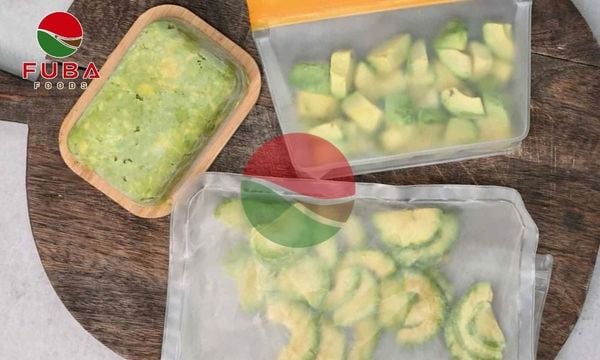
Frozen avocado can have a shelf life of up to 24 months when stored at -18°C or below under appropriate conditions. Bulk export packaging can include 10 kg cartons with PE inner liners, alongside foodservice and retail packaging formats designed for different distribution requirements.
For foodservice distributors and importers, packaging should be assessed together with order volume and distribution conditions. The appropriate pack size depends on how quickly the product will be consumed after opening and how the downstream operation manages frozen inventory.
Why Supplier Processing Capability Matters
The convenience of frozen avocado slices ultimately depends on the consistency of the product supplied. Pre-cut fruit is only useful to a foodservice operation when the supplier can maintain the required cut, quality, packaging, and frozen condition across repeated deliveries.
This is where direct manufacturing capability becomes important. A factory-controlled process can connect raw-material sourcing, inspection, preparation, freezing, quality control, packaging, storage, and export handling within one production system.
FUBA operates a frozen fruit and vegetable processing facility in Ca Mau with an annual capacity of 20,000 MT, more than 600 workers, and over 15 years of experience in frozen fruit processing and export. The company also has sourcing partnerships across Vietnam’s agricultural regions, supporting continuity of raw materials for its product range.
Its processing infrastructure includes six IQF freezing lines, three contact freezing lines, two air-blast freezing systems, three 500 MT cold-storage units, five metal detectors, three X-ray inspection systems, and an in-house microbiological laboratory.
For frozen avocado slices, these capabilities matter because the final format is part of a larger controlled process. Raw materials are inspected and graded before processing, prepared according to product requirements, rapidly frozen, checked through food-safety controls, packed, stored below -18°C, and then shipped through cold-chain logistics.
FUBA’s quality-management framework includes HACCP, ISO 22000, HALAL, and BRCGS, together with product traceability and controlled cold storage. This integrated approach can be particularly relevant for importers and foodservice distributors that need documented production controls and consistent specifications across commercial orders.
How to Select the Right Frozen Avocado Slice Supplier
Supplier selection should begin with the product specification rather than the quoted price alone. Buyers should first define the required slice format, dry matter, variety, colour, texture, packaging, storage conditions, and expected shelf life.
The next step is to evaluate whether the supplier can consistently produce that specification. A manufacturer with its own processing and freezing infrastructure can provide clearer visibility into how the product is made and where quality controls are applied.
Supply capacity should also be considered when purchasing for foodservice distribution. A supplier may provide a suitable sample but still struggle to maintain the same specification when order volume increases. Reviewing annual production capacity, processing equipment, raw-material sourcing, cold-storage capability, and export experience can help distinguish a scalable manufacturing partner from a supplier that relies primarily on external production.
Packaging and logistics should be assessed at the same time. Frozen avocado slices need to remain within the required temperature range from factory to destination, so cold-chain handling should form part of the sourcing discussion rather than being treated as a separate logistics issue.
For larger or recurring orders, buyers can also discuss customised specifications, packaging formats, and private-label requirements. These options can be particularly useful for distributors and foodservice suppliers building a consistent frozen ingredient range for multiple customers.

Conclusion
Frozen avocado slices for foodservice offer a practical way to simplify fruit preparation while supporting portion consistency and a more manageable frozen inventory model. Their defined shape makes them particularly suitable for toast, sandwiches, salads, bowls, breakfast dishes, desserts, and other applications where avocado remains a visible component of the finished product.
The main value is not simply that the avocado is frozen. It is that preparation-intensive steps such as cutting and portioning are moved upstream into a controlled manufacturing process, allowing foodservice operators to focus more directly on recipe preparation and service.
When sourcing frozen avocado slices, buyers should look beyond the cut format and evaluate dry matter, variety, slice consistency, packaging, storage conditions, shelf life, cold-chain capability, and production capacity. A direct manufacturer with integrated sourcing, processing, freezing, quality control, and storage can provide stronger control over these factors.
For foodservice distributors and commercial kitchens looking for a convenient avocado format, choosing the right supplier can therefore be just as important as choosing the right product format. A consistent frozen avocado slice can help turn avocado from a preparation-intensive fresh ingredient into a more manageable component of everyday foodservice production.


