

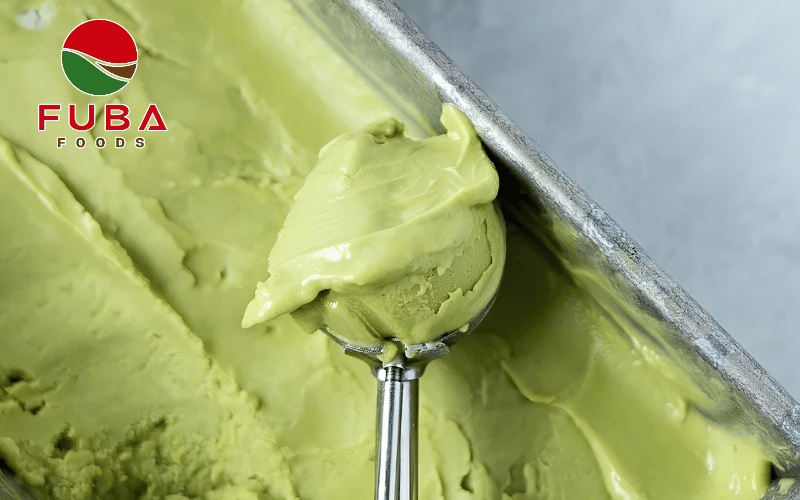
Avocado smoothies depend heavily on the quality and consistency of the fruit ingredient. In a small operation, preparing fresh avocados may seem straightforward. At commercial scale, however, peeling, cutting, removing seeds, managing ripeness, controlling waste, and maintaining the same texture across batches can become a recurring operational challenge.
Frozen avocado for smoothies provides a practical alternative by giving F&B operations a ready-to-use avocado ingredient that can be stored under controlled frozen conditions and incorporated into recipes as needed. The main value is not simply convenience. A properly specified frozen avocado can help reduce preparation work, improve portion control, and make the fruit component of a smoothie more consistent.
For cafés, beverage manufacturers, foodservice operators, and other F&B businesses, the right product still depends on format, dry matter, texture, flavour, processing quality, storage, and supply reliability. This article looks at those factors from a production perspective and explains what to consider when sourcing frozen avocado for smoothie applications.

Why Fresh Avocado Can Create Challenges in Smoothie Production
Fresh avocado offers excellent sensory qualities, but its characteristics can change significantly depending on ripeness and handling. For commercial smoothie production, this creates several points that need to be managed every day.
Ripeness and Preparation Consistency
Fresh avocados do not necessarily reach the same level of ripeness at the same time. Fruit that is too firm can be difficult to process and may produce a less creamy smoothie, while overripe fruit can have undesirable texture or reduced usable yield.
The preparation process itself also requires labour. Staff need to inspect the fruit, cut it, remove the skin and seed, and portion the usable flesh before blending. When production volumes increase, these small preparation steps can become a significant part of daily operations.
Frozen avocado shifts much of this work upstream to the processing facility. Instead of managing the variability of individual fresh fruits at the beverage station or production line, the operator receives an ingredient that has already gone through controlled preparation.
Waste and Usable Yield
Fresh avocado can also generate waste from skin, seed, damaged portions, and fruit that does not reach the required maturity. The actual usable yield can therefore vary from batch to batch.
For a commercial smoothie operation, inconsistent yield makes ingredient costing more difficult. If the amount of usable avocado changes, the actual cost per serving may also change even when the purchase price of fresh fruit remains similar.
Using a processed frozen ingredient allows the manufacturer or F&B operator to work with a defined product specification and portion more predictably. The economic benefit should be evaluated through actual usable yield and recipe performance rather than simply comparing the price per kilogram of fresh and frozen fruit.
What Makes Frozen Avocado Suitable for Smoothies?
Not every frozen avocado product will perform identically in a smoothie. The most important characteristics are usually related to texture, dry matter, flavour, and product format.
Creamy Texture and Dry Matter
Smoothies require an ingredient that can blend effectively into the liquid base without creating an undesirable texture. Avocado’s natural creamy body is one of its main advantages in this application.
Dry matter is particularly relevant because it influences the body of the avocado ingredient. A product with a consistent specification can make it easier to reproduce the intended smoothie texture from one production batch to another.
FUBA’s frozen avocado range specifies dry matter ≥23%. Its frozen avocado puree is described as smooth and creamy and made from 100% fruit without preservatives. The range also includes Booth and 034 varieties.
For a commercial smoothie formulation, however, the specification should still be tested within the actual recipe. The right dry-matter level depends on the amount of liquid, sweetener, dairy or plant-based ingredients, and other fruit components used in the formula.
Choosing Between Puree, Cubes, and Slices
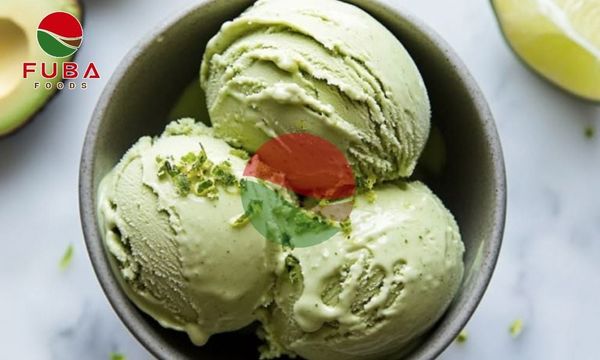
Frozen avocado puree is generally the most straightforward format for smoothie production because it can be incorporated directly into the formulation without requiring additional cutting.
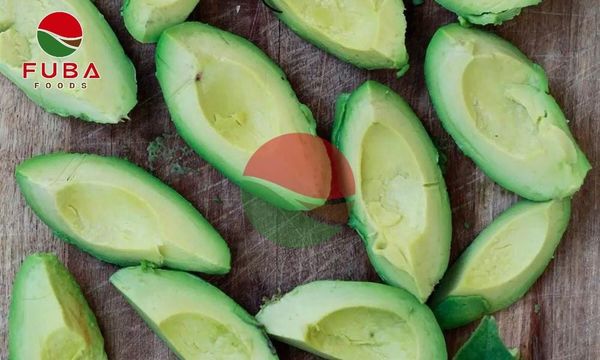
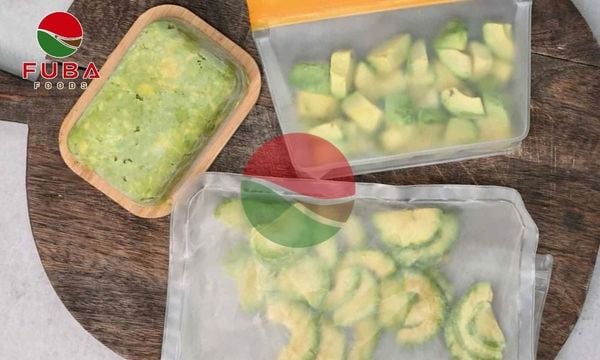
Cubes can be useful when the production process is designed around portioned frozen ingredients or when the avocado will also be used in other food applications. Slices may be more suitable for foodservice or recipes where the physical form needs to remain recognizable before further processing.
For high-volume smoothie production, puree can simplify batching because the ingredient already has a uniform processed format. For operations with multiple product lines, cubes or other formats may provide greater flexibility.
How Frozen Avocado Helps Improve Smoothie Consistency
Consistency is one of the strongest reasons to consider frozen avocado for commercial smoothie production.
A smoothie recipe may specify a fixed amount of avocado per serving, but the final result can still vary when fresh fruit differs in size, maturity, moisture, or usable flesh. These differences can affect thickness, flavour intensity, colour, and mouthfeel.
With a standardized frozen ingredient, the formulation can be built around a more defined raw-material specification. This does not eliminate every source of variation, but it reduces the variability introduced by individual fresh fruits.
For multi-location F&B operations, this can be especially useful. When the same smoothie recipe is produced at several outlets, consistent ingredient specifications make it easier to maintain similar product characteristics across locations.
Frozen Avocado and F&B Production Efficiency
The operational advantage of frozen avocado extends beyond the blender.
Less On-Site Preparation
Fresh avocado requires receiving, ripening management, inspection, cutting, peeling, deseeding, and portioning. Frozen avocado moves many of these activities into the industrial processing environment.
This can reduce preparation steps at the production site and allow staff to focus on beverage preparation rather than raw-fruit handling. In a high-volume operation, reducing repetitive preparation can also simplify workflow and improve labour allocation.
For manufacturers producing ready-to-blend smoothie bases, frozen avocado can be incorporated directly into a controlled formulation alongside other frozen fruit ingredients.
Easier Inventory Management
Fresh avocado requires careful stock rotation because its ripeness and quality change over time. Frozen avocado provides a different inventory model, as the product can be maintained under controlled frozen storage for an extended period.
Frozen avocado can have a shelf life of up to 24 months when stored at -18°C or below under appropriate conditions. This can provide more flexibility for planned purchasing and inventory management, reducing the need to rely entirely on the immediate availability of fresh fruit.
Actual inventory planning should still account for packaging, shipment conditions, storage capacity, and the customer’s own handling practices. Maintaining appropriate frozen conditions throughout storage and transportation remains essential to making effective use of the product’s intended shelf life.
What to Check When Sourcing Frozen Avocado for Smoothies
Selecting a frozen avocado supplier should begin with the smoothie formulation rather than the supplier’s catalogue alone.
The first consideration is the product specification. Confirm whether puree, cubes, or another format is most appropriate, then evaluate dry matter, texture, flavour, colour, and any applicable processing requirements.
The second consideration is raw-material sourcing. A supplier with an established agricultural network can have greater control over the availability and consistency of incoming avocado.
FUBA works with farming regions and growers across Vietnam, with avocado identified among the key products sourced from the Central Highlands. This connection between agricultural sourcing and factory processing provides a more integrated supply structure for frozen avocado.
The third consideration is processing control. Raw-material inspection, washing, sorting, preparation, freezing, detection systems, packing, and cold storage should be treated as interconnected parts of the quality system.
Why Factory Processing Matters for Frozen Avocado
For a frozen ingredient, the factory behind the product can have a direct impact on consistency. Processing begins with raw-material selection and continues through preparation, freezing, packaging, storage, and shipment.
FUBA’s processing flow includes farm sourcing, raw-material inspection, washing and cleaning, sorting and grading, cutting or preparation, IQF freezing, metal detection, packing, cold storage, and export shipment.
The factory is equipped with six IQF lines, as well as contact-freezing and air-blast freezing systems. This processing infrastructure supports different frozen-product requirements while providing dedicated freezing capacity for the wider fruit and vegetable portfolio.
For smoothie ingredients, the important point is that freezing is only one part of the process. Consistent raw materials, controlled preparation, food-safety checks, packaging, and cold-chain management all contribute to the ingredient that ultimately reaches the blender.

Food Safety and Cold-Chain Considerations
Frozen avocado used in commercial beverages needs to be handled under an appropriate food-safety and temperature-control system.
The supplier should have controls covering incoming fruit, processing hygiene, foreign-material detection, traceability, finished-product handling, and storage. These systems are particularly important when the frozen ingredient will be supplied across international markets.
FUBA’s factory includes five metal detectors, three X-ray inspection systems, and an in-house microbiological laboratory. Its quality and food-safety systems include HACCP, ISO 22000, HALAL, BRCGS, and product traceability.
After production, frozen avocado should remain under controlled frozen conditions throughout storage and transportation. A break in the cold chain can affect the condition of the ingredient even when the original factory processing was properly controlled.
Evaluate Supply Capacity for Growing Smoothie Demand
A smoothie business may begin with modest volumes but require significantly more avocado after a product gains traction. Supplier capacity should therefore be considered before scaling rather than after supply becomes a problem.
These capabilities provide a useful foundation for customers that need recurring frozen avocado supply rather than occasional spot purchases. Supply reliability also depends on raw-material availability.
Consider Packaging and Commercial Requirements
The best ingredient specification still needs to arrive in a format that works for the customer’s operation.
Smoothie manufacturers and foodservice businesses may have different requirements from retail customers. Bulk packaging can be more practical for high-volume production, while smaller formats may suit lower-volume or multi-location operations.
FUBA offers foodservice and bulk-export packaging for its avocado products, including a 10 kg carton with PE inner liner. OEM and private-label manufacturing with customized specifications and packaging formats are also available.
When comparing suppliers, packaging should therefore be evaluated alongside minimum order quantities, storage capacity, shipment schedules, and expected consumption rather than treated as a separate purchasing detail.
Test Frozen Avocado Before Standardizing the Recipe
A sample trial is essential before replacing fresh avocado or adopting a new frozen ingredient as a standard formulation component.
The puree should be blended under the same conditions used in the commercial recipe. Evaluate the resulting smoothie for creaminess, thickness, flavour, colour, and overall mouthfeel. If the recipe includes dairy, plant-based milk, other fruit, sweeteners, or ice, the avocado should be tested together with those ingredients rather than on its own.
For cube or slice formats, test the product through the actual preparation process to determine whether the chosen format provides the desired blending performance and portion control.
Once the sample performs consistently, the specification can be documented as part of the purchasing standard. This makes future supplier comparisons more objective and reduces the risk of changing ingredient characteristics without realizing their effect on the finished smoothie.
Conclusion
Using frozen avocado for smoothies can help F&B operations address several practical challenges associated with fresh fruit, including preparation labour, ripeness variation, inconsistent usable yield, and difficulty maintaining the same smoothie characteristics across batches.
The most suitable ingredient still depends on the application. Puree is often practical for direct blending, while cubes and slices can provide greater flexibility for operations using avocado across multiple food products. Dry matter, texture, flavour, raw-material sourcing, processing controls, freezing technology, packaging, and cold-chain management should all be evaluated before making a sourcing decision.
For commercial operations, the supplier’s manufacturing capability is equally important. A controlled factory process, established agricultural sourcing network, food-safety systems, freezing capacity, cold storage, and sufficient production volume can provide a stronger foundation for consistent long-term supply.


