

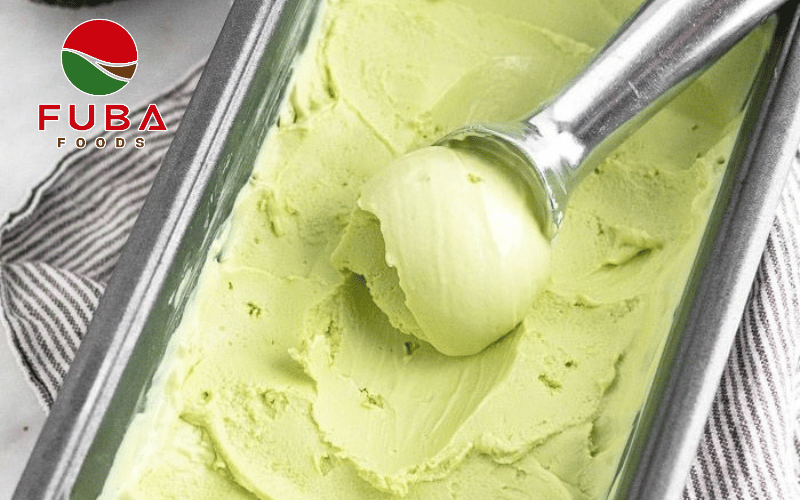
Avocado is no longer limited to savoury dishes. Its naturally creamy texture, mild flavour, and relatively neutral profile make it useful in ice cream, yogurt desserts, smoothies, mousse, bakery fillings, chilled desserts, and other products where a smooth fruit base or distinctive avocado component is required. For manufacturers developing these products at commercial scale, however, the challenge is not simply finding avocado. The format of the frozen avocado can directly affect formulation, processing time, texture, and production consistency.
Frozen avocado for dessert products is most effective when the format matches the role avocado plays in the finished recipe. Frozen avocado puree is generally suited to smooth formulations such as ice cream, yogurt, mousse, fillings, and dessert sauces, while frozen avocado cubes or slices can be more appropriate when visible fruit pieces, portioning, or further processing flexibility is required.
For food manufacturers, dessert producers, importers, and distributors, choosing the right format before sourcing can help avoid unnecessary processing steps and reduce inconsistencies between batches. This article explains how different frozen avocado formats perform in dessert production, what specifications should be assessed during product development, and how factory-level processing capability can affect the reliability of the final ingredient.
Why Use Frozen Avocado for Dessert Products?
The value of avocado in dessert production comes primarily from its texture and ability to integrate with other ingredients. When processed correctly, avocado can contribute creaminess and body to a formulation while providing a recognisable fruit character.
Fresh avocado can achieve similar results, but it introduces additional preparation requirements. Fruit needs to be sourced at an appropriate maturity stage, peeled, deseeded, processed, and used within a limited period. For commercial dessert production, these variables can create challenges in standardising raw-material quality.
Frozen avocado changes the starting point of the process. The fruit is processed before reaching the dessert manufacturer and maintained under controlled frozen conditions until it is required for production. This can make avocado easier to incorporate into planned manufacturing schedules, particularly when demand varies throughout the year.
The important consideration is that freezing does not eliminate the need for product specification. Variety, dry matter, texture, cut format, freezing process, packaging, and cold-chain conditions can all influence how the ingredient performs after thawing or further processing.
Which Frozen Avocado Format Fits Dessert Production?
The appropriate format depends on whether avocado is expected to become part of the dessert’s overall texture or remain identifiable as a fruit component.
Frozen Avocado Puree for Smooth Dessert Formulations
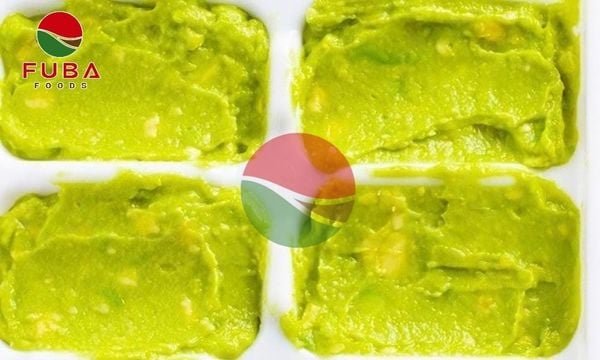
Frozen avocado puree is generally the most direct format when a dessert requires a smooth and creamy avocado base. Because the fruit has already been processed into puree, manufacturers can incorporate it into the formulation without first breaking down frozen pieces.
This makes puree particularly practical for avocado ice cream, frozen desserts, yogurt products, mousse, creams, fillings, sauces, and smoothie-based dessert formulations. It can also simplify formulation trials because the avocado is already available in a form that can be mixed with other liquid or semi-solid ingredients.
For industrial production, the advantage extends beyond convenience. A consistent puree format can reduce the number of preparation steps required before mixing and may make batch-to-batch formulation easier to reproduce.
FUBA offers frozen avocado puree made from 100% Vietnamese avocado, with Booth and 034 varieties and a stated dry matter of at least 23%. The product is described as having a smooth, creamy texture and is intended for applications including ice cream, yogurt, dessert, smoothie, and food processing.
Frozen Avocado Cubes for Further Processing
Frozen avocado cubes provide a different level of flexibility. Instead of receiving a fully processed puree, the manufacturer receives avocado in defined pieces that can either be incorporated into selected recipes or processed further.
For dessert manufacturers with their own blending or crushing equipment, cubes can be useful when the same raw material needs to serve several purposes. Part of the batch may be processed into a smooth base, while another portion can remain as fruit pieces for a different product.
Cubes may therefore be suitable for dessert applications where flexibility is more important than immediate processing convenience. They can also provide a more defined starting point for manufacturers that want greater control over the final texture.
Frozen Avocado Slices for Visible Fruit Applications
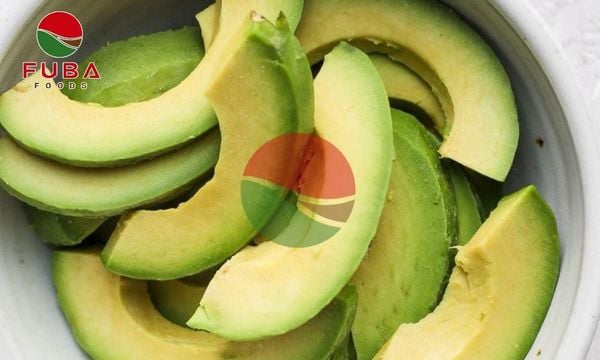
Slices can be useful when avocado needs to remain visually identifiable in the finished dessert. This can apply to plated desserts, dessert toppings, fruit-based preparations, or foodservice products where presentation is part of the product concept.
Compared with puree, slices retain a more recognisable fruit structure. Compared with cubes, their shape may be more appropriate for specific presentation requirements.
The choice should nevertheless be validated through actual product trials because frozen and thawed avocado can behave differently depending on the recipe, handling conditions, and time between preparation and service.
How Frozen Avocado Affects Dessert Texture
Texture is one of the most important considerations when developing desserts containing avocado. A formulation intended to be creamy and uniform requires a different ingredient format from one designed around visible fruit pieces.
Creaminess and Body
Puree is naturally suited to formulations where avocado needs to contribute body and creaminess throughout the product. In ice cream or mousse, for example, the avocado can become integrated into the overall structure rather than remaining as separate pieces.
The final result still depends on the complete formulation. Sugar, dairy or plant-based ingredients, stabilisers, processing conditions, freezing conditions, and other components can influence the finished texture. Therefore, avocado puree should be evaluated as one part of the formulation rather than treated as the sole determinant of texture.
Piece Integrity
When avocado is intended to remain visible, cube or slice integrity becomes more important. Pieces that lose their shape during handling may affect the appearance of the finished dessert and make portion control more difficult.
This is why buyers should evaluate samples under realistic production conditions. A supplier’s cut specification may look suitable on paper, but the practical result depends on how the product behaves during storage, thawing, mixing, assembly, and service.
What Specifications Should Dessert Manufacturers Check?
Dry Matter and Avocado Characteristics
Dry matter is an important specification when avocado is being used as a functional ingredient in a formulation. It affects the amount of actual avocado solids entering the recipe and therefore needs to be considered when establishing formulation ratios.
The variety should also be considered because different avocado varieties can produce differences in flavour, texture, colour, and composition. For commercial product development, it is preferable to test the exact specification intended for regular production rather than developing a recipe around an unspecified sample.
Colour, Flavour, and Texture
Desserts often have relatively delicate flavour profiles, meaning avocado characteristics can influence the final sensory balance. Manufacturers should therefore evaluate the natural colour, flavour intensity, creaminess, and texture of the frozen ingredient alongside the other recipe components.
For products positioned around avocado as a visible or primary flavour, these characteristics may be more important than they would be in a formulation where avocado is used mainly to contribute to the body.
Freezing and Storage Conditions
Frozen avocado needs consistent temperature management from processing through transportation and storage. Temperature fluctuations can affect the condition of the product and may influence its quality after thawing.
Frozen avocado can have a shelf life of up to 24 months when stored at -18°C or below under appropriate conditions. For bulk export, 10 kg cartons with PE inner liners can be used, while foodservice and retail applications may require different packaging formats.
For importers and distributors, these specifications should be considered alongside transportation duration, warehouse conditions, packaging integrity, and inventory turnover. A long stated shelf life is only useful when the cold chain is properly maintained throughout storage and transportation.
Frozen Avocado for Dessert Products: Processing Considerations
The format selected at the purchasing stage can directly affect the manufacturer’s own processing requirements.
With puree, the ingredient can generally move more directly into mixing or formulation after appropriate preparation according to the manufacturer’s process. This can reduce the need for additional crushing or blending equipment.
With cubes or slices, additional processing may be required when the final product needs a smooth consistency. However, this additional step can also provide greater control over the final particle size and texture.
For product developers, this creates a useful trade-off between convenience and processing flexibility. A manufacturer with limited preparation capacity may benefit from puree, while a facility with established blending or processing equipment may prefer cubes or slices to maintain greater control over the production process.
The most efficient choice is therefore not necessarily the format with the least processing overall. It is the format that fits the existing production line without creating unnecessary labour, equipment use, or material handling.
Why Factory Processing Matters for Frozen Avocado Quality
A consistent frozen avocado ingredient begins before the freezing stage. Raw-material sourcing, maturity selection, inspection, preparation, freezing, quality control, packaging, and storage all contribute to the performance of the final product.
A direct manufacturing model allows these stages to be managed within an integrated production system. For commercial buyers, this can provide greater visibility into how the product specification is established and maintained.
This integrated setup is relevant to avocado because processing controls extend beyond simply freezing the fruit. The production flow covers raw-material inspection, washing and cleaning, sorting and grading, preparation, freezing, metal detection, packing, cold storage, and export shipment.
FUBA’s quality systems include HACCP, ISO 22000, HALAL, and BRCGS, together with product traceability and controlled storage below -18°C. For manufacturers sourcing frozen avocado for commercial dessert production, these controls provide an important foundation for consistent supply and documented food-safety management.

How to Choose Frozen Avocado for Dessert Product Development
Product development should begin with the role avocado is expected to play in the finished dessert. If the objective is a smooth, creamy base, puree is generally the most direct format. If avocado needs to remain in pieces, cubes or slices provide a more appropriate starting point.
The next step is to define the technical specification. Dry matter, variety, texture, colour, flavour, cut size, packaging, storage temperature, and shelf life should be established before moving to larger commercial orders.
Sample testing should then be performed using the actual production process. For puree, this means evaluating how the ingredient blends with the formulation and affects viscosity, flavour, colour, and finished texture. For cubes or slices, testing should focus on piece integrity, appearance, handling, and behaviour after thawing or incorporation.
Commercial sourcing also requires consideration of supply continuity. A supplier may provide a technically suitable sample but still need to demonstrate that the same specification can be maintained at larger volumes. Production capacity, raw-material sourcing, freezing infrastructure, cold storage, quality controls, and export experience should therefore form part of the supplier evaluation.
For manufacturers requiring customised specifications or packaging, discussing these requirements directly with the processing facility can also help align the frozen avocado format with the intended production system.

Conclusion
Frozen avocado for dessert products can provide a practical alternative to fresh avocado when manufacturers need greater preparation consistency, controlled frozen storage, and a defined ingredient format.
Frozen avocado puree is generally the most suitable option for smooth formulations such as ice cream, yogurt desserts, mousse, fillings, sauces, and other products where avocado needs to integrate into the overall texture. Cubes offer greater flexibility for further processing, while slices can be useful when the fruit needs to remain visually recognisable in the final product.
The right choice should ultimately be based on the finished recipe, production equipment, required texture, and commercial specification rather than format alone. Dry matter, avocado variety, colour, flavour, cut characteristics, packaging, storage conditions, and supplier production capability should all be validated before scaling up.
For dessert manufacturers and distributors, working with a direct processor can also provide greater control over product specifications and supply requirements. With integrated sourcing, processing, freezing, quality control, cold storage, and export capabilities, FUBA provides frozen avocado in multiple formats that can be matched to different product-development needs.


