


Choosing a frozen food manufacturer is about more than finding a supplier with the right product list. For importers, distributors, food manufacturers, and foodservice businesses, the real concern is whether a manufacturer can maintain raw material quality, consistent specifications, food safety, and reliable supply as orders continue to grow.
This is where experience becomes meaningful. More than 15 years in frozen fruit and vegetable processing gives a manufacturer the opportunity to build not only production knowledge, but also relationships with growing regions, processing systems, quality controls, cold-chain infrastructure, and international customers.
FUBA Foods frozen food manufacturer has developed from this manufacturing foundation in Vietnam, combining agricultural sourcing with modern frozen food processing and export capabilities. Today, its operation covers a broad range of frozen fruits and vegetables, with an annual supply capacity of 20,000 MT and export markets spanning more than 30 countries.
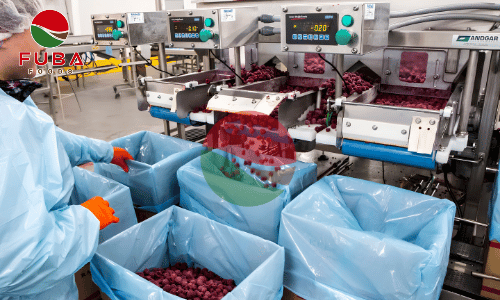
This article looks at the FUBA Foods story through the capabilities that matter most to customers: where its raw materials come from, how products are processed, how quality is controlled, and how the factory supports commercial supply at international scale.
From Vietnam’s Agricultural Regions to Frozen Food Processing
Vietnam provides an important foundation for frozen food manufacturing because different agricultural regions produce different fruits and vegetables across the year. A manufacturer serving international customers therefore needs more than access to individual farms. It needs a sourcing network capable of connecting seasonal agricultural production with an organized processing operation.
FUBA has built relationships with farming regions and growers across Vietnam to support a more stable supply of raw materials. Its sourcing network reaches major agricultural areas, including the Central Highlands and Mekong Delta, where different fruit and vegetable crops are grown.
This regional diversity becomes particularly important for frozen food. Fresh agricultural products are naturally seasonal and can vary in size, maturity, color, texture, and other characteristics. A structured sourcing network gives the manufacturer a stronger foundation for selecting raw materials according to defined processing requirements.
For customers, the advantage is not simply access to Vietnamese produce. It is the ability to connect agricultural sourcing with standardized industrial processing, allowing the same type of ingredient to be supplied in commercial frozen formats throughout the year.
How Has FUBA Developed Its Frozen Food Manufacturing Capability?
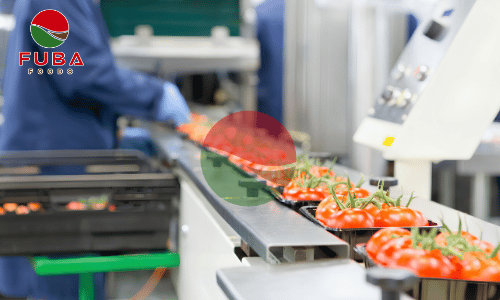
Experience in frozen food processing is ultimately reflected in the systems behind the product. A manufacturer needs to manage several stages between the farm and the finished carton, and weaknesses at any stage can affect the final product.
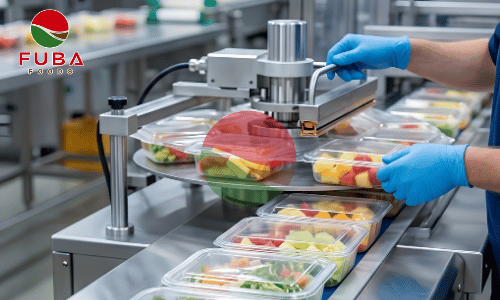
The production process begins with incoming raw material inspection, followed by washing and cleaning, sorting and grading, preparation according to product specifications, freezing, inspection, packing, cold storage, and export shipment. IQF technology is used to rapidly freeze individual pieces, helping retain the natural color, texture, flavor, and nutritional value of the product.
This integrated flow is important for commercial customers because product quality cannot be created at the freezing stage alone. Raw material selection affects yield and appearance. Cutting and preparation affect portion consistency. Freezing affects texture and handling characteristics. Packaging and storage then determine how well the product remains protected after processing.
Over time, these interconnected controls become part of a manufacturer’s operating capability rather than isolated production steps.
What Frozen Fruits and Vegetables Does FUBA Produce?
A broad product portfolio can be valuable when customers need to source multiple ingredients from the same manufacturing partner. Instead of working with separate suppliers for every fruit or vegetable, customers may be able to consolidate sourcing when one factory has the appropriate processing capabilities across different categories.
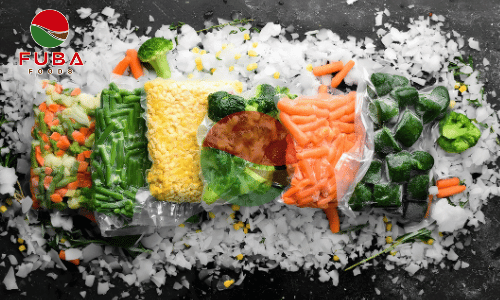
The product portfolio includes frozen fruits such as mango, passion fruit, avocado, dragon fruit, jackfruit, and durian, alongside vegetables including okra, corn, edamame, sweet potato, pumpkin, sweet pepper, eggplant, and zucchini.
The products are not limited to a single frozen format. Depending on the ingredient, customers can source formats such as cubes, slices, halves, chunks, whole pieces, and puree. This allows the frozen ingredient to be selected around the customer’s manufacturing or foodservice application rather than forcing every customer into the same specification.
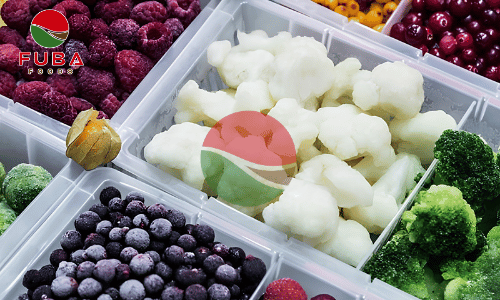
For example, mango can be processed into IQF cubes, half cuts, or puree, while dragon fruit is available in cube, slice, and puree formats. Passion fruit and avocado are also available in formats designed for applications such as beverages, ice cream, yogurt, bakery, desserts, smoothies, and food processing.
Why Does IQF Technology Matter to Commercial Customers?
For frozen fruit and vegetable manufacturers, freezing technology directly affects how the finished product behaves after thawing, handling, and further processing. IQF, or Individual Quick Freezing, freezes individual pieces rapidly rather than creating one large frozen block.
This format is particularly useful when customers need to portion ingredients efficiently. Individual pieces can be separated and measured according to production requirements, making IQF products suitable for food manufacturing, foodservice, and other applications where convenience and consistency matter.
The equipment behind this capability also provides an indication of manufacturing scale. FUBA operates six IQF freezing lines with a stated capacity of 500 kg per hour per line, in addition to three contact freezing lines and two air-blast freezing systems.
The significance is not simply the number of machines. Multiple freezing systems allow a factory to process different product requirements and support larger production volumes while maintaining an organized manufacturing flow.
How Does the Factory Control Food Safety and Product Quality?
For an international customer, food safety needs to be controlled throughout the production process rather than checked only when the finished product is ready to ship.
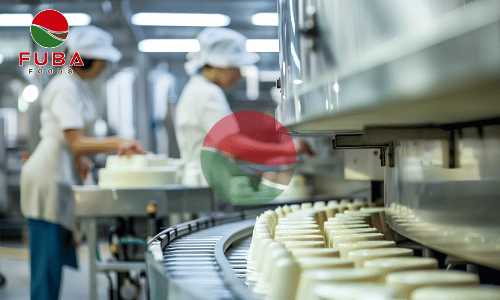
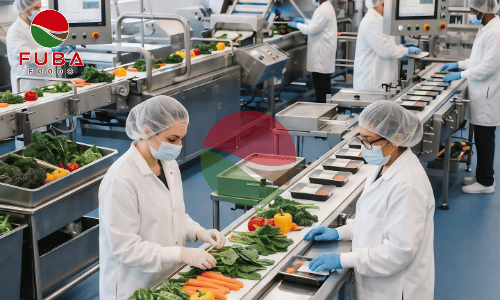
Incoming materials are inspected before processing. Products are washed and cleaned, then sorted according to size, color, and quality specifications. After preparation and freezing, products pass through inspection systems before packaging and storage. This creates multiple control points across the manufacturing process.
The factory’s inspection infrastructure includes five metal detection systems, three X-ray inspection systems, and an in-house microbiological laboratory staffed by three people. These systems provide different layers of quality and food safety control within the production environment.
FUBA’s quality assurance framework also includes internationally recognized systems and certifications such as FDA, HACCP, ISO 22000, HALAL, and BRCGS. Finished products are stored under controlled temperatures below -18°C, with product traceability incorporated into the cold-storage system.
For customers, these controls matter because quality consistency is not determined by the appearance of a sample shipment. It depends on whether the same controls are applied repeatedly across production batches.
How Does FUBA Support Large-Scale Frozen Food Supply?
A manufacturer may produce excellent samples but still struggle to become a reliable long-term supplier if it lacks sufficient production and storage capacity. Commercial customers therefore need to look beyond individual products and evaluate the infrastructure supporting repeated orders.
FUBA’s factory in Ca Mau has an annual capacity of 20,000 MT and more than 600 workers, supported by multiple processing and freezing systems. The company exports to more than 30 countries, giving its manufacturing operation experience in serving international markets rather than focusing only on domestic distribution.
Cold storage is another important part of this capacity. The factory operates three cold-storage facilities, each with a stated capacity of 500 MT, allowing processed products to remain under controlled frozen conditions before shipment.
This infrastructure helps connect production with export logistics. For customers, that connection is important because a frozen food supplier must be able to manage not only manufacturing but also the period between production and international shipment.
Can Customers Customize Frozen Food Specifications?
Different customers rarely require exactly the same frozen ingredient. A food manufacturer may need a specific cube size, cut, puree specification, packaging format, or preparation method, while a distributor may prioritize pack size and product consistency across markets.
This is why manufacturing flexibility can be as important as production volume. FUBA provides OEM and private-label manufacturing with customized specifications and packaging formats, allowing products to be developed around different customer requirements.
The factory’s portfolio also includes different processing forms, from standard IQF cuts to puree and value-added products. This gives customers more room to select an ingredient according to its intended application instead of treating frozen food as a one-format commodity.
For long-term sourcing, this flexibility can simplify product development and reduce the need to coordinate different processing partners for different specifications.
What Makes a Frozen Food Manufacturer Reliable for Long-Term Sourcing?
Long-term supply reliability is built from several connected capabilities. Agricultural sourcing must be dependable enough to provide suitable raw materials. Processing equipment must support the required specifications. Quality systems must remain consistent from batch to batch. Cold storage must protect finished products, while export operations must be able to move shipments through the international supply chain.
FUBA’s approach brings these elements together within one manufacturing and export operation. Its sourcing network supports raw material collection across Vietnam, while the factory combines IQF and other freezing systems, inspection equipment, cold storage, packaging capabilities, and export logistics.
This is particularly relevant for distributors and food manufacturers that need more than a one-time purchase. A long-term supplier needs to provide repeatable specifications, sufficient production capacity, and the operational infrastructure to support continued commercial orders.
The value of more than 15 years of experience is therefore not simply the number itself. It is reflected in the manufacturing systems, sourcing relationships, product knowledge, and export processes developed over time.
Why Consider FUBA Foods as a Frozen Food Manufacturing Partner?
When evaluating a FUBA Foods frozen food manufacturer, customers can look at the company through the same practical criteria used to assess any serious international supplier: raw material sourcing, manufacturing capability, product range, quality systems, capacity, customization, storage, and export experience.
FUBA’s combination of a 20,000 MT annual capacity, more than 15 years of frozen fruit and vegetable experience, 600+ workers, and exports to 30+ countries provides a manufacturing foundation for international supply.
Its product portfolio covers both frozen fruits and vegetables, while its processing infrastructure supports IQF, freezing, inspection, packaging, and value-added processing. This allows the manufacturer to serve different commercial requirements without positioning itself simply as a trading intermediary.
For customers looking for a Vietnamese frozen food manufacturer, the most important consideration is ultimately whether the factory can consistently translate Vietnam’s agricultural resources into safe, specification-controlled frozen products and deliver them reliably to international markets.
Conclusion
The story of a frozen food manufacturer is best understood through the systems built behind its products. More than 15 years of experience can create meaningful value when it is supported by reliable agricultural sourcing, modern processing technology, food safety controls, production capacity, cold storage, and international export experience.
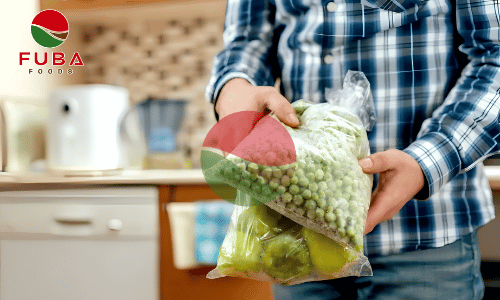
FUBA Foods has developed these capabilities around Vietnam’s agricultural resources, combining a broad frozen fruit and vegetable portfolio with IQF and value-added processing, quality-control infrastructure, customized manufacturing, and export supply. Its scale and manufacturing systems provide a foundation for serving customers that require consistent frozen ingredients rather than one-off shipments.
For importers, distributors, food manufacturers, and foodservice customers, choosing a supplier should therefore go beyond comparing product prices. The stronger question is whether the manufacturer behind the product has the experience, infrastructure, and process control to support the specification and supply requirements of a long-term international partnership.


